Positioning a room humidity meter
A meter beside cold glass describes a different local situation from one in the occupied part of the room.
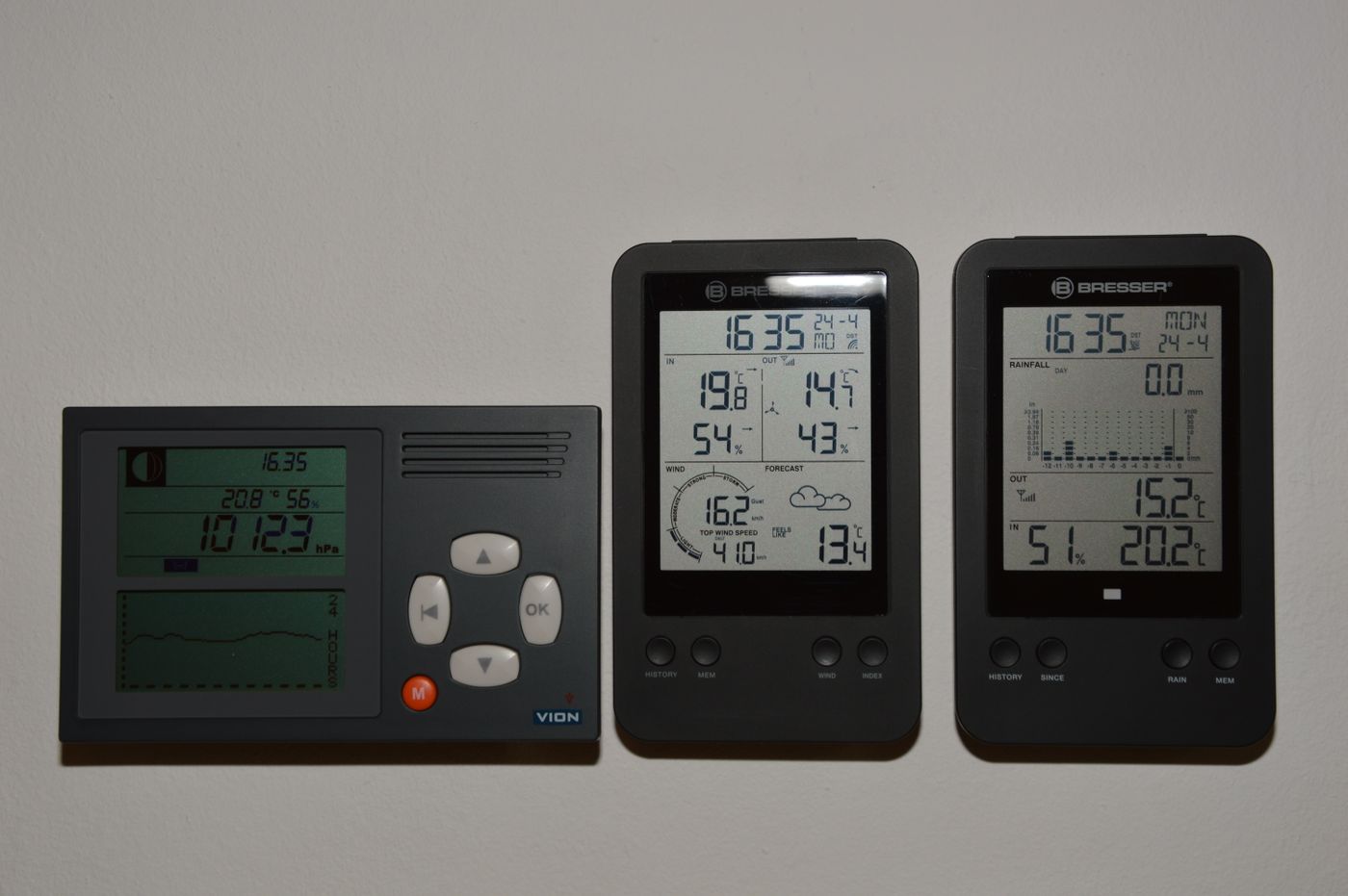
A hygrometer reports relative humidity at its own location. It does not automatically describe every wall or another room. Different readings from devices in different positions may therefore reflect their surroundings rather than a fault.
Relative humidity also depends on temperature. A radiator, sunny windowsill or cold external surface may be an unsuitable location for observing general room conditions. Choose a representative, accessible place and follow the manufacturer's positioning advice.
Define the measurement purpose
To observe the usual bedroom pattern, keep the instrument in a consistent position. Investigating a particular cold corner is instead a deliberate local observation. Do not confuse those jobs. An ordinary room reading cannot rule out a moisture problem on one surface.
After moving the device, allow it to adapt to the new surroundings. The necessary time depends on the product and temperature difference. A reading immediately after carrying it from a warm space to a cooler one is not necessarily settled.
Avoid touching or covering sensor openings unnecessarily. Breath, damp hands or a very close houseplant can influence local conditions. Do not place the meter directly in a humidifier or dehumidifier's airflow when your aim is to observe the broader room.
Look at patterns rather than isolated numbers
Record readings alongside ordinary events over several days. Ventilation, showering, drying laundry and temperature changes help explain fluctuations. A brief peak differs from a persistent unusual pattern.
To compare two devices, first place them under the same conditions and allow both to stabilise. Account for their stated accuracy. Small differences do not automatically justify improvised calibration. Calibrate only using the manufacturer's specified method.
Investigate visible condensation, recurring damp patches or unusual odours regardless of one display reading. A hygrometer can support observations, but cannot identify a building defect or provide a health diagnosis. Use it to understand a pattern rather than as a comprehensive certificate that the room has no problems.