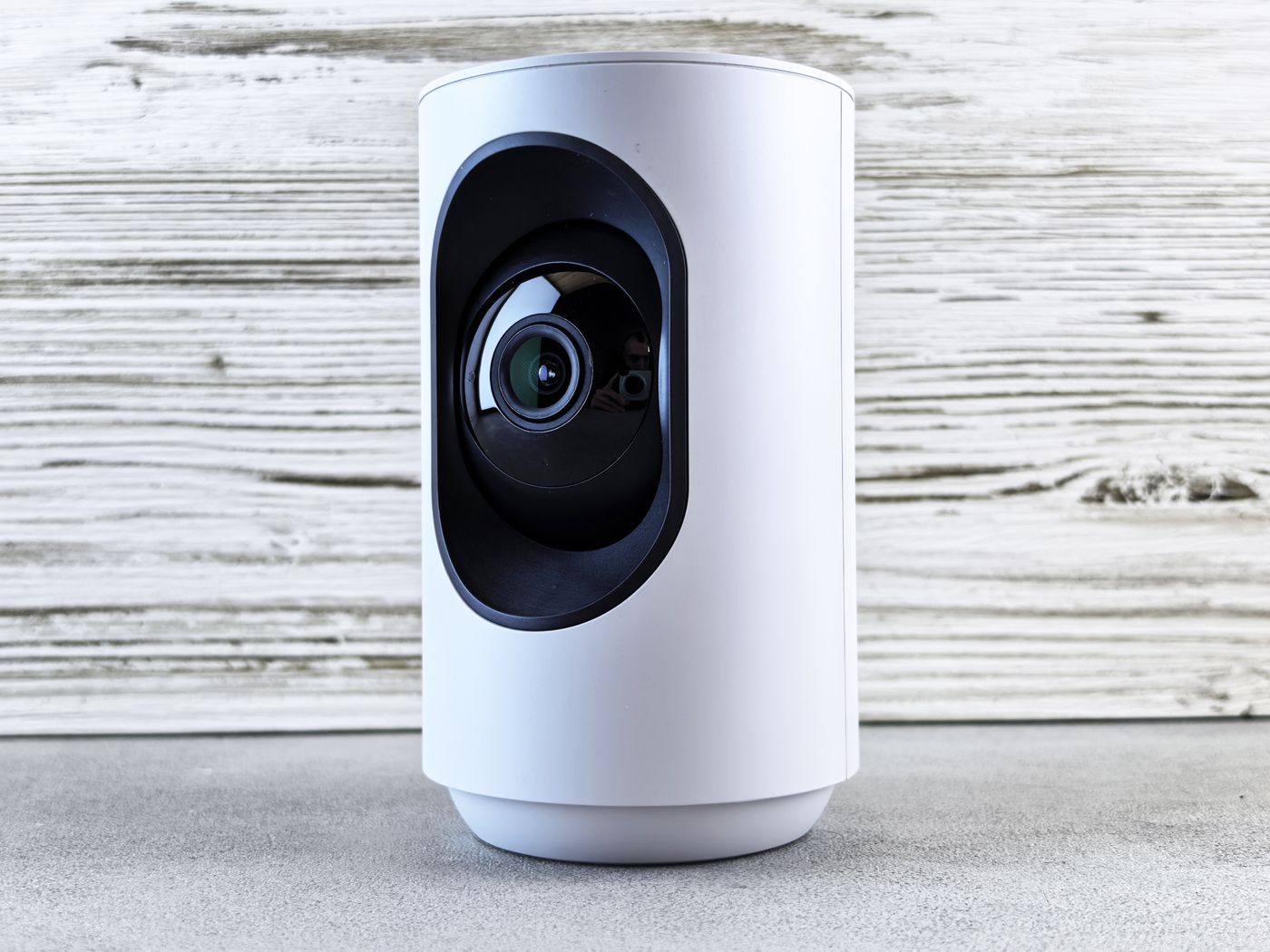
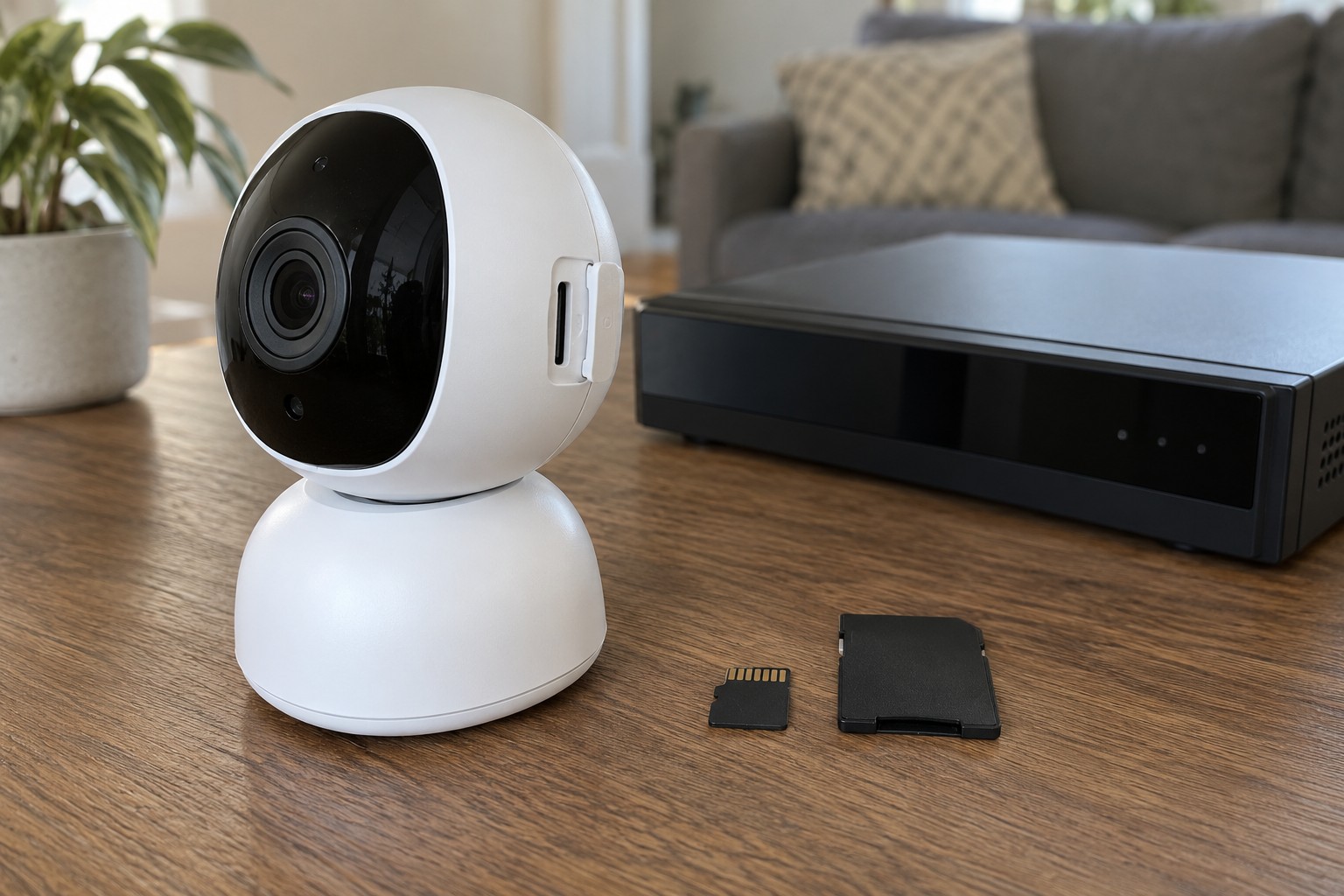
Why cameras struggle to see through windows at night
An indoor camera can show a useful daytime view through glass and mostly reflections after dark.
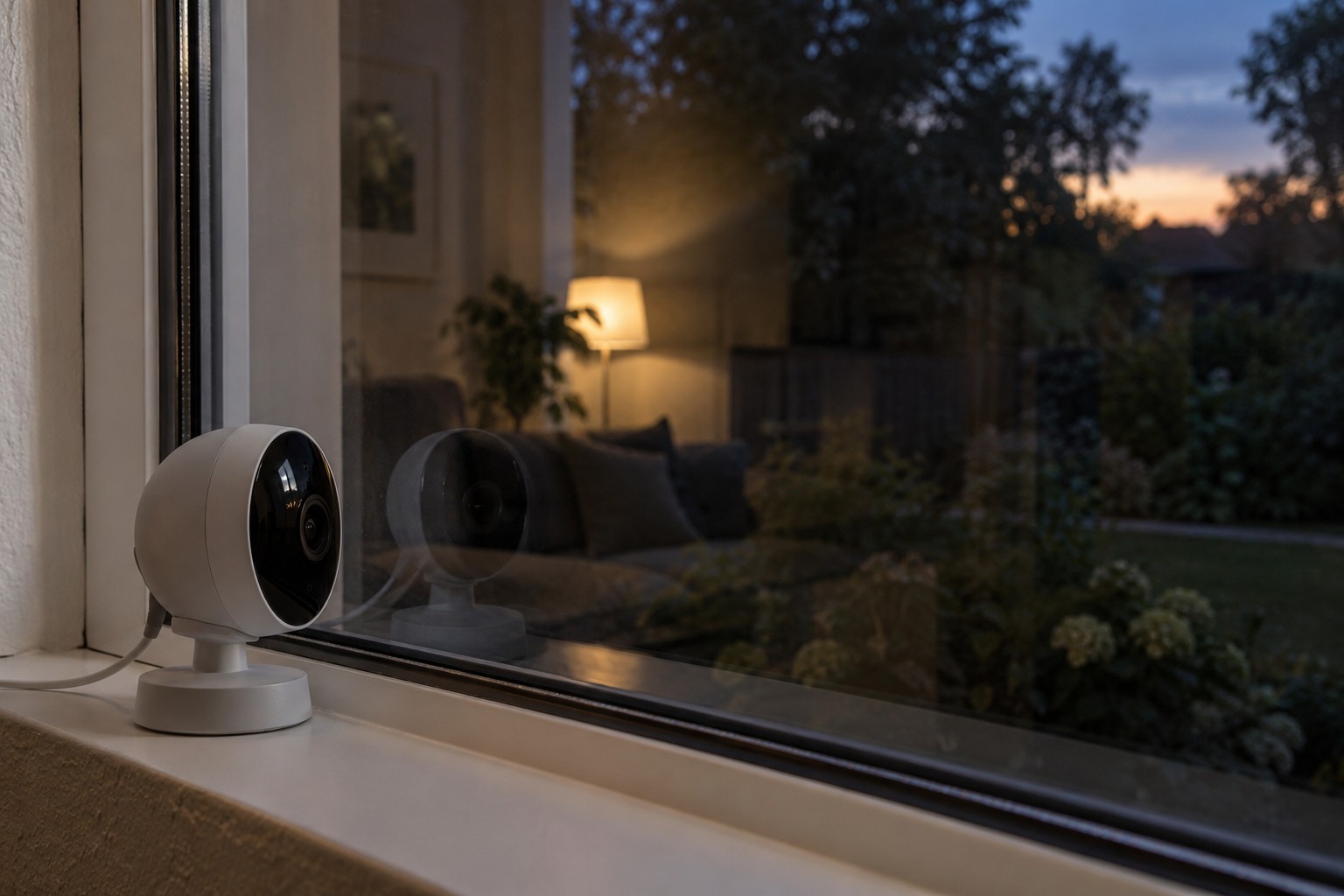
During daylight, an indoor camera shows the garden. After sunset, a bright patch fills the window. The camera's infrared illumination may be reflecting from a nearby surface back into the lens. Glass can sit directly in that path even though it looks transparent to your eyes.
Compare the same position by day and night. Note when the change begins and whether indoor lights add reflections. This helps distinguish reflected light from a dirty lens, insufficient outdoor lighting or a poor connection.
Examine the night setting
Check the model's night-vision options. Disabling its infrared illumination may reduce an associated reflection, but does not automatically produce a useful dark image. Without enough other light, the scene may simply remain too dark. Judge the setting by the actual result.
Ordinary room lamps and bright screens can reflect in the glass too. Change one light source or setting at a time. Moving the camera, changing lighting and altering image quality together would make it difficult to know what helped.
Pressing the camera directly against the pane is not a universal fix. Mounting, ventilation, viewing angle and device instructions still matter. An improvised cover must not obstruct vents or moving parts. Cleaning the glass also does not eliminate the underlying reflection mechanism.
Reconsider the location
If usable outside images are essential, an outdoor-rated camera outside the window may be a more appropriate arrangement. That requires a new assessment of mounting, power and field of view. Moving an indoor camera onto the outer sill does not make it suitable outdoors.
Consider what areas will be recorded and the applicable local requirements. Improving the night image does not automatically justify capturing a wider area. Retain only the view needed for the intended purpose.
After a change, repeat the night test with normal lighting. Include a moving person rather than examining only a stationary scene. A brighter still image does not establish that the details you need remain visible during movement.