Positioning an indoor camera with privacy in mind
A useful view shows the intended event without incidentally recording the whole household's private life.
Before choosing a shelf or wall, define the purpose. Is the camera intended to show one entrance while the home is empty, or a particular pet area? A clear task makes it easier to avoid an unnecessarily broad view.
Discuss the arrangement with people who use the room. Visibility alone does not make a camera appropriate in every situation. Sleeping areas, places where people change and other intimate spaces should not appear incidentally in the background. Include visitors, carers and the view through an open internal door in the discussion.
Inspect what the camera actually sees
Position it securely and open the live view. Walk the routes normally used through the room. What appears at the edges? Can it see screens, personal documents or neighbouring windows? A closer position or different direction may remove those details while retaining the intended function.
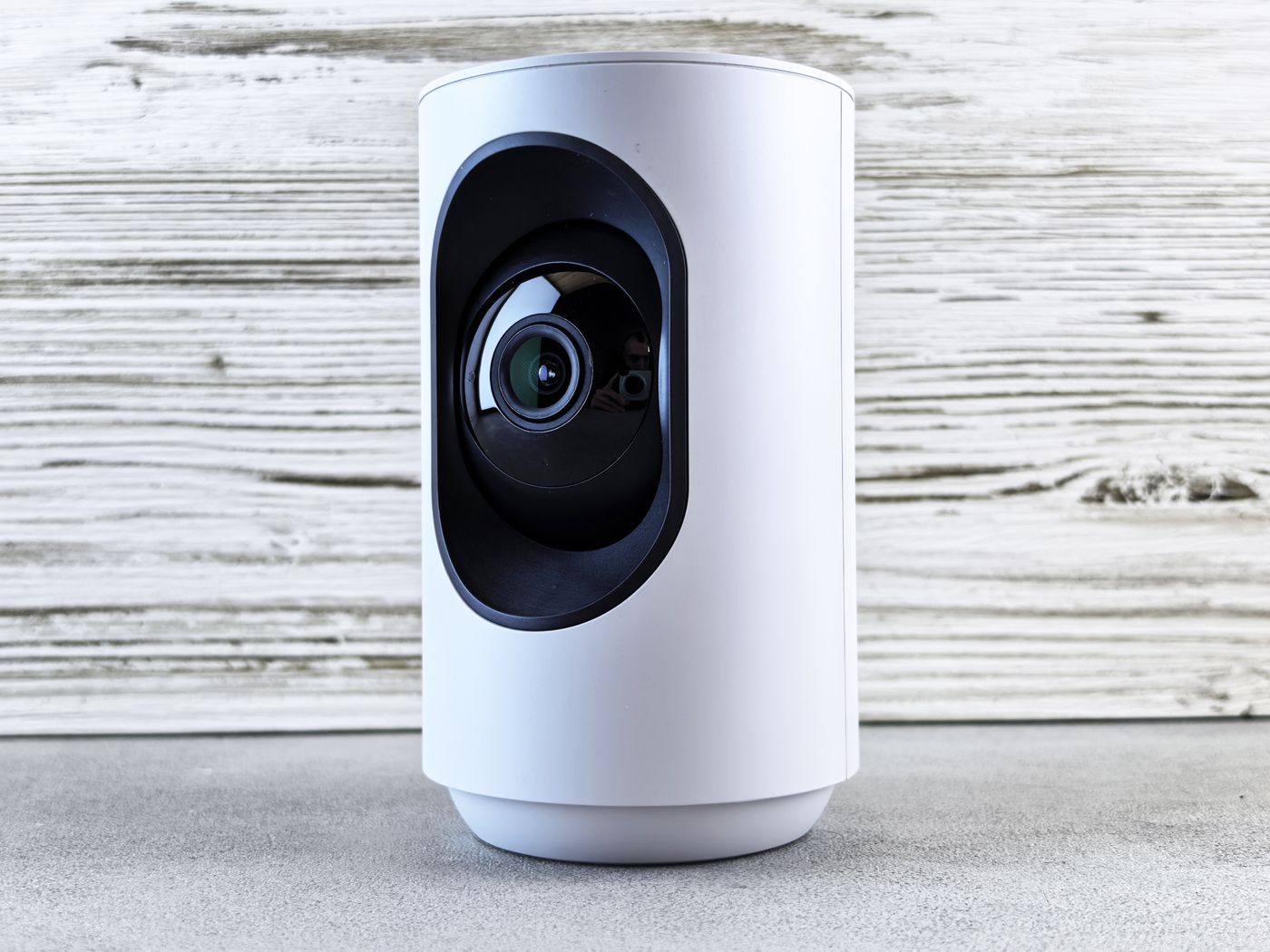
A pan-and-tilt model needs consideration of every reachable view. A suitable initial angle is not enough if remote control can later point into a private space. Check supported limits and the permissions of everyone allowed to move it.
Treat audio recording as a separate decision. Excluding part of an image does not prevent conversations being captured. Switching a camera off also does not automatically delete old footage. Examine microphone, recording, storage and access settings separately.
Make the operating state understandable
Agree when the camera should operate and how people can recognise its state. A manufacturer-designed physical cover can make the image channel visibly blocked, but its effect on the microphone and storage still needs checking. An app button carrying a camera icon may do something different on another model.
Test the agreed state with a second authorised account. Can it still open a live view or earlier clips? Do notifications remain active? This reveals differences between capture, remote access and stored history rather than treating one setting as protection for all three.
Technical choices do not settle legal questions, especially for shared or other people's spaces. Check the requirements applicable to the location. If the actual task can be achieved without continuous indoor images, for example using a simple door contact, include that less image-intensive option in the decision.