Planning a humidifier cleaning routine
Tanks, accessible water passages and filters can require different care. Topping up is not a substitute for cleaning.
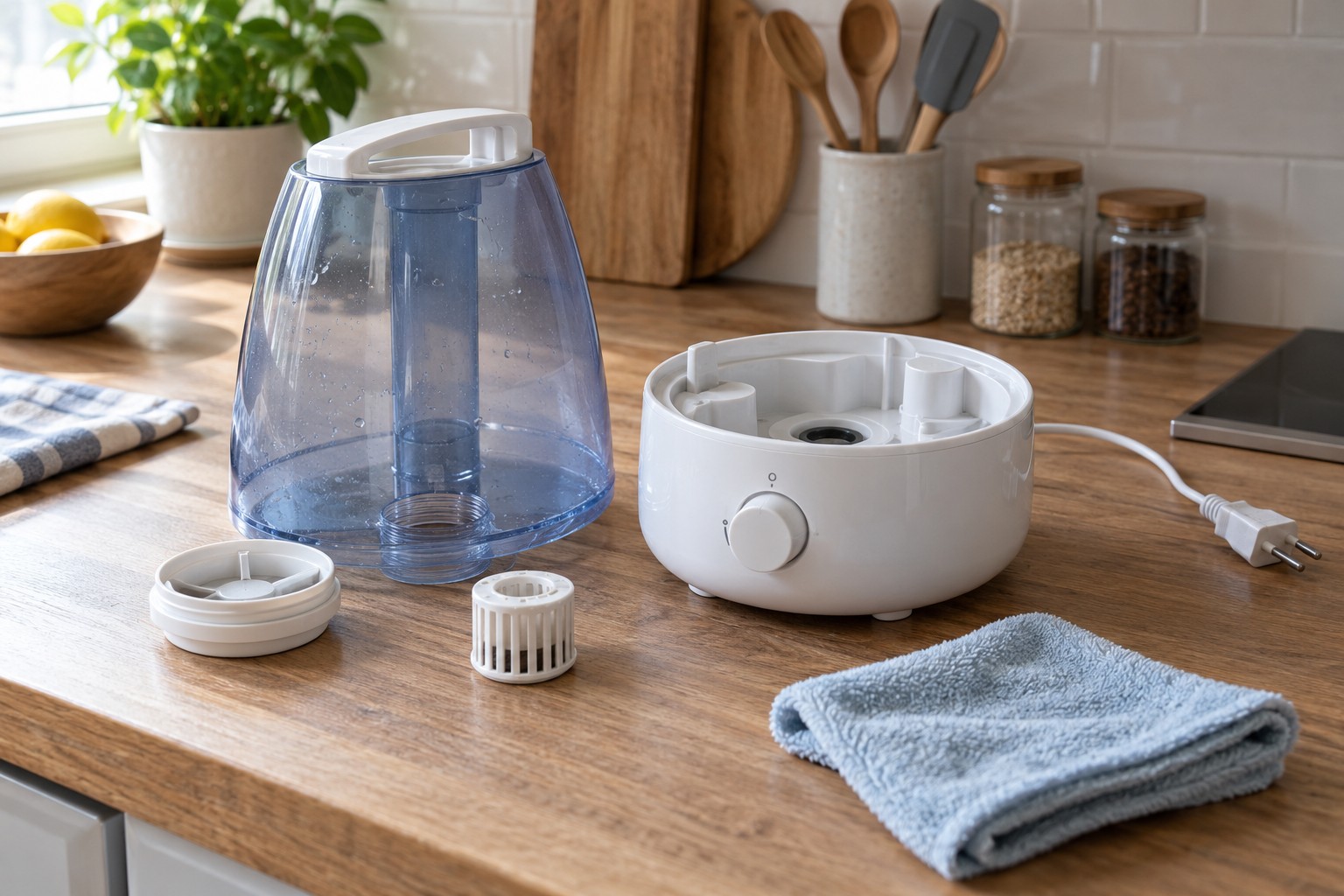
A humidifier contains water that can remain inside the appliance or on internal surfaces. Think about maintenance before buying one. A narrow tank opening that is difficult to reach may matter more in daily use than an additional app feature.
Read the instructions for the particular type. Evaporative, ultrasonic and steam models have different components and requirements. Not every filter can be cleaned or reused. Devices involving hot water also require the specified cooling time.
Fresh water is only part of the routine
The EPA recommends careful management of remaining water and regular cleaning for portable humidifiers. Follow the manufacturer's specific intervals and methods, rather than leaving old water in the tank indefinitely. Topping up may dilute deposits but does not remove them.
Switch off, disconnect and remove the intended components. Empty remaining water without wetting electrical areas. Some units specify a particular pouring direction. Tilting them arbitrarily can send water into openings not designed to receive it.
Distinguish descaling from cleaning. The instructions determine which product suits which component. Never mix cleaning agents or transfer an aggressive bathroom-cleaning routine to the appliance. Where a cleaner is explicitly permitted, remove its residues thoroughly as directed. The EPA emphasises adequate rinsing after cleaning agents are used.
Inspect parts and surroundings
Check the tank, seals and accessible wet surfaces for deposits or damage. A scaled or worn filter may require the correct replacement. Do not scrub delicate membranes or sensors with hard objects. Leave compartments outside the user-maintenance procedure unopened.
Observe the surroundings during operation too. Damp furniture, wet window areas or a clammy carpet indicate that the setting or position needs attention. The humidifier should not soak its immediate environment. A separately positioned hygrometer can help show trends, but does not replace investigating a moisture problem.
After cleaning, dry and reassemble components according to the manual. Use the specified water type and no fragrances or additives unless explicitly supported. Observe a short initial run for leaks.
Before longer storage, empty, clean as instructed and dry completely. Do not simply leave a half-full tank until the next heating season. A manageable routine followed consistently is more useful than waiting for obvious deposits before attempting one extensive cleaning session.