Positioning leak sensors beneath appliances
Water must be able to reach the sensing contacts, while the device remains accessible for checks and batteries.
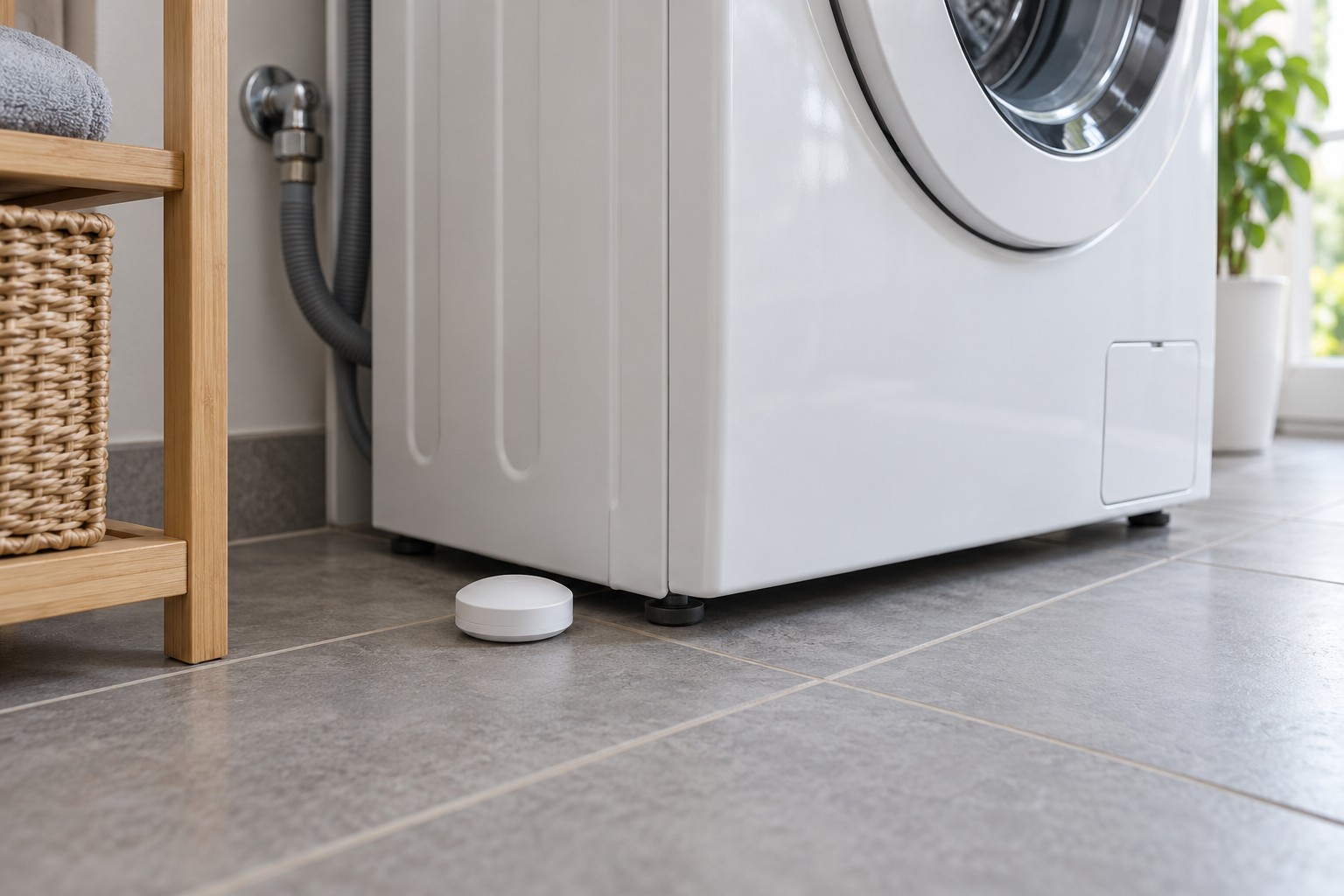
A leak sensor helps only if water reaches its intended contacts. A conveniently visible shelf may therefore be unsuitable, while a position far behind an appliance can make testing difficult. Choose around plausible water paths and maintenance rather than simply where the small housing fits.
Examine the area around a washing machine, dishwasher or sink without unsafe lifting or intervention. A slight floor slope can influence where water travels first. One sensor does not automatically cover the whole area beneath a large appliance. Some products support additional probes; others do not.
Accessible and protected from crushing
Orient the sensing surfaces as instructed. Do not place the sensor on a cloth that separates it from the water path. Keep it away from appliance feet, moving parts and hot surfaces, and ensure it will not be crushed when the appliance shifts.
Check communication at the final location. Metal housings and a deep recess may alter reception; successful setup on the kitchen table is not enough. Give the sensor a clear location name so an alert identifies somewhere useful rather than merely saying water detected.
Test the complete alert path
Use only the manufacturer's specified functional test. Do not pour water beneath an electrically connected appliance to make the experiment realistic. Check the sensor and then confirm delivery through the hub to the intended phone. Dry and restore the device as instructed afterwards.
A leak alert normally does not shut off the water supply. That requires a separate appropriate, properly installed system. Agree who will notice an alert and how they can respond safely. A phone message does not guarantee anyone is present.
If real water is near electrical equipment, prioritise safety over checking an app. Do not touch wet electrical parts; obtain appropriate help. A sensor complements maintenance rather than justifying continued use of damaged hoses or known leaks.
Recheck its position after cleaning or moving the appliance. Keep battery status and test date in a small maintenance record. A sensor left on a cupboard after mopping can remain technically online while no longer performing its intended task.