Matching rechargeable batteries to chargers
The same physical size does not mean the same battery chemistry. Read the cell, appliance and charger information together.
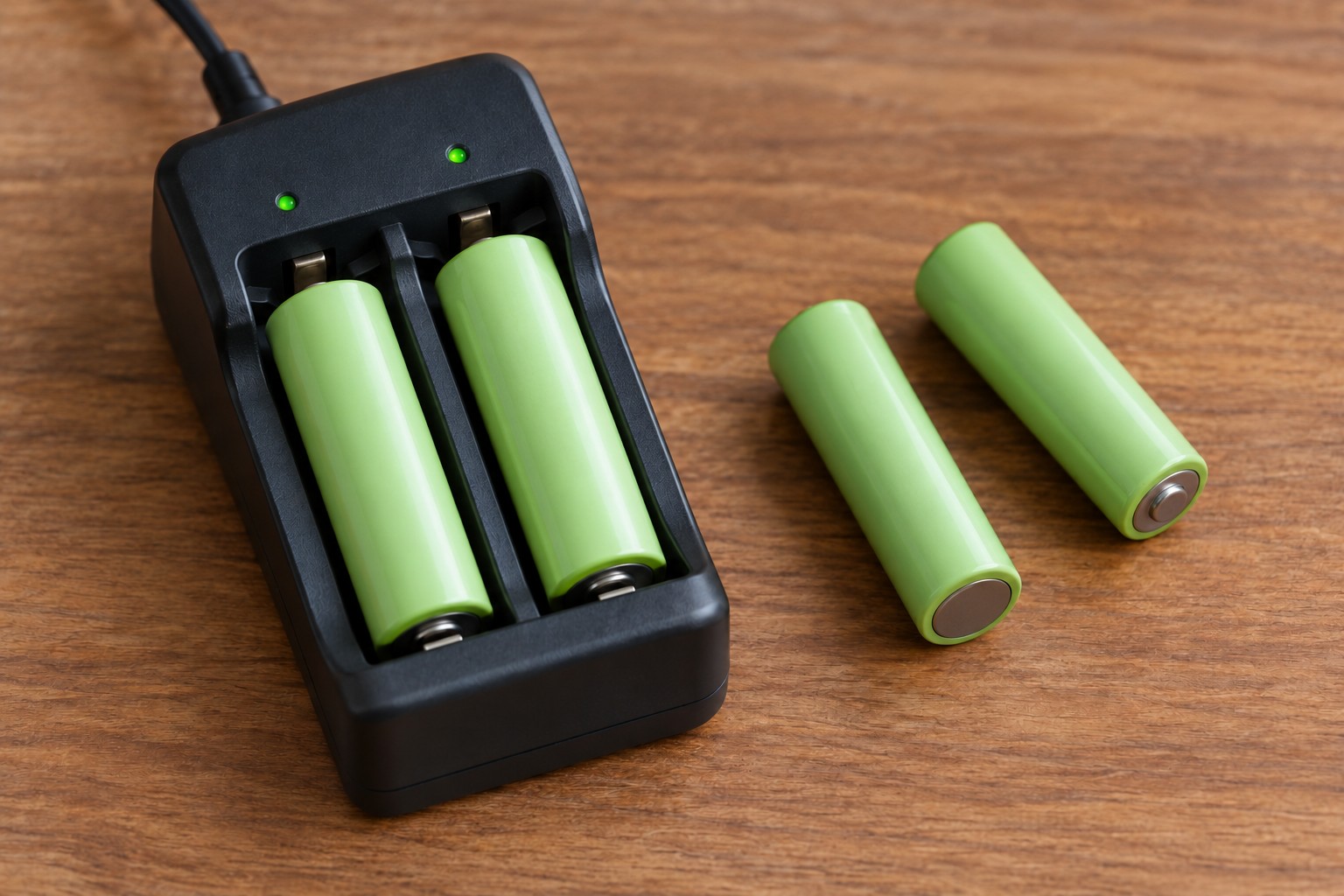
Cylindrical batteries can look very similar in a drawer. For charging, however, fitting inside the slot is not enough. Size, chemistry, voltage and the charger's permitted cell types must agree. Do not identify uncertain cells by trying them in a charger.
Read before inserting
Look for an unambiguous indication that the cell is rechargeable. Ordinary non-rechargeable batteries must not be put into a charger. Equipment designed for NiMH cells is not automatically suitable for another chemistry. Similar-looking cells can have substantially different electrical characteristics.
Then check whether the appliance you intend to power permits that rechargeable type. Physical size alone is insufficient. Some devices have particular supply requirements or a battery indicator designed around another cell type. The manual is more reliable than assuming every AA-shaped cell is interchangeable.
Keep the charging arrangement understandable
Keep cells together as a set when they are used together in one appliance. Do not casually mix old and new cells or different characteristics. Also establish whether the charger treats slots independently or requires particular combinations. Its instructions define the acceptable arrangement.
Inspect cells before inserting them. Damaged wrappers, corrosion, leakage or unusual deformation are not reasons to try another charging cycle. Stop using damaged cells and follow the applicable safe return or disposal guidance. Keep batteries and rechargeable cells away from children.
Place the charger on a suitable clear surface as directed. Do not cover it with paper or fabric. A status light may represent several states; note which indication means charging, completion or error if necessary. Repeatedly removing and reinserting a cell is not a dependable way to resolve an error.
Store charged sets separately from those awaiting charging and protect the terminals from conductive objects such as keys. Simple labelled storage makes their state easier to understand. If a set runs down unexpectedly quickly, record which appliance and usage were involved. That helps investigate the problem without continually mixing in more cells of unknown condition.