Finding a place for a robot vacuum dock
The robot needs a clear approach, the dock needs a stable position, and you need access for maintenance.
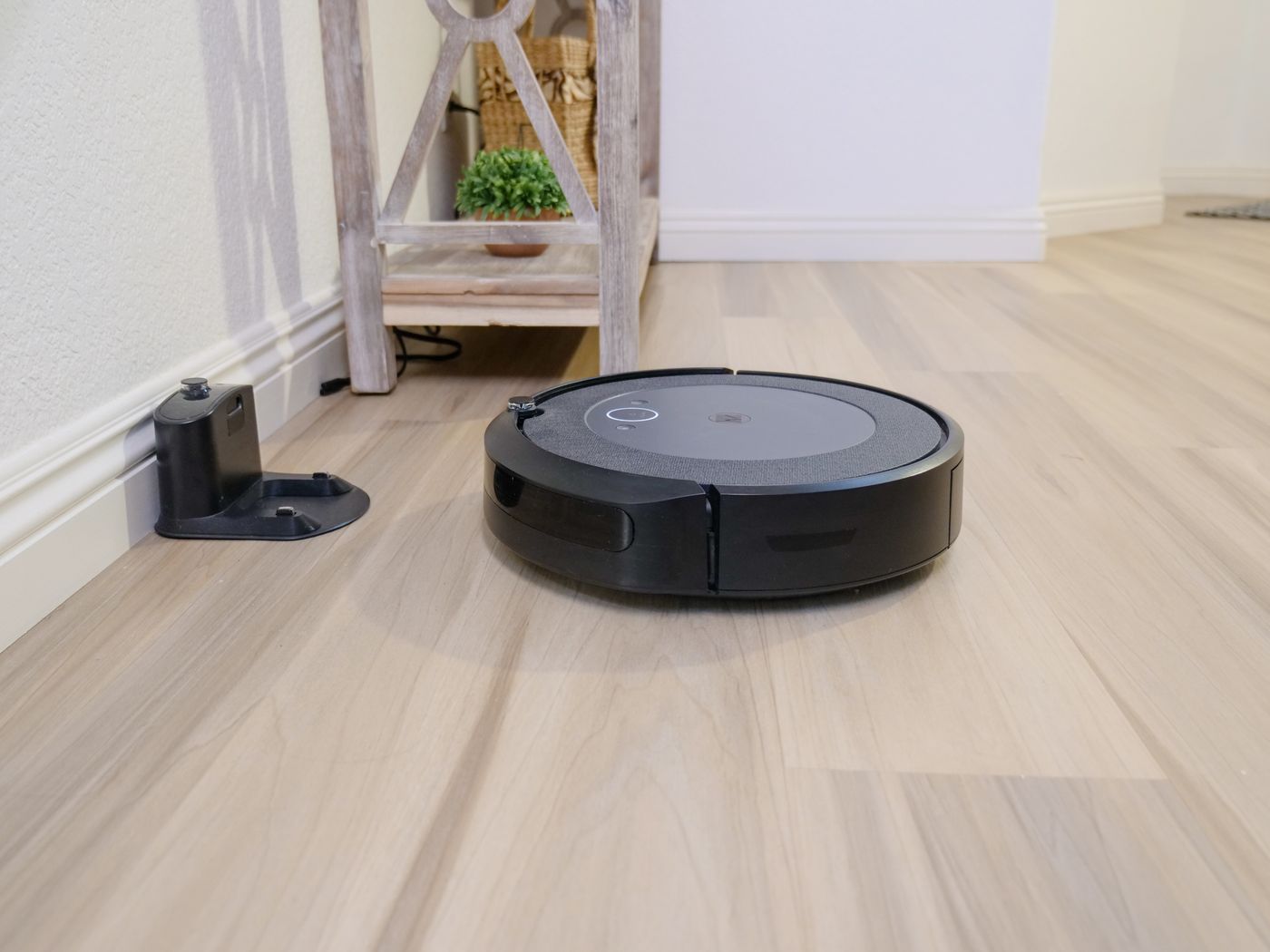
The narrowest spare corner is not necessarily the best place for a robot vacuum dock. The robot must find it, approach correctly and make full contact. With an emptying or washing station, you also need room to remove bins, bags or water tanks.
Start with the clearances in the exact model's manual. iRobot specifies open areas beside and in front of certain Home Base models, plus separation from stairs. Those measurements are model-specific, not universal dimensions for every robot. Follow the instructions for your particular robot and station combination.
A stable starting point
Choose a level, stable surface in the intended position against a wall. A soft rug edge or movable mat can allow the station to shift as the robot approaches. Check that the socket remains accessible and the power cable does not form a loose loop in the driving area. The robot should not need to cross its own supply lead.
Avoid a location where an opening door regularly blocks the approach. Placement beneath furniture may work if the product allows it and servicing access remains adequate. A low table might prevent a tall water tank from being lifted out. Measure the space above and in front, not only the footprint.
For connected models, check the network at the proposed position. A phone gives an initial indication of Wi-Fi coverage but does not prove the robot's radio performance. Successful setup and actual operation in that location are the meaningful tests.
Test more than one return
Start a short clean from the dock and let the robot return normally. Repeat from a more distant room. Watch whether it approaches freely or catches on a chair leg, curtain or rug edge. One successful attempt is not sufficient if the area changes frequently in daily use.
A washing station also requires attention to the floor and possible moisture. Follow instructions about protective mats and maintenance; improvised layers can affect stability or docking. Avoid environments excluded by the manual.
If the robot stores a map, do not move the station repeatedly. Make necessary relocations using the documented process and test afterwards. An accessible position that remains clear is usually more useful than a perfectly hidden corner requiring preparation before every run.