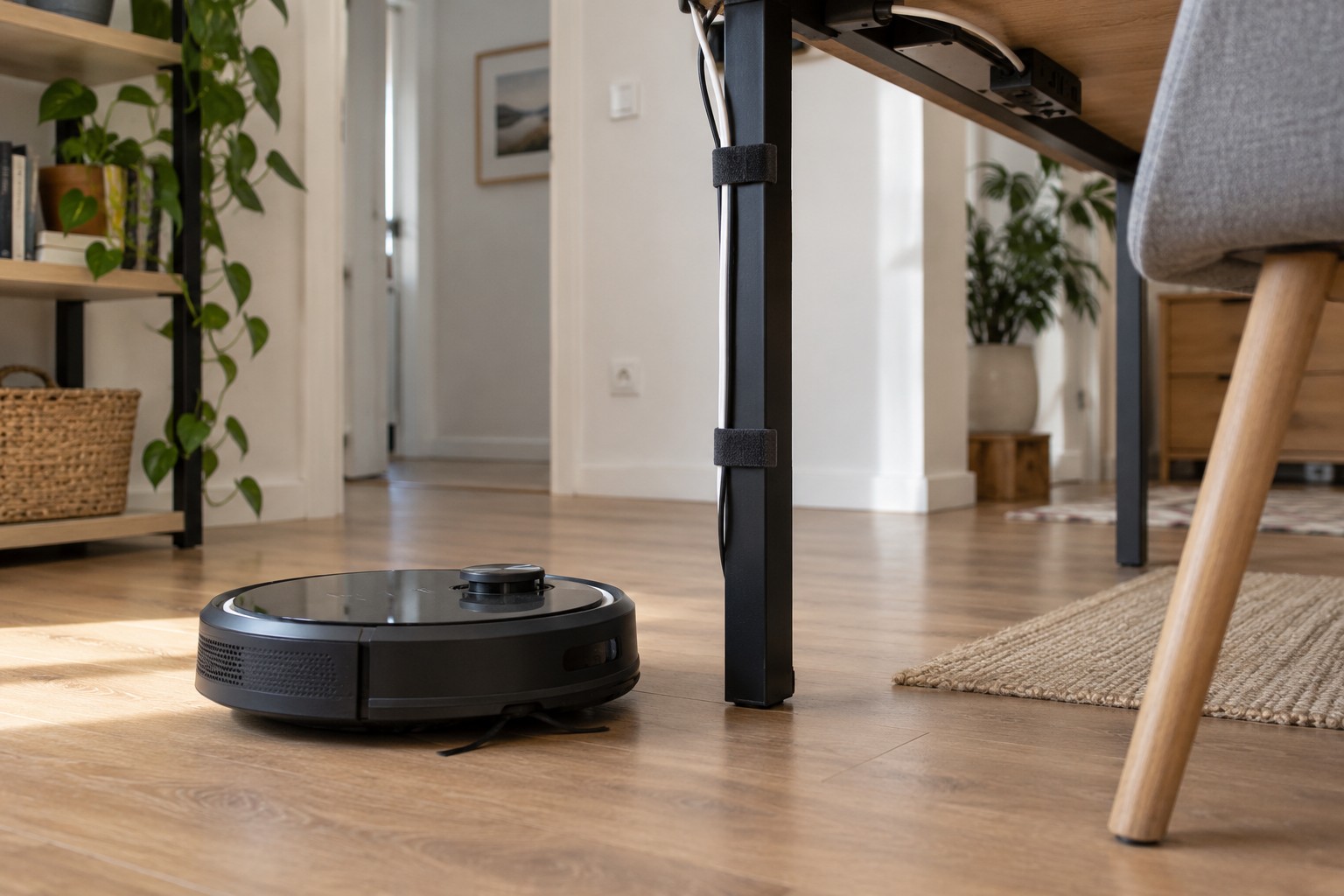
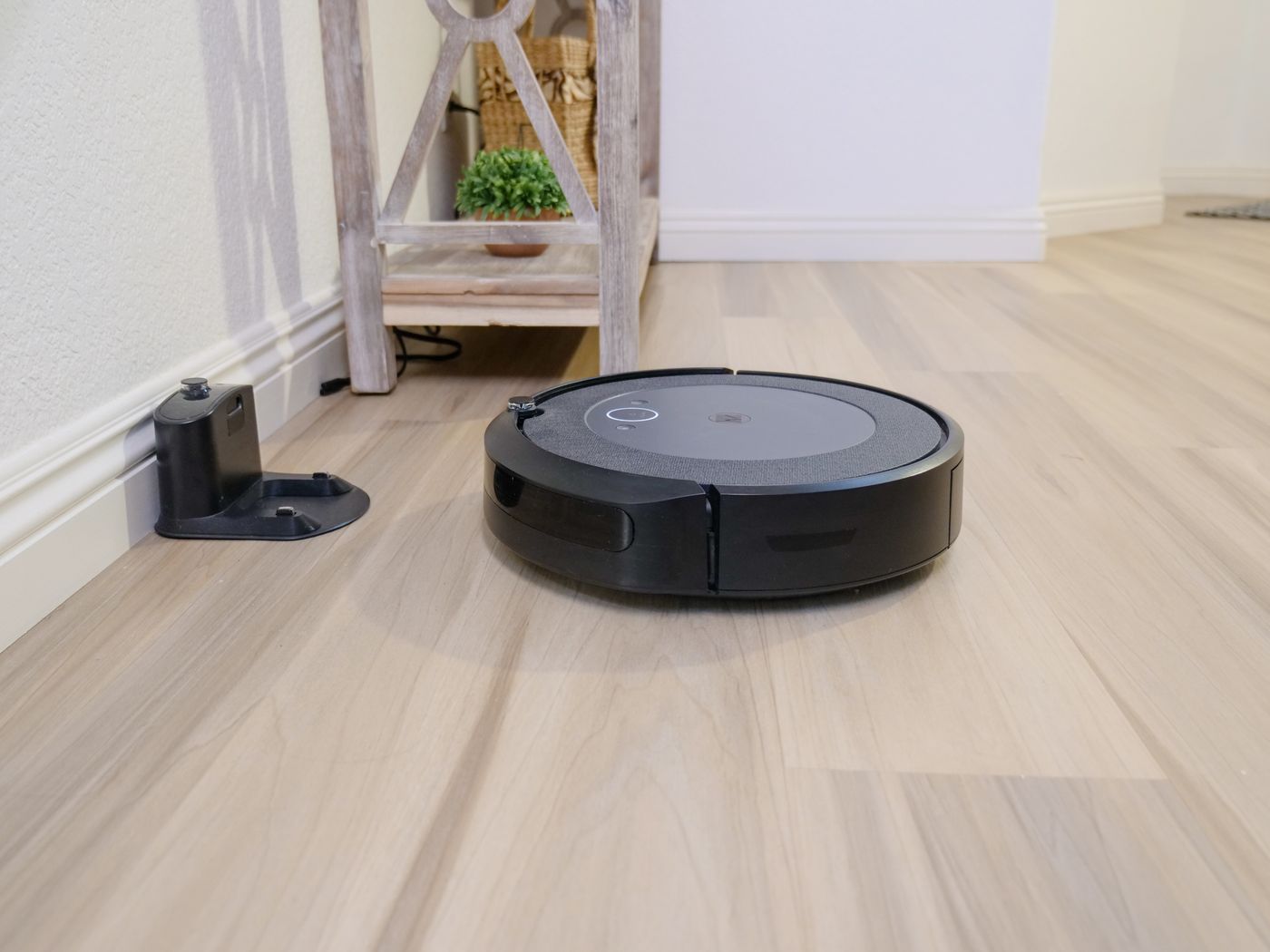
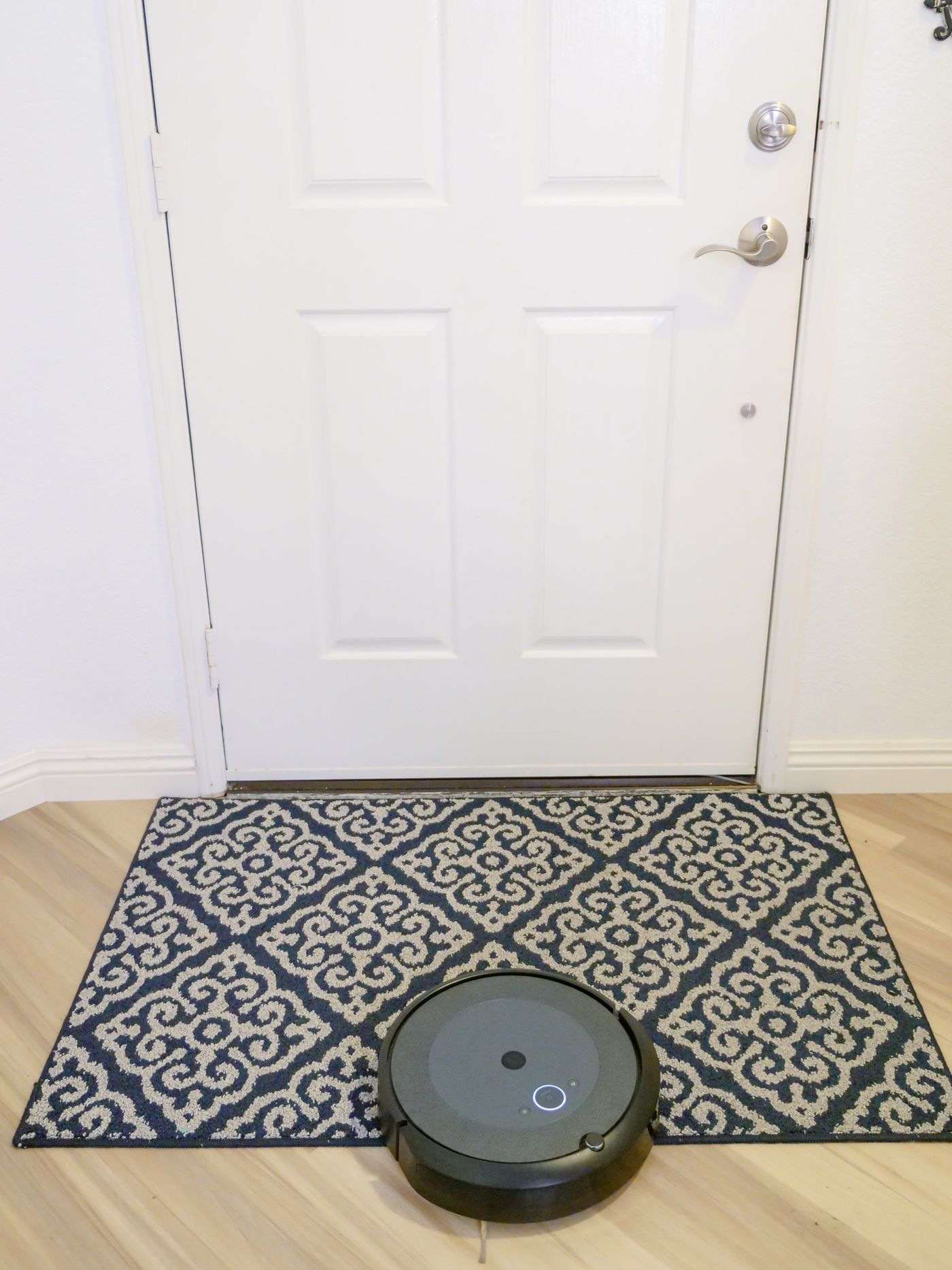
Checking thresholds for a robot vacuum
A maximum climbing height does not describe every threshold. Profile, approach angle and grip affect the result.
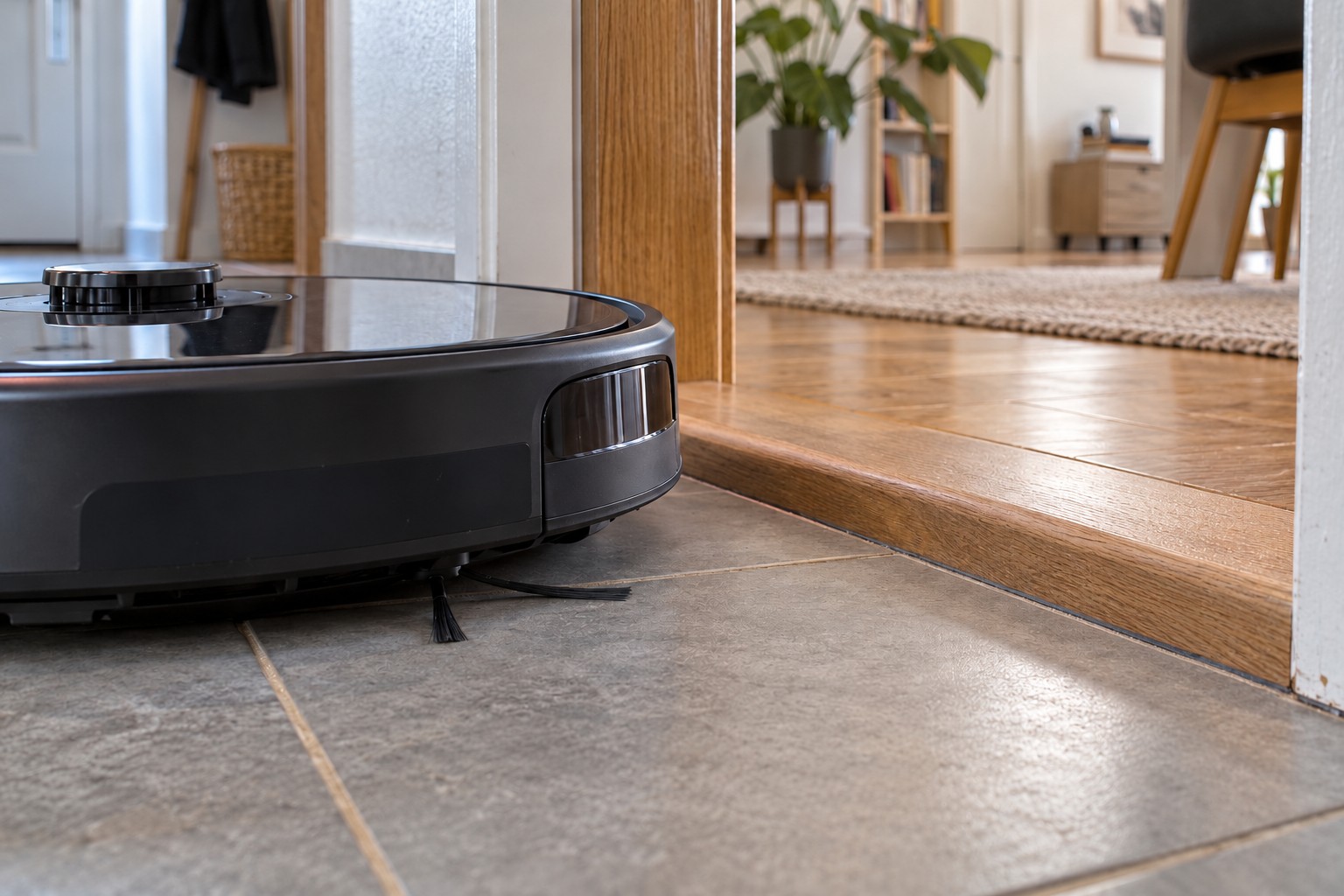
A robot vacuum may cross a gently sloping edge but fail at an equally high vertical threshold. The maximum climbing figure in its specifications is therefore not a complete description of your home. Measure and inspect actual transitions before expecting dependable cleaning across several rooms.
Record the height and shape on both sides. A lower floor in one room can make the return trip harder than the outward journey. A rug immediately before the threshold also changes the approach. Low-angle photographs help when comparing the situation with manufacturer guidance, but cannot replace a controlled trial.
Test the transition deliberately
Start with a charged, properly maintained robot and a clear approach. Let it encounter the threshold during normal operation. Observe both directions rather than pushing it over by hand. Manual assistance does not establish that it will manage independently later.
Look for spinning wheels, contact beneath the body or a caught brush. These observations help distinguish poor traction from an unsuitable profile. Never remove sensors or cover cliff detectors to force a crossing. Intended safety functions must not be disabled to increase room coverage.
If failure is intermittent, inspect ordinary conditions around the transition. A shifted runner, open door or chair can change the approach angle. Success in a completely cleared test area does not necessarily translate to everyday reliability.
Adapt appropriately or accept the boundary
A suitable transition ramp may help in some situations, but must work with the floor, door and people using the route. It must not slide or create a new trip edge. Check that doors still close correctly and that alterations are permitted in rented accommodation. Loose strips or stacked cardboard are not lasting solutions.
If a transition remains unsuitable, separate cleaning areas may make more sense. Follow the instructions for carrying and starting the robot elsewhere, including its mapping requirements. Not every model automatically identifies its position correctly after being moved.
Repeat the test after changing rugs or flooring. The meaningful question is not whether the robot crossed once, but whether both directions work repeatedly under normal conditions.