Checking a door before buying a smart lock
The cylinder, fittings and existing mechanism help determine whether a retrofit lock is suitable.
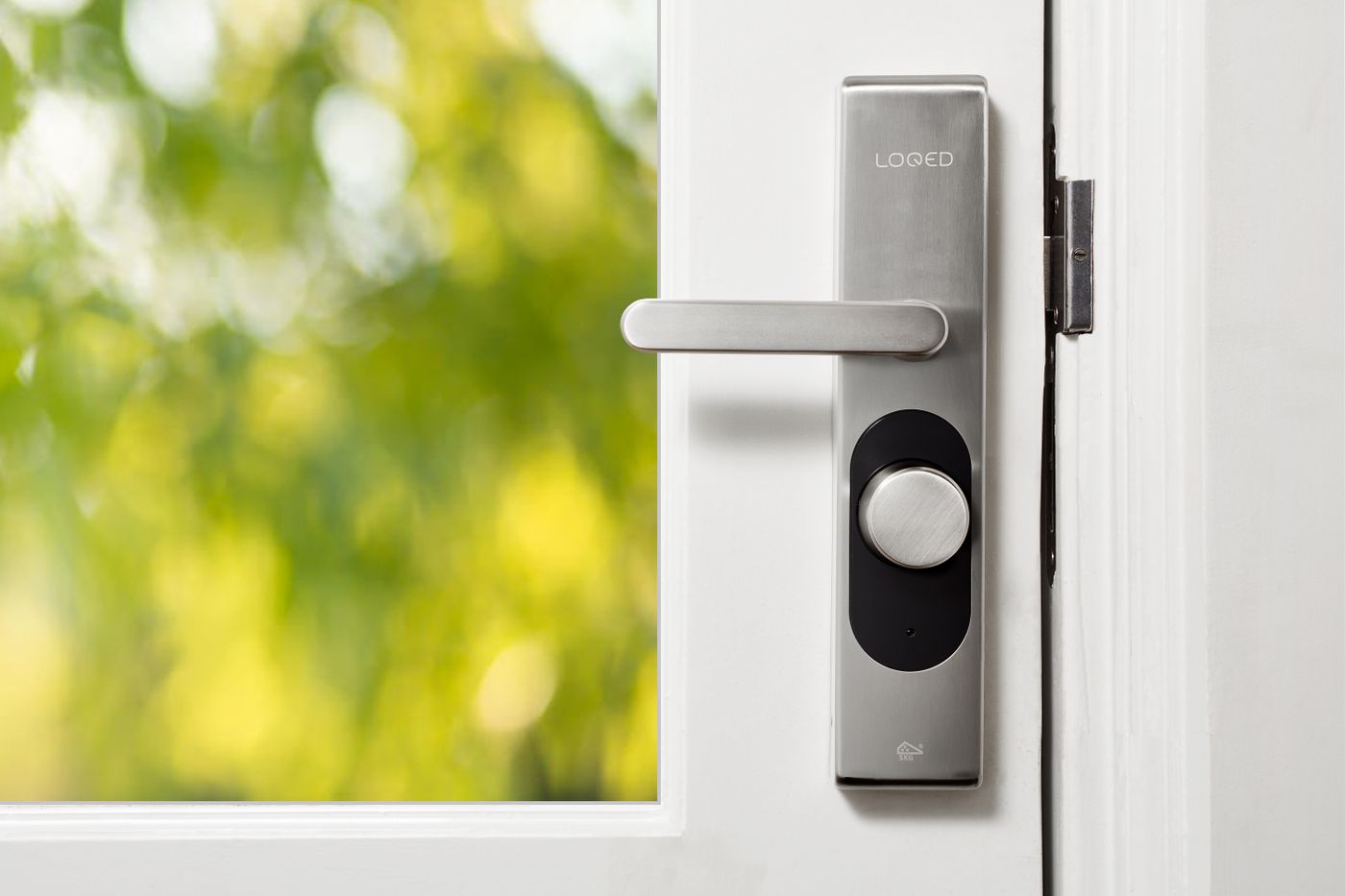
A smart lock can fit one door and fail to suit another that looks similar. Cylinder type, fittings, clearances and the way the door locks matter alongside the product name. Assess the existing door before allowing a feature such as automatic unlocking to drive the purchase.
The mechanical door must work first
Use the ordinary controls to check that the door closes and locks without unusual resistance. If it needs lifting or strong pulling, have the cause assessed. A motor is not a repair for a distorted or poorly adjusted door. Notice whether the behaviour differs with the door open and closed.
Record whether a handle must be lifted before locking and whether the inside uses a key or thumbturn. A product that rotates a key does not automatically perform every additional mechanical movement. Use the specific manufacturer's compatibility process and supply requested measurements or photographs securely when needed.
Allow room for the device and people
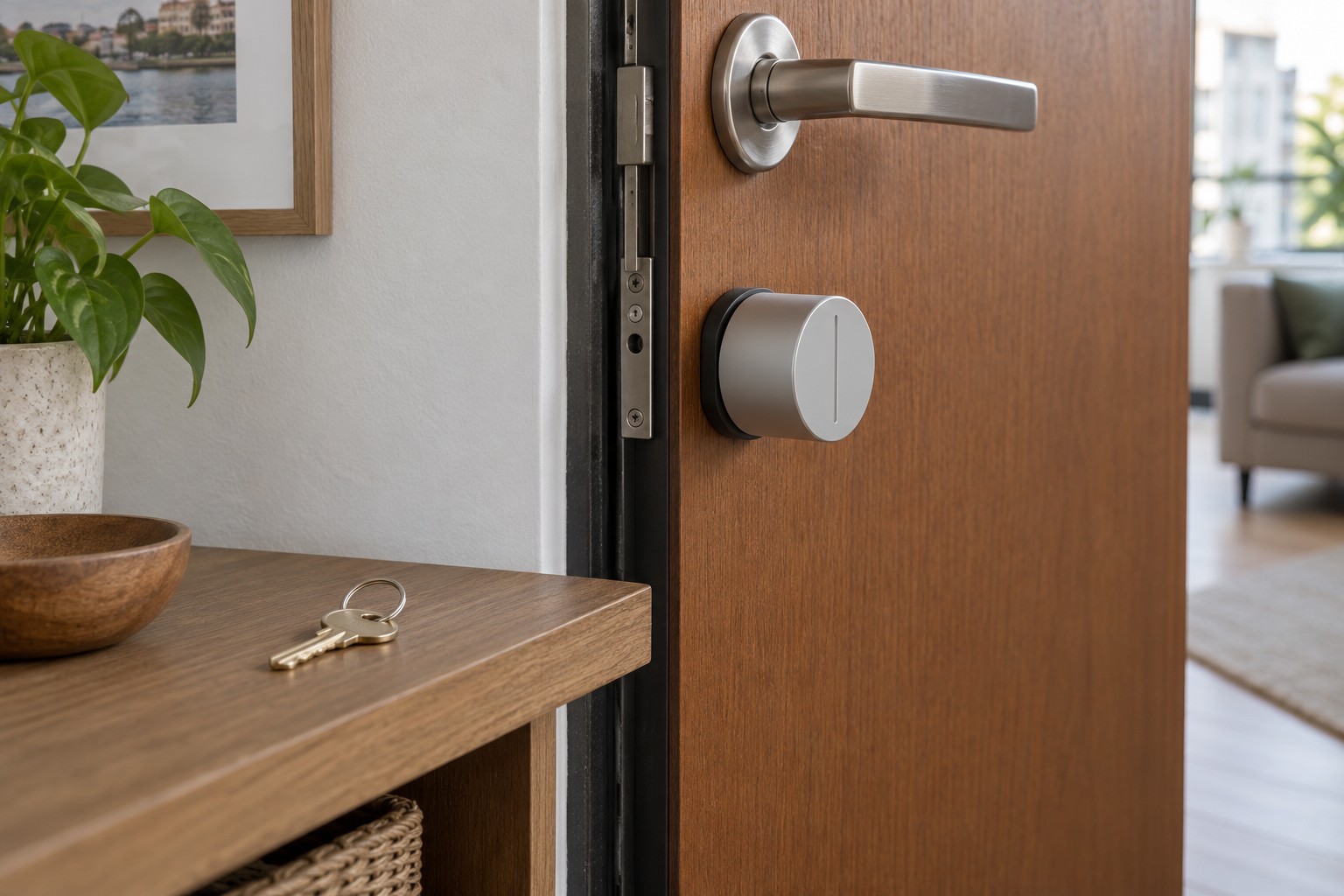
Measure the relevant clearances as directed for the selected model. The motor housing must not collide with the handle, frame or another door. Check the full opening angle and battery access. A technically fitting case can still make daily use awkward if the handle becomes difficult to reach.
Mounting is model-specific too. A clamp, adhesive surface and replacement component can have different requirements. Do not modify rented, shared or specially regulated doors without establishing who is responsible. A qualified locksmith or installer can assess uncertain mechanical details.
Do not assume an outside key will work
Some retrofit systems leave a key inserted inside. The cylinder must then support the intended operation from outside. An emergency function is a property of the particular cylinder, not something every door has. Follow the documented check with the door open so the experiment cannot lock you out.
Backup operation belongs in the purchasing decision. Another smartphone does not help if the lock motor itself has no power. Examine the documented responses to an empty battery, lost phone and failed home network separately.
Only after the mechanical checks should you consider the ecosystem: which hub or app is required, what works locally and what depends on a remote service? Appropriate wireless technology cannot make an unsuitable mechanical lock fit. Equally, a neatly mounted device is not yet a complete access plan for everyone in the household.