Choosing a bedside reading lamp
The useful detail is not the size of the lamp, but where its beam falls and whether you can reach the controls from bed.
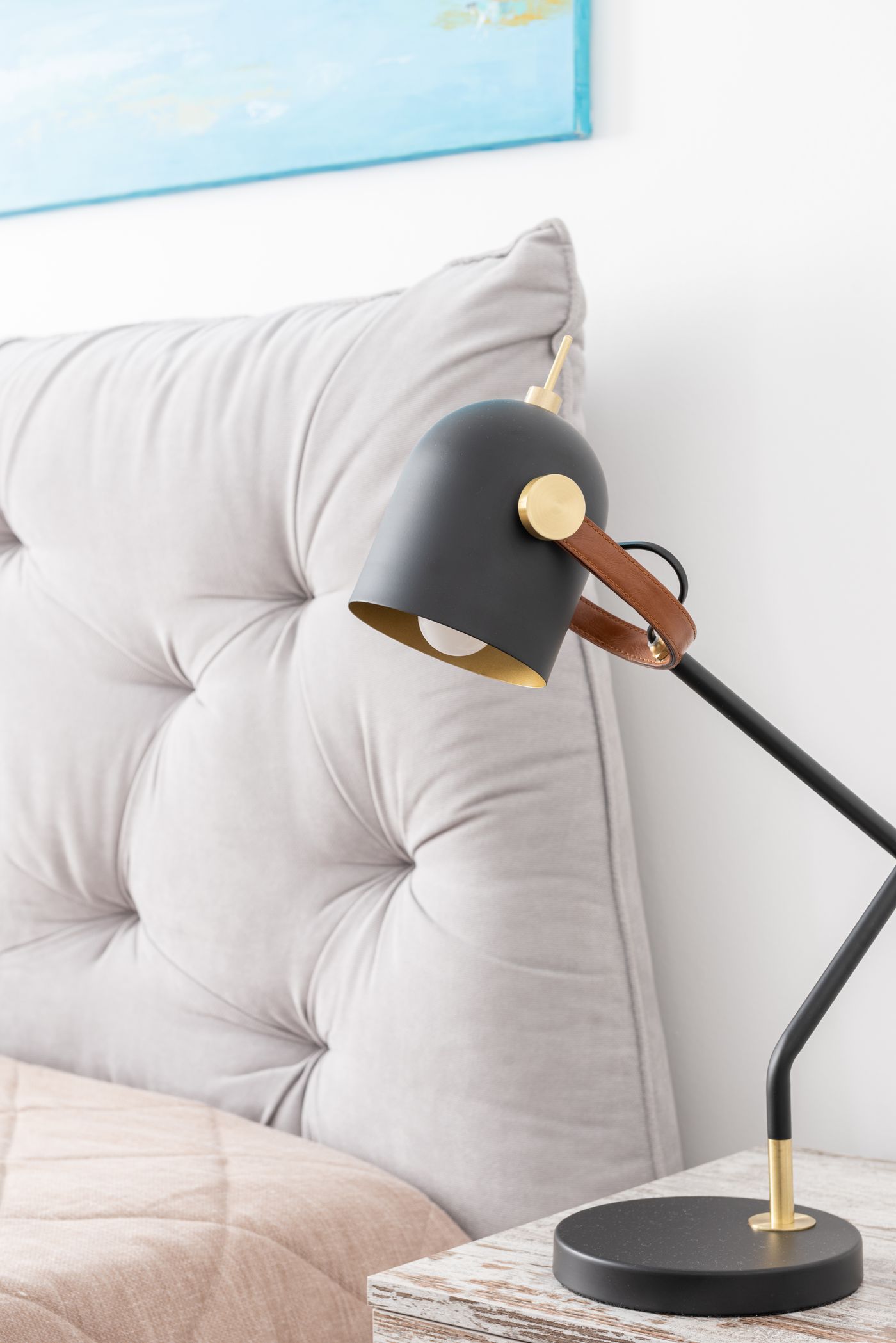
A lamp can look right on a bedside table and still be awkward to read by. Its bare light source might shine towards your eyes while the page stays in shadow. Alternatively, the switch may sit so far behind the base that switching it off means sitting up again. Treat the bed, table and normal reading position as one arrangement rather than choosing the lamp in isolation.
Start by sitting with a book as you normally would. Pillow height changes the viewing angle considerably. A bulb that is hidden when you stand beside the bed may be visible from a lower position. If someone shares the bed, check the view from that side as well. A lamp aimed accurately at one reader can still send unwanted light towards the other.
Put the beam where the book will be
An adjustable head or arm gives you a way to direct the light. Check that the joint holds its position rather than slowly drooping. A heavy head on a very light base can also become unstable when extended. The whole base should rest on the table, with enough room that picking up a book does not knock it towards the edge.
If you often read magazines, try a glossy page under the proposed light. A bright reflection may disappear with a small change of angle. Simply increasing brightness will not necessarily help. An opaque shade can shield light from the side, but its shape also affects how much of the open book is illuminated.
Match the bulb and the controls
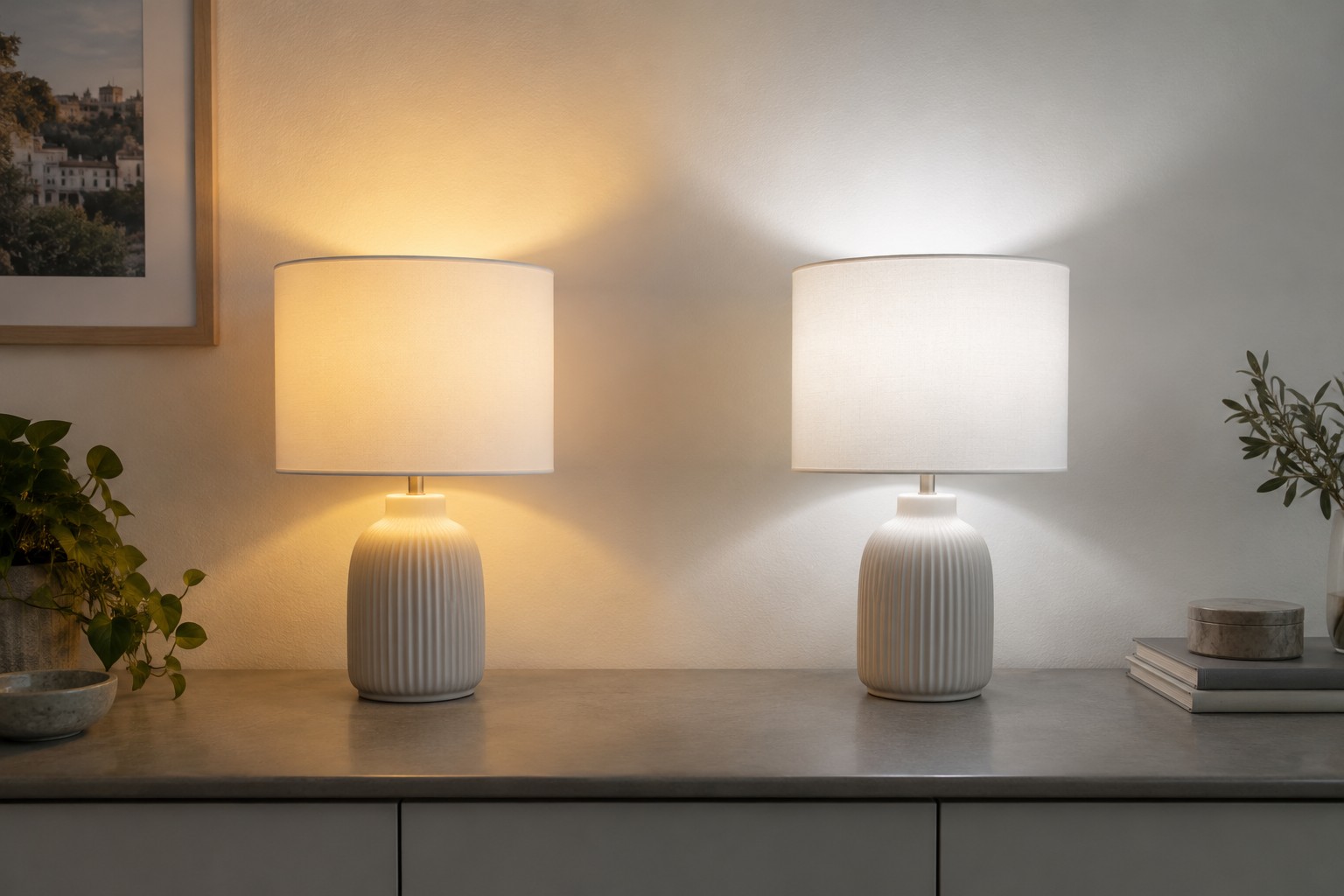
Lumens describe light output, watts describe electrical power and kelvin describes the appearance of the light's colour. They answer different questions. Do not compare an old bulb and a new one solely by wattage. The fitting, physical dimensions and permitted power must also suit the lamp. If there is a dimmer, check that the lamp and bulb combination is explicitly suitable for dimming.
There is no single brightness that fits every bedside arrangement. Distance, shade design and individual visual needs all change the result. Try the intended light source where possible. Dimming gives you an adjustment, but it does not replace a well-directed beam or shielding from a visible bulb.
Can you reach the switch with one hand without pulling the cable? An inline switch needs to remain accessible rather than falling behind the furniture. Route the cord away from moving bed mechanisms. A wall-mounted lamp frees table space, but its mounting method and the wall must be suitable. Fixed electrical installation work should be handled by a qualified professional.
Finish with a short rehearsal: pick up the book, turn the light on, change your sitting position and switch it off. If the page stays illuminated and the controls remain easy to reach, the arrangement is doing its job. That everyday sequence tells you more than whether the lamp looks attractive in a product photograph.