How a lampshade changes the light
Material, openings and shape determine where light goes and whether the source remains visible.
A new shade changes more than a lamp's appearance. It can transmit light sideways, direct it downwards or hide the source from particular angles. Replacing a shade therefore changes the lighting effect, not just the decoration.
Observe the existing shade while the lamp is on. Which surface should become brighter or less conspicuous? For reading, the light reaching the book matters. For background illumination, the wall and surrounding room are more relevant. These jobs can call for different materials.
Transmitting or shielding
A pale translucent fabric sends some light sideways. An opaque metal shade directs more through its openings. Dark fabric may transmit considerably less sideways light than a pale fabric of similar shape. The actual result also depends on lining, thickness and the bulb.
Check the openings from your normal seated position. A broad lower opening may illuminate a table well but also expose the bulb directly when the lamp is tall. A small shade is not automatically less glaring. Position and shielding need to work together.
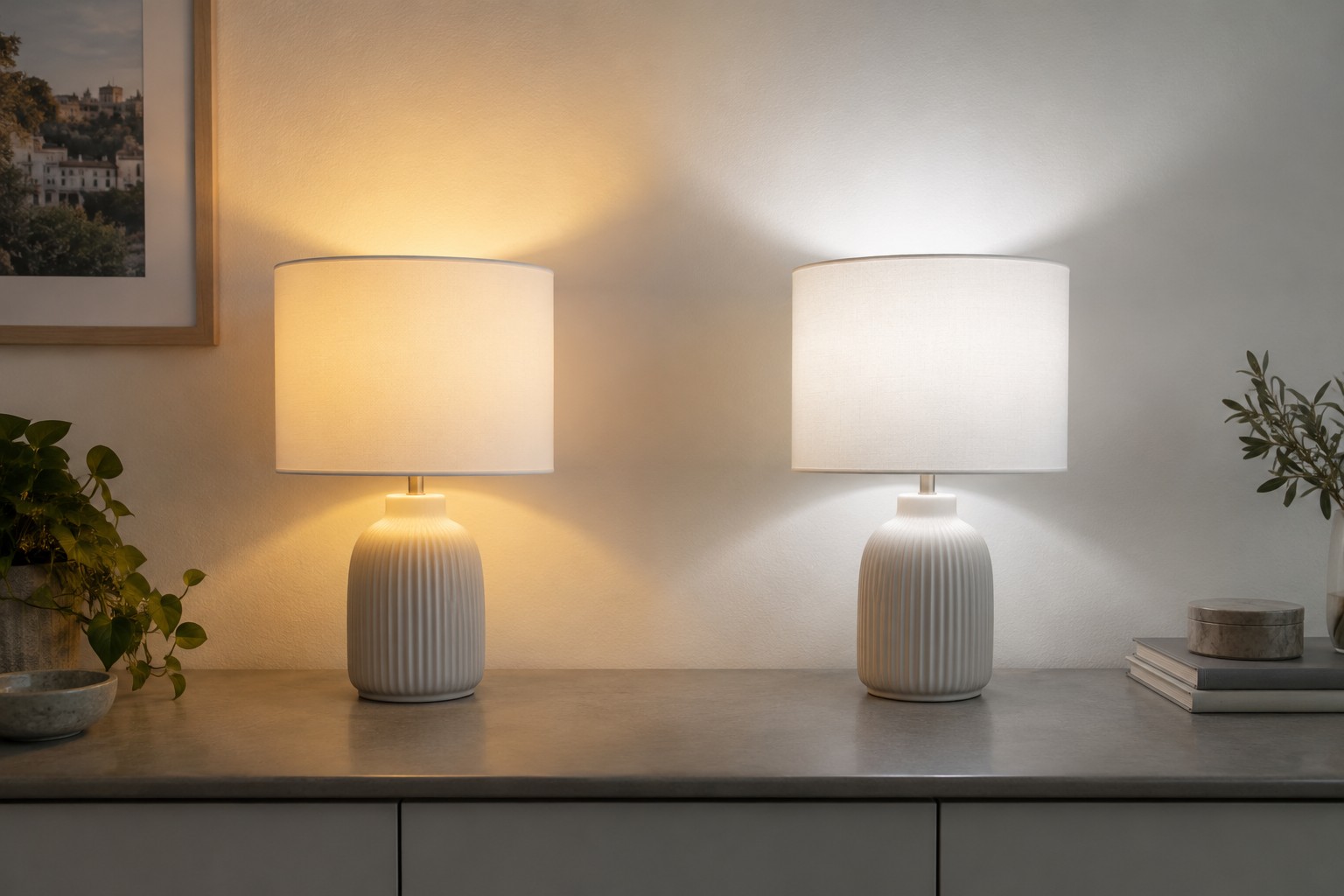
The shade's colour can influence the perceived colour of the light too. Do not compare unlit fabric samples alone. A warm-toned lining changes reflected light, while a white shade can look different with different bulbs. Keep the bulb unchanged during the comparison if you want to judge the effect of the shade itself.
Mechanical and heat limits
A replacement must suit the lamp's intended fixing and weight limits. Check the required retaining ring or adaptor against the documentation. The shade must not rest on the bulb unless the system is specifically designed for that arrangement. Bent improvised brackets and loosely wedged parts are not suitable fixings.
Follow the specified clearances and maximum power. LEDs and their electronics still produce heat. A very tight shade or an opening that has been closed afterwards can change operating conditions. Do not cover the fitting with extra fabric or paper to create a preferred colour.
Disconnect the supply and allow the parts to cool before changing the shade. Then test the replacement from several viewing angles while doing the actual task. If it illuminates the intended surface less effectively, a brighter bulb within the same unsuitable geometry may not solve the underlying problem.