Choosing between warm and neutral white light
Kelvin describes a light's colour appearance. It does not tell you how bright the lamp is or whether it suits every room.
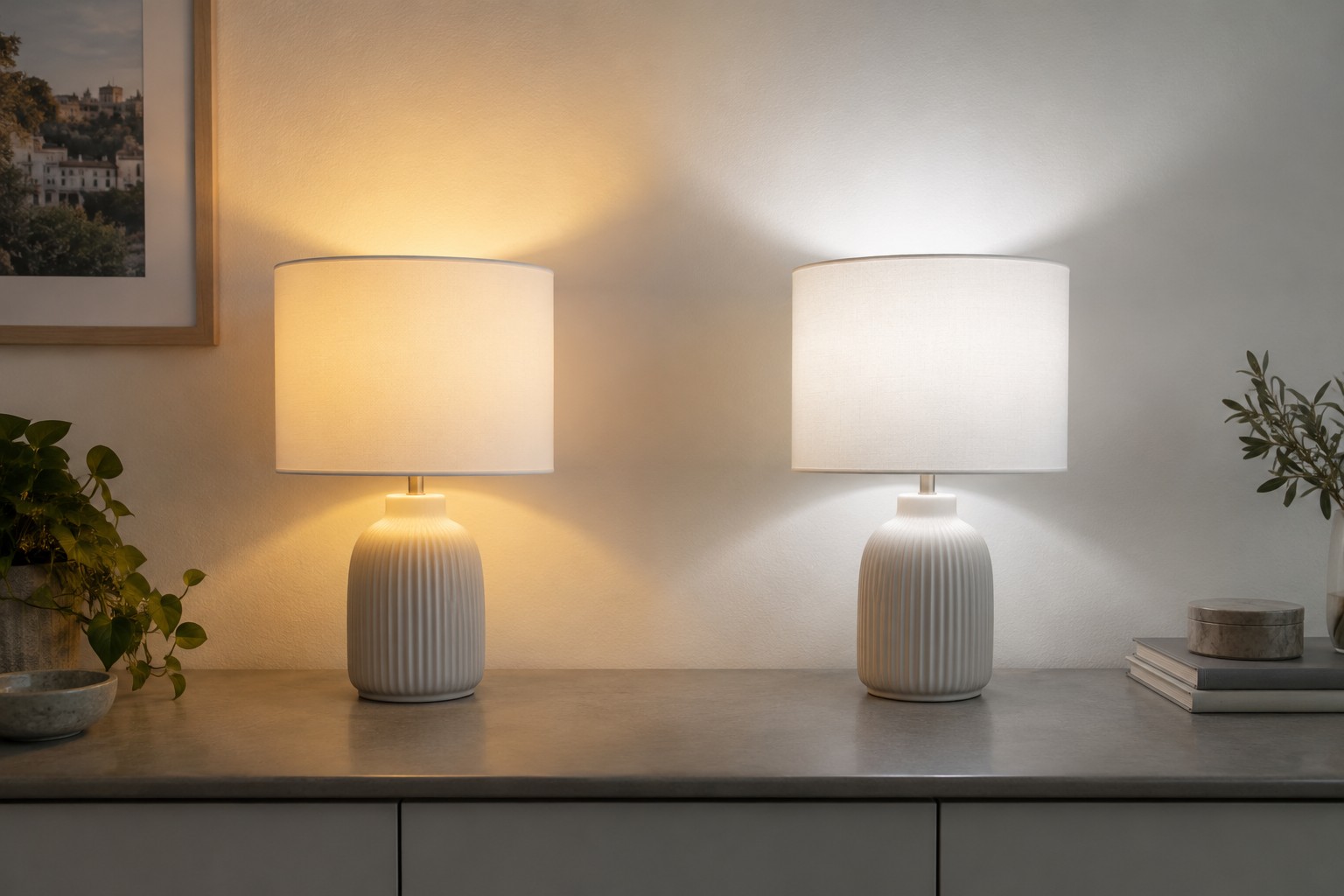
Two lamps can have the same lumen output yet look quite different. One may appear more yellow and the other more neutral. For white light sources, this appearance is described using colour temperature in Kelvin. Lower values generally look warmer and higher values cooler, although packaging descriptions do not always use identical boundaries.
Keep at least three specifications separate when choosing a lamp. Lumens describe light output, watts describe electrical power consumption and Kelvin describes colour appearance. A higher Kelvin figure does not automatically mean a brighter lamp. It also does not tell you everything about how accurately the light renders the colours of objects.
Compare in the actual room
If you are uncertain, try one suitable bulb in its intended location before replacing a whole set. Turn off other lights with different colour appearances during the comparison. Examine the same objects from the same position: a white wall, timber, fabric and a printed page. Photographs are a limited substitute because a camera's automatic white balance can change the apparent difference.
Warm white may suit an evening sofa corner, while someone at a worktable may prefer a more neutral appearance. This does not justify assigning one mandatory value to every type of room. Wall colours, daylight, shades and personal preferences all affect the result. A dark, warmly painted wall can look different from a white tiled surface under the same bulb.
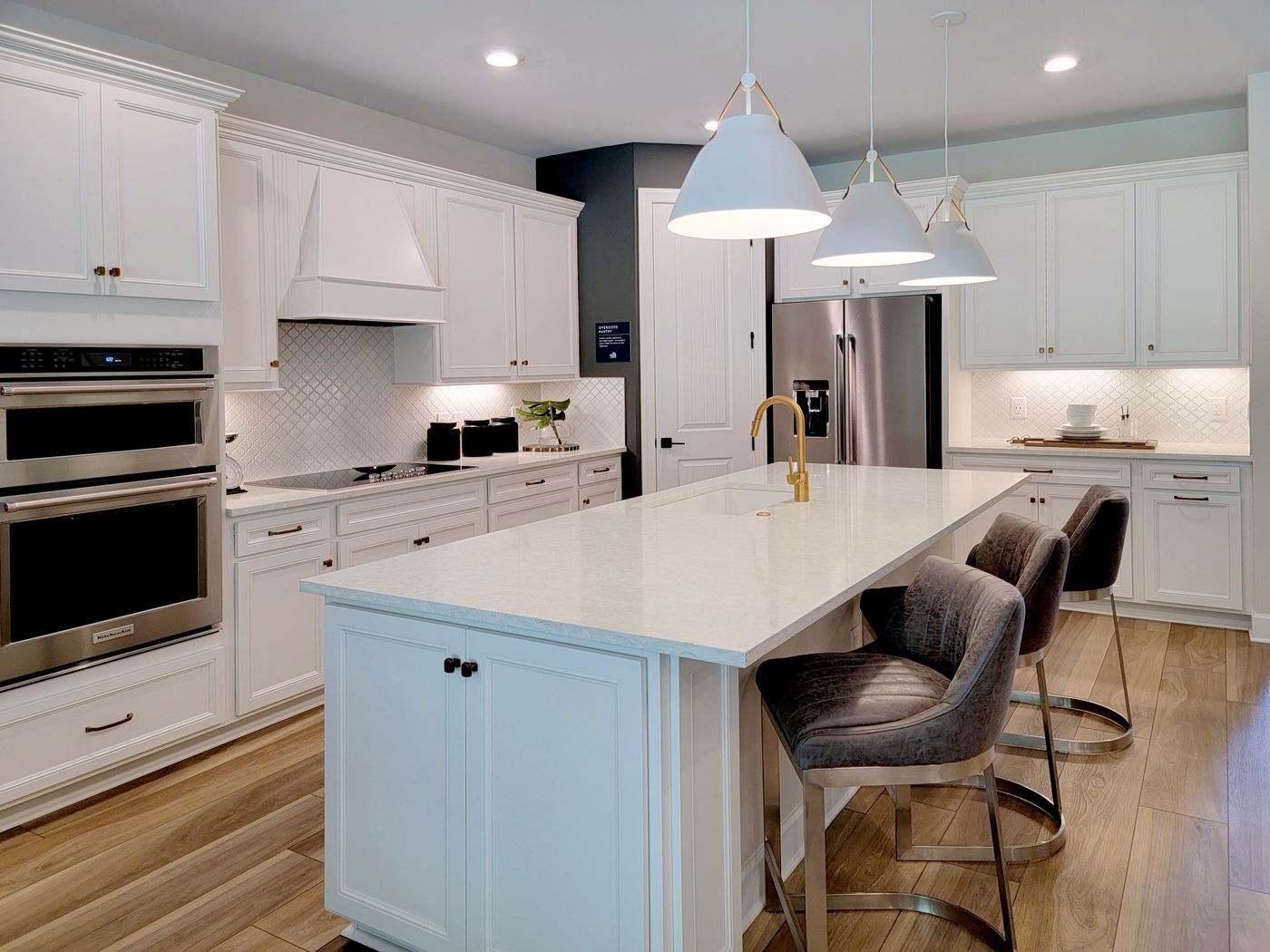
Differences are particularly noticeable within one visible group. When replacing three exposed bulbs in a fitting, a matching set is usually easier to coordinate than three unrelated models. Keep the exact product identification if you may need to replace just one bulb later.
Make adjustable white light purposeful
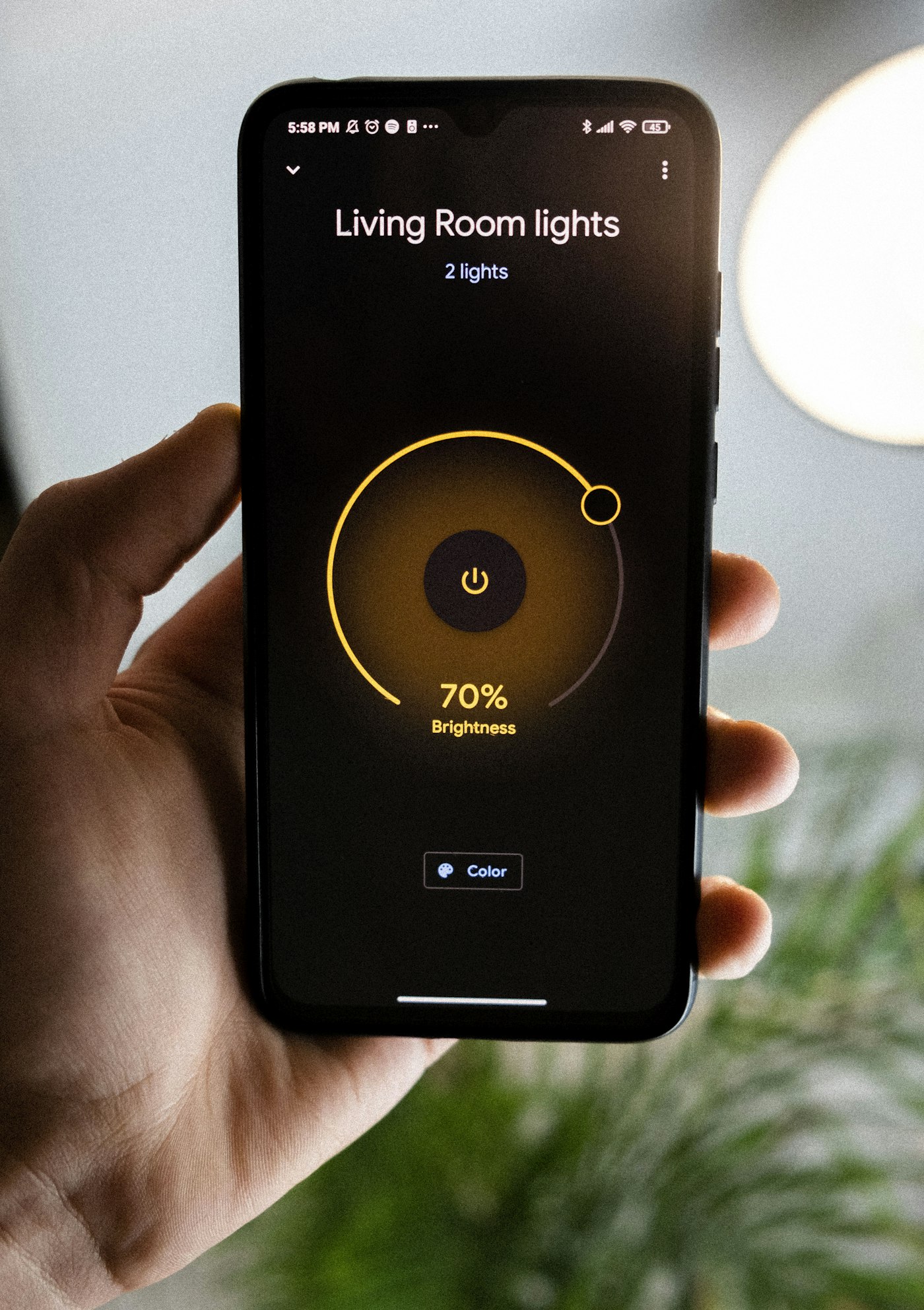
A fitting with adjustable white light can support several activities. Save a few understandable settings, such as reading and background lighting. Compare brightness as well as colour: some products have different maximum outputs at different white settings. The highest lumen figure on the packaging may not apply throughout the adjustment range.
If you have already found a fixed colour temperature that works, an adjustable product is not automatically an improvement. It adds controls, but also settings that other household members need to understand. Choose it for a real use rather than simply for the number of available variations.
Avoid drawing sweeping conclusions about concentration, sleep or health from colour temperature alone. For an ordinary home lighting choice, begin with questions you can actually check: are the intended surfaces clearly visible, do their colours look suitable, and can you use the light without glare?