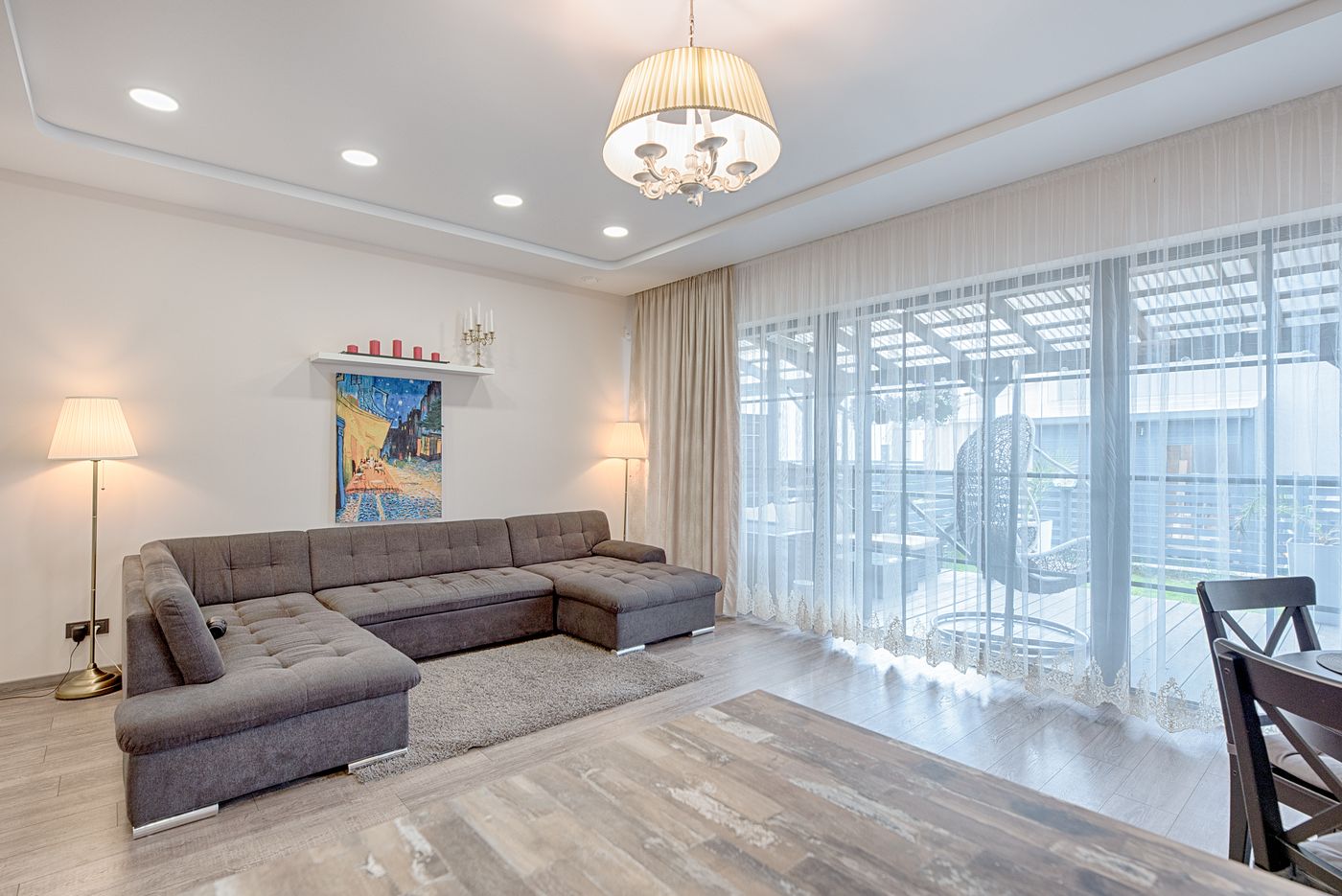
Reducing glare from ceiling lights
The problem is often a direct view of a small, bright source rather than a bright ceiling itself.
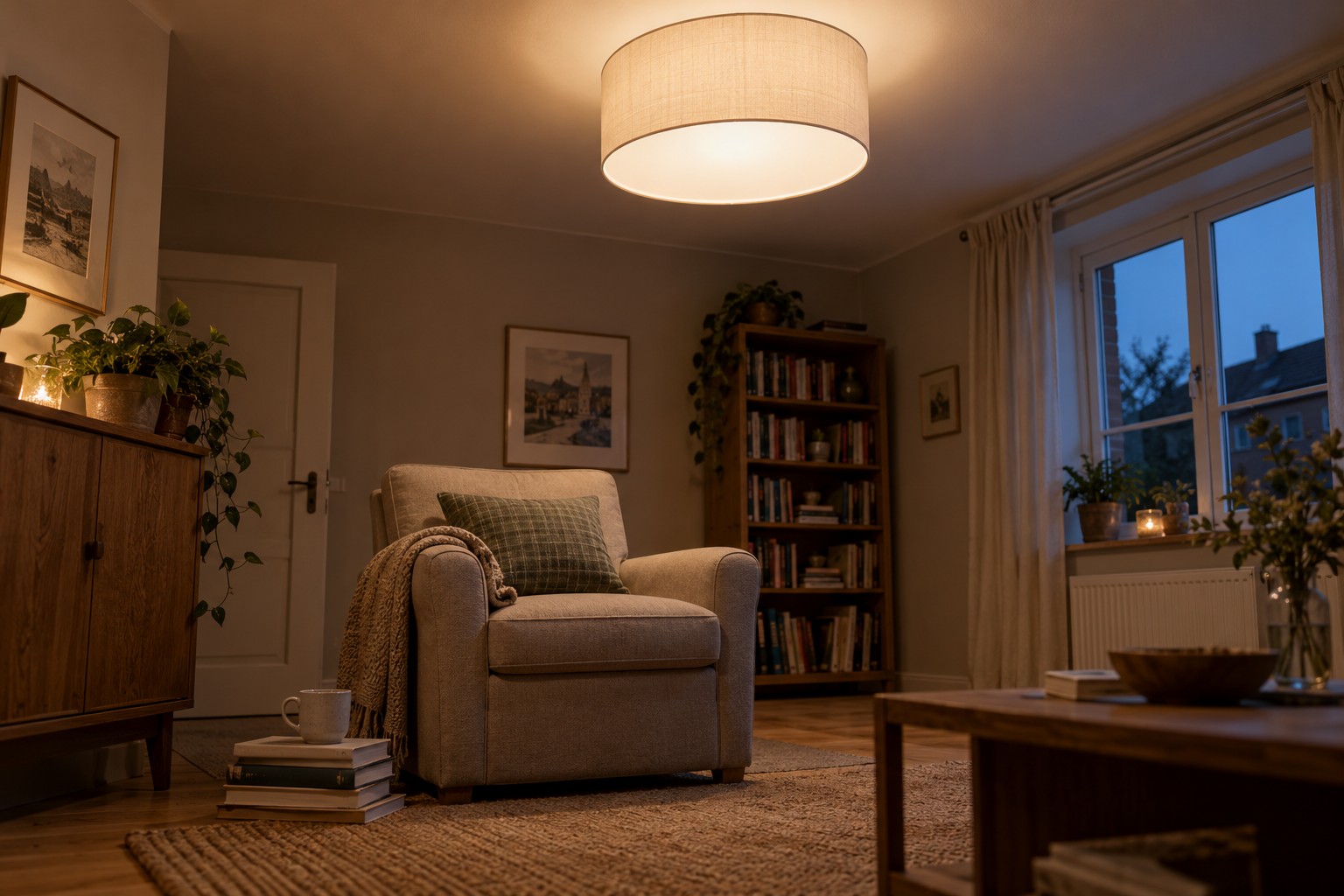
If a ceiling light feels uncomfortable while seated, distinguish the exact situation first. Are you looking directly at a bright LED surface? Is the fitting reflected in the television? Or does the whole room feel excessively contrasty? These observations point towards different solutions.
Inspect the light from normal seats rather than only standing beneath it. Reclining changes the viewing angle considerably. An angled spotlight may point directly at a sofa position even though it looks unobtrusive from the doorway. If its head is designed to move, direct it towards an appropriate surface instead of the occupied area.
A reflection or a direct view?
For a distracting reflection on a display, temporarily adjust the light angle or screen position. Notice which change removes the reflected source. Lower brightness may reduce the effect without correcting the geometry. Glossy tables and framed glass can reflect light as well.
If the source itself is too exposed, a fitting with appropriate shielding or a diffuse luminous surface may be more suitable. Adding an improvised paper or fabric cover is not a safe solution. Use only covers intended for the product and respect heat clearances. Have fixed alterations assessed professionally.
Sometimes the ceiling fitting is the only light in an otherwise dark room. Modest supplementary wall or table lighting can reduce the contrast. That does not mean switching on more light everywhere. The purpose is a more suitable distribution between occupied areas, walls and background.
Dimming as one part of the answer
Suitable dimming can help when a fitting is much too bright for a particular activity. Check compatibility between bulb, driver and control first. Flicker or unstable operation at low settings is not an unavoidable effect that should simply be accepted.
Assess multiple spotlights individually. Perhaps only the one pointing towards the sofa needs adjustment while the others illuminate the room usefully. Reducing every light together could otherwise leave a work surface unnecessarily dark.
Finish with a typical evening in the room. Watching television, reading and talking involve different viewing directions. A successful change reduces the specific disturbance without making another important area unusable.