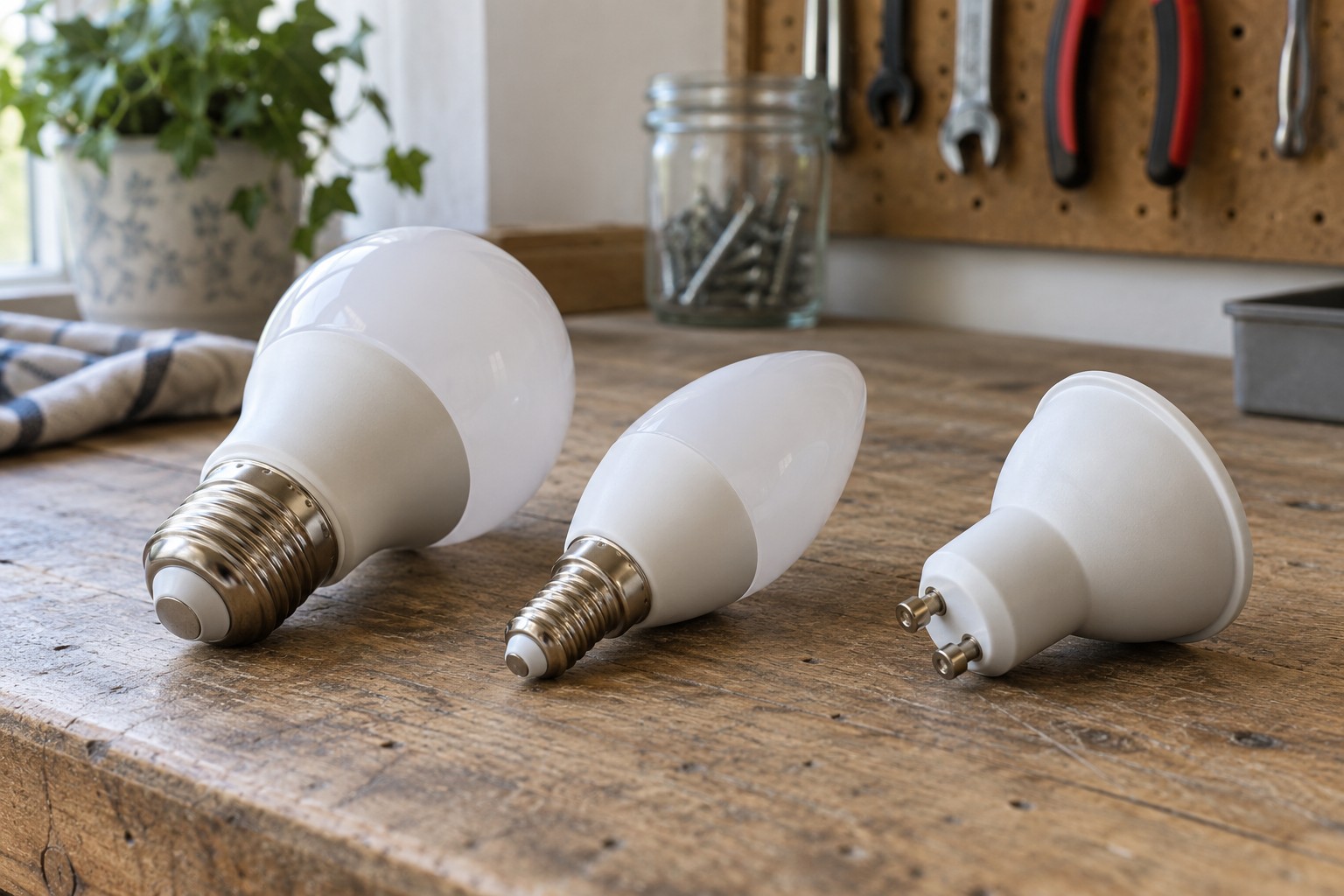
Investigating a flickering dimmable lamp
Flicker does not always mean a failed LED. The bulb, driver and dimmer need to be assessed as a combination.
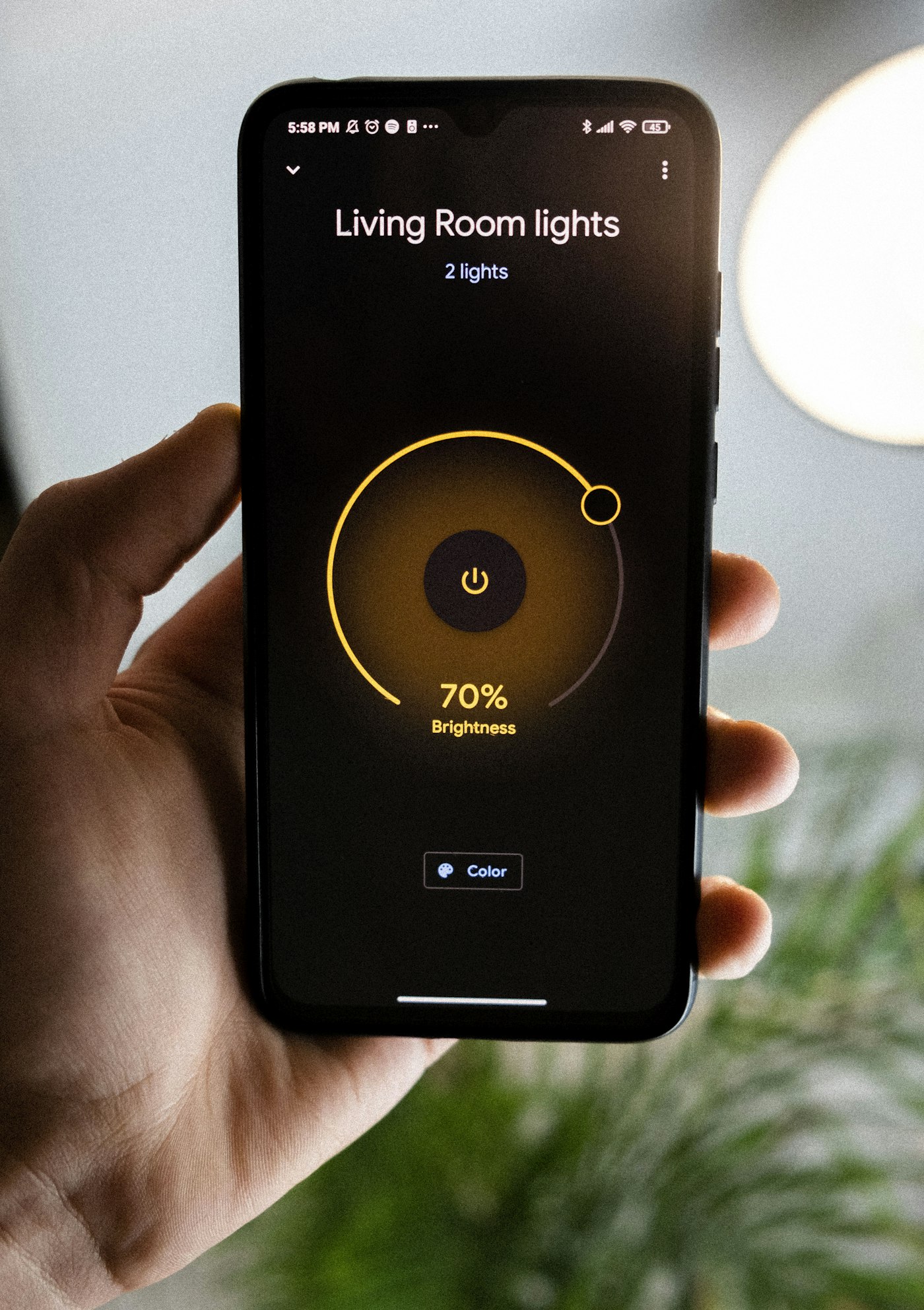
A lamp that flickers only at the bottom of its dimming range presents a different problem from several lights that suddenly become unstable throughout a room. First observe when the fault occurs without opening the fitting. Note whether it happens at switch-on, after the lamp has been running for a while or only below a particular setting.
Stop using equipment that produces a burning smell, sparks, discolouration, damaged parts or an unusually hot switch, and arrange a professional inspection. Repeated switching or swapping random components is not an appropriate investigation in that situation. Work on fixed wiring is also outside the scope of these everyday checks.
Identify the exact combination
Record the bulb model and the accessible identification on the fitting. Look in the documentation for a dimmable marking and a compatibility list. An LED can fit the socket while being unsuitable for the existing dimming technology. Philips explicitly explains that even dimmable LEDs require a compatible dimmer.
A fitting with integrated LEDs also depends on its driver. It may not have a user-replaceable bulb at all. Low-voltage systems add further supply requirements. Use the instructions for the exact model rather than those for a fitting that simply looks similar.
Distinguish a conventional wall dimmer from a smart bulb that adjusts brightness internally through wireless commands. Combining both methods is not automatically supported. Setting the wall control to maximum does not replace explicit compatibility approval. If the existing installation cannot be identified confidently, ask an electrician to assess it.
Useful observations without dismantling
Try normal operation at a medium setting and then a high one. If instability occurs only at the bottom, you may have reached the combination's usable minimum. Some compatible dimmers provide a documented minimum-level adjustment. Their instructions determine whether and how this can be changed; do not experiment with concealed electrical adjustments.
With a multi-bulb fitting, establish whether one bulb flickers or the whole group does. Different bulb models within the same group can behave differently. If replacing a bulb is an intended user operation, isolate the supply, allow it to cool and use a suitable replacement within the fitting's limits. Follow the instructions rather than bending contacts or modifying the lampholder.
A phone recording is not a reliable sole test for visible flicker. The camera and light can interact through their timing, creating bands or fluctuations in the recording. Observed behaviour and appropriate testing matter more than one video. A recording can still be useful for showing a fault that appears only intermittently.
Give support useful information
A manufacturer or electrician can do more with specific details than with a general statement that the LED is poor: model numbers, the number of bulbs, the installed dimmer, when the problem begins and which setting triggers it. Mention any recent replacement of a bulb, fitting or switch.
A satisfactory arrangement does not need to achieve every dimming level advertised for an unrelated lamp. It needs to be an explicitly suitable combination that operates steadily across the range you want. If reaching that result requires a different dimmer or fitting, plan the change rather than hiding the problem beneath increasingly complicated temporary settings.