Planning light above a dining table
Table shape, seating positions and an extension leaf matter more than a universal hanging-height rule.
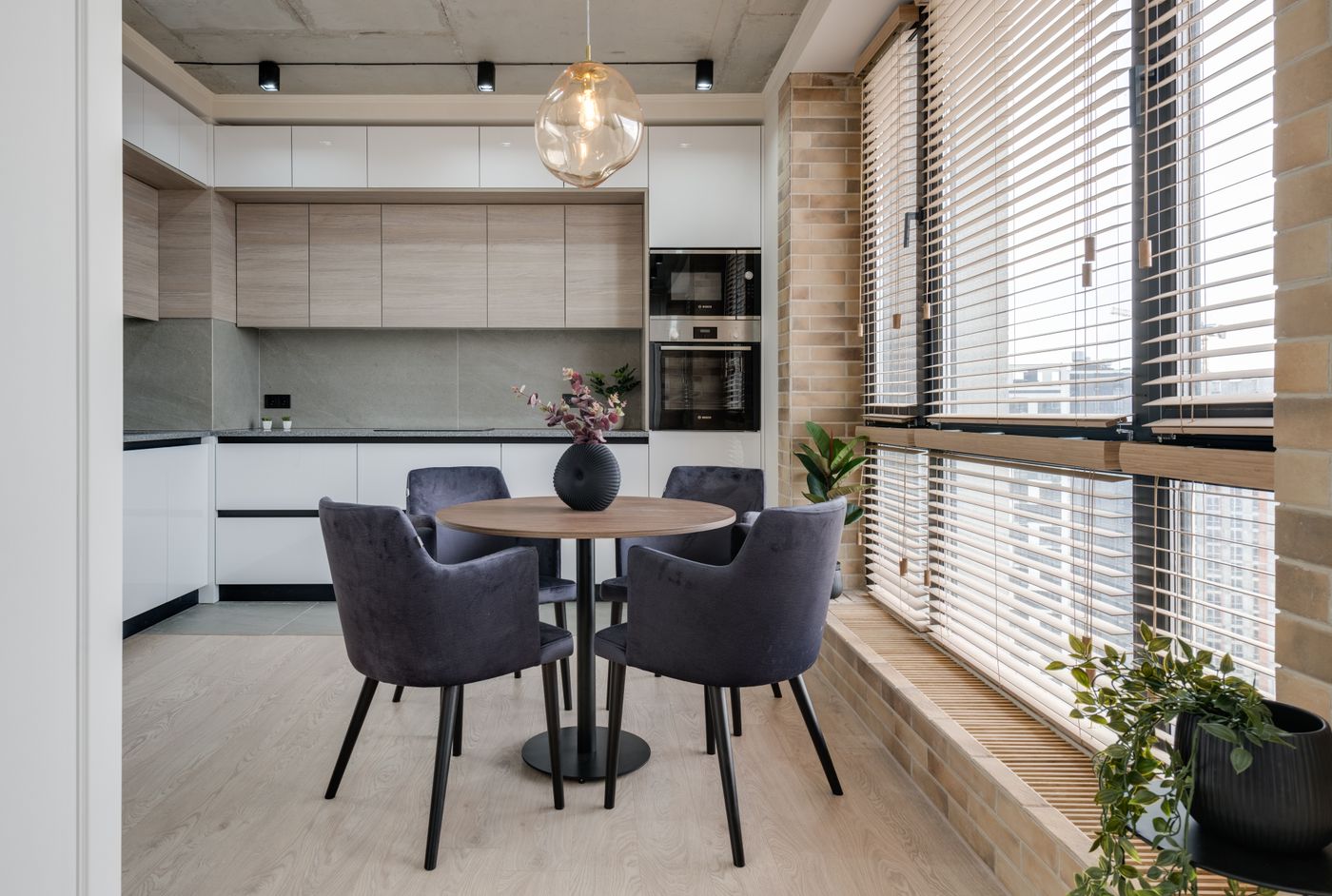
A dining light is often selected around the centre of the table. That centre can change when an extension leaf is added or the table moves to accommodate guests. Draw the usual table footprint and the largest arrangement you regularly use. This helps establish whether one fitting, several light sources or a longer distribution of light makes sense.
Include the routes around the table. A low pendant that is safely above the tabletop may hang in a walking route after the furniture is moved. The plan needs to suit the way the room is used, not just a symmetrical view from the doorway.
Judge it from the seats
Sit in each normal position. Can you see the person opposite without looking around the shade? Is the bright source directly visible? Does it reflect in the tabletop or a glazed surface? A published hanging-height suggestion cannot replace these checks because fitting shape, ceiling height and seated eye level vary.
An opaque shade open underneath can strongly emphasise the tabletop while leaving the rest of the room relatively dark. A translucent shade spreads more light sideways. Either may suit the room, but they perform different jobs. If the table also serves for homework or making things, include a setting that illuminates its edges rather than just the centre.
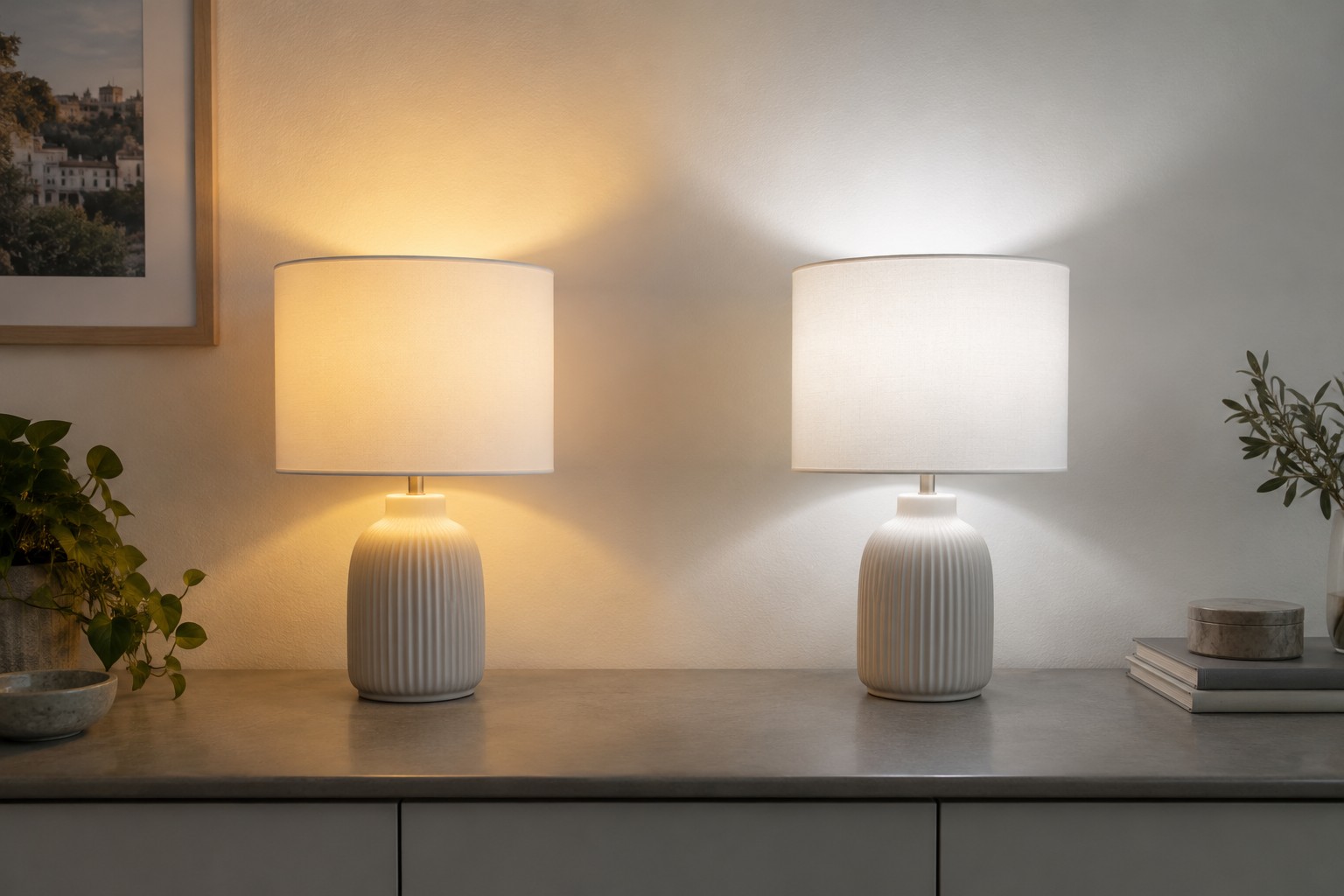
Colour temperature describes the appearance of the light, not its brightness. Compare the Kelvin figure separately from the lumen output. Where several bulbs are used, check that their intended colour temperatures match if a consistent appearance is wanted. Marketing descriptions such as warm or cosy are less precise than the actual specification.
Think about controls and mounting
A suitable dimming range helps the table serve different activities. Check the full combination of fitting, bulb, driver and dimmer, however. A dimmable bulb does not automatically work with every existing wall control. Testing both low and high settings can also reveal uneven light or unwanted noise.
Mounting and fixed electrical installation should be carried out professionally. A heavy or widely projecting fitting needs an appropriate supporting structure. Decide the desired position before altering a connection; a cable stretched under tension is not a solution to an unsuitable hanging point.
Assess the finished arrangement with the table set for a meal and again during a normal working task. Shiny crockery, dark timber and a pale tablecloth change the reflected light. If the surface remains clearly visible and people can talk without glare, the fitting is doing its job without needing a dramatic effect.