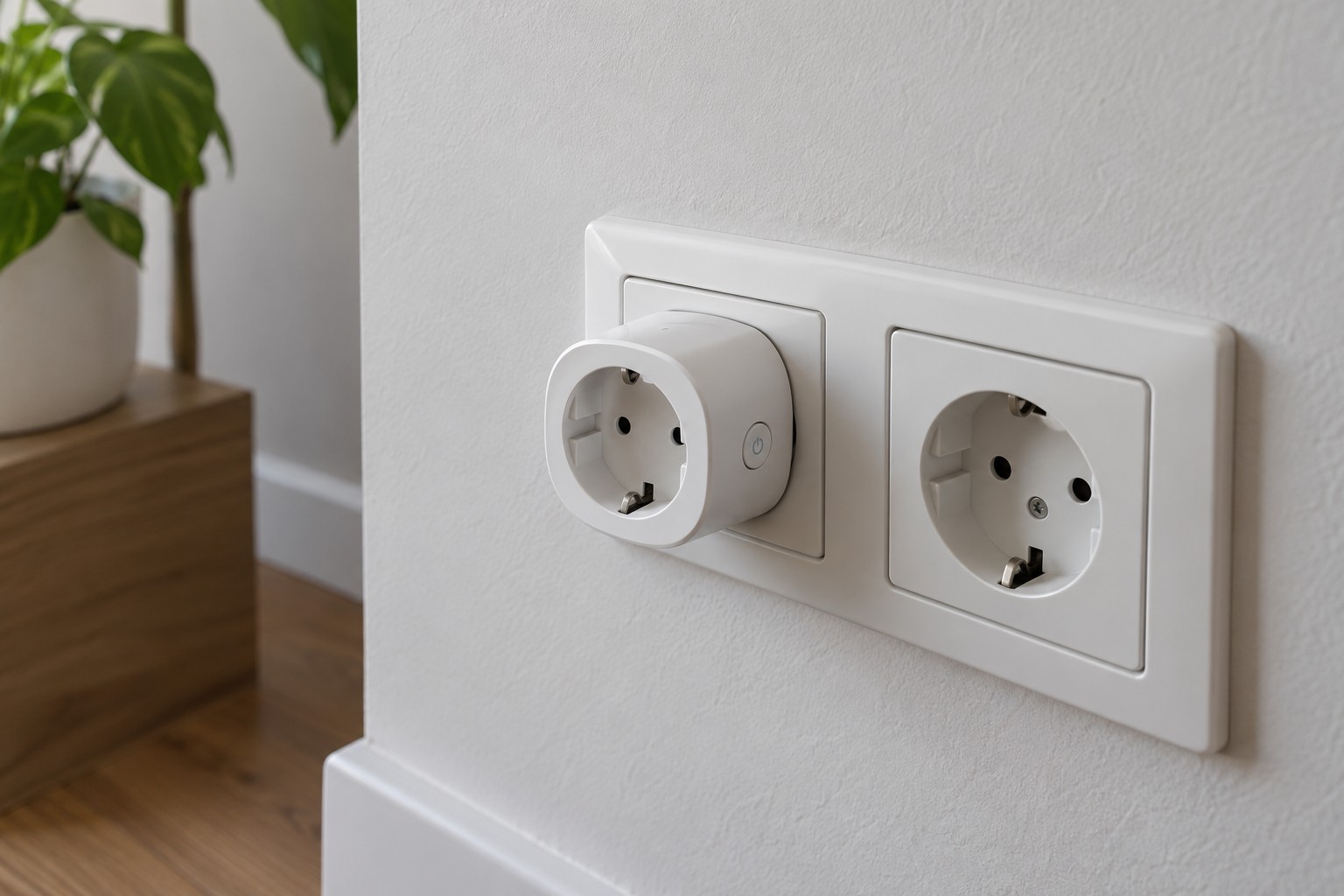
Using a plug-in energy monitor
Instantaneous power and accumulated energy answer different questions. A useful measurement starts with a defined observation period.
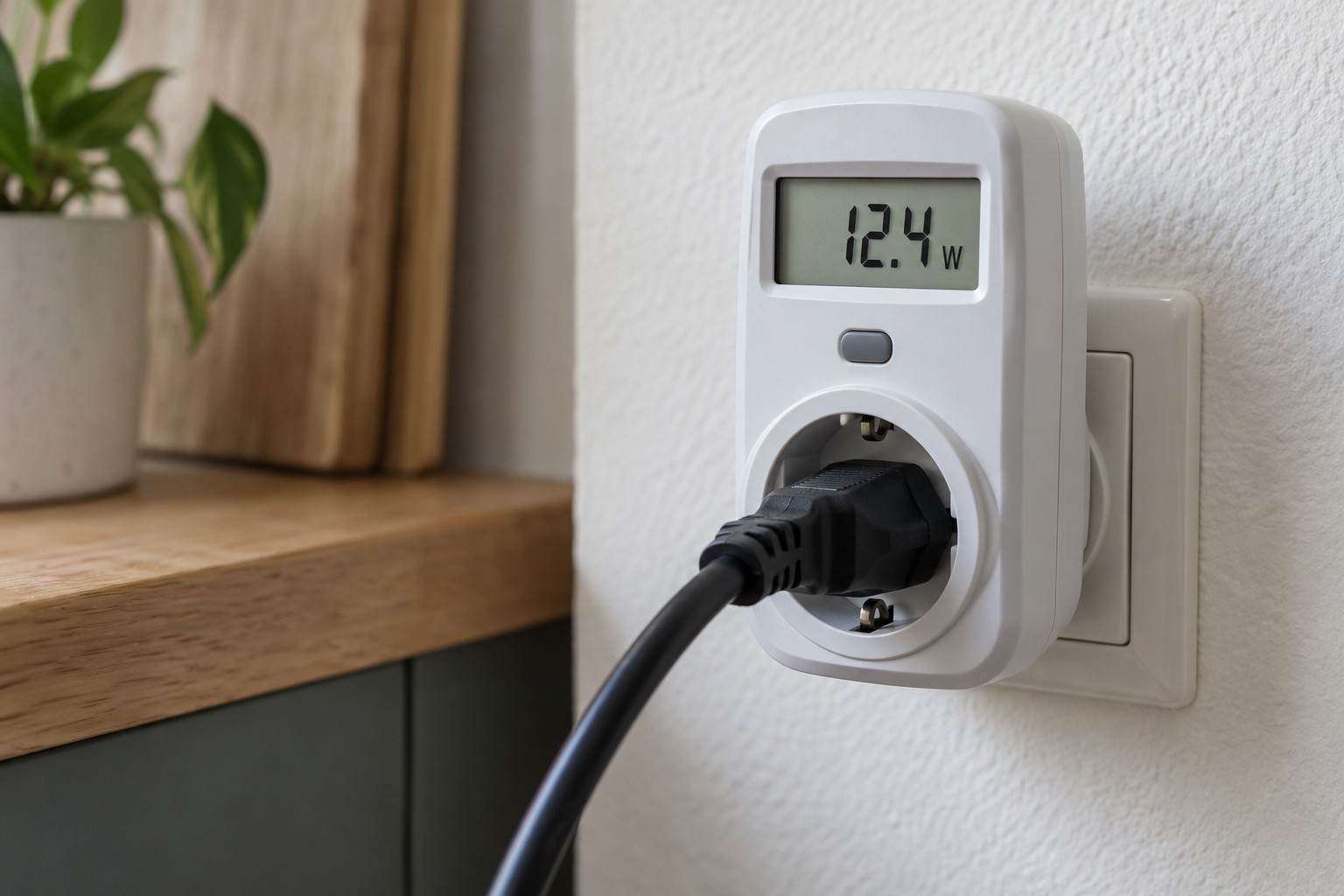
The numbers on a plug-in electricity monitor change as an appliance works. Without a specific question, that can be interesting but difficult to interpret. Are you investigating a complete operating cycle, consumption while idle, or the difference between two settings? Choose one question before connecting the meter.
Check that the meter is suitable for the appliance. Permitted voltage, current, load type and operating environment must all match. A plug-in monitor is not a tool for working on permanently wired equipment or inside a distribution board. Follow both sets of instructions and leave unsuitable or uncertain connections alone.
Watts and kilowatt-hours are different readings
A watt reading describes power at that moment. Kilowatt-hours describe energy used over time. A short high reading can therefore contribute less total energy than a small demand sustained for a long period. Also check whether the screen is showing current power or a stored maximum: the units alone may not distinguish those modes.
To measure a complete activity, reset the accumulated energy counter as instructed and record the start time. Let the intended activity run to a clearly defined finish. If you include an idle period afterwards, note how long it lasts. Otherwise, the next measurement may cover a different window and the comparison becomes misleading.
Keep the comparison fair
When comparing two settings, change only the relevant setting. A computer should not be downloading large files during one trial but sitting idle during the other. Different picture content and brightness can influence a screen's consumption. Record the activity and conditions alongside the energy figure. A paper table with date, duration, operating mode and kilowatt-hours is enough.
Repeat surprising results. At very low loads, the resolution or accuracy of a basic meter can make a substantial difference. A displayed zero does not necessarily establish that consumption is exactly zero. Read the specified measurement range rather than treating every decimal place as the basis for a precise annual calculation.
For an approximate running cost, multiply measured kilowatt-hours by the applicable unit rate in your electricity tariff. This does not include standing charges. Extrapolating to a year also assumes that the measured pattern repeats. Make that assumption explicit, especially if the observation covered only one day. Seasonal use and changes in household routines can make a short sample unrepresentative.
Turn the result into a decision
Higher consumption is not automatically wasted consumption. An appliance may be performing a function that you want to keep. Before switching it off, consider whether doing so would interrupt recordings, updates or another necessary task. Do not compare a single plug-in meter directly with the whole household bill; it measures only what is connected through it.
Save the result beside your original question. That makes it clear which part was measured and which part was estimated. Remove the monitor when finished unless ongoing measurement is intentional. The useful outcome is an explainable decision about a particular appliance, not simply a longer collection of numbers.
A worked example with explicit limits
Suppose a suitable appliance uses 0.12 kWh during a carefully recorded two-hour trial. Its average power over that period was 60 W. That does not mean the instantaneous demand remained at 60 W throughout. At an illustrative unit rate of €0.30 per kWh, the trial would cost €0.036. Use your actual applicable tariff for your own calculation; the example is not a current price quotation for your household.
If an equivalent activity happens five times a week, a weekly estimate would be five times 0.12 kWh. First check that the activities really are comparable, however. A long standby period between trials is not included in that calculation. Record separately which periods were measured and which remain outside the estimate. This small distinction often matters more than carrying the result to extra decimal places.
Before a second trial, check the meter itself. Did you reset only the cost display, or the energy counter too? Is the unit unchanged? Did an interruption erase the accumulated value? If the controls are confusing, photograph the starting and finishing displays beside a handwritten time note. A plausible result with an explainable start and finish is more useful than an apparently precise number whose observation period is uncertain.