Routing flat Ethernet cables near doorways
A flat cable still needs protection against crushing, sharp folds and trip hazards.
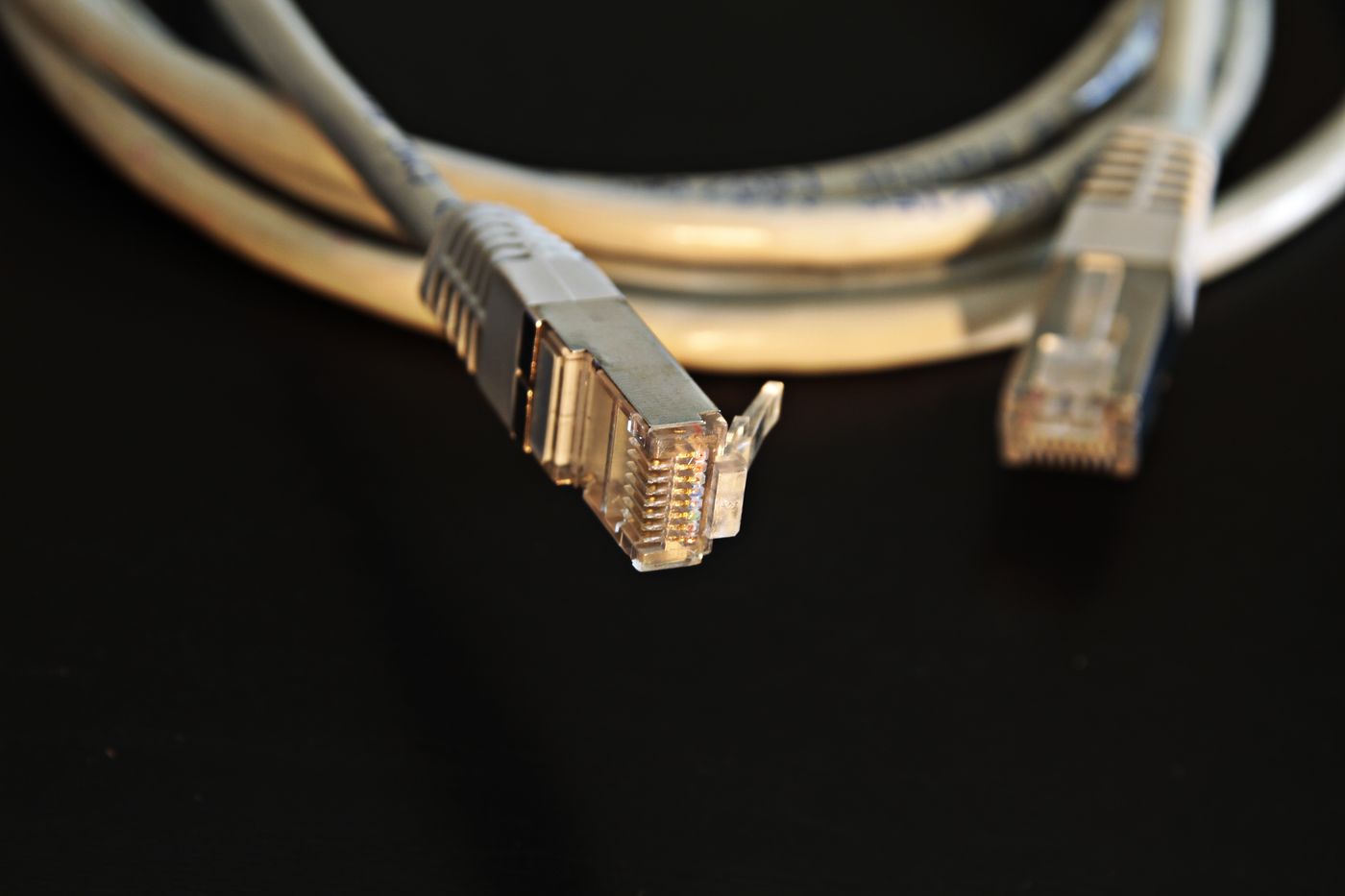
A flat Ethernet cable can look like an easy answer to a doorway between the router and office. Its low profile is not permission to trap it between the door and frame. Repeated pressure can damage the conductors even if the connection initially works. A clear, protected route matters more than the cable's shape.
Move the door slowly through its full travel and inspect the hinge side, latch side and clearance above the floor. Avoid any route through a gap that closes during movement. A clearance that looks sufficient now may become unsuitable after a rug is added or the door shifts slightly.
Look around the frame
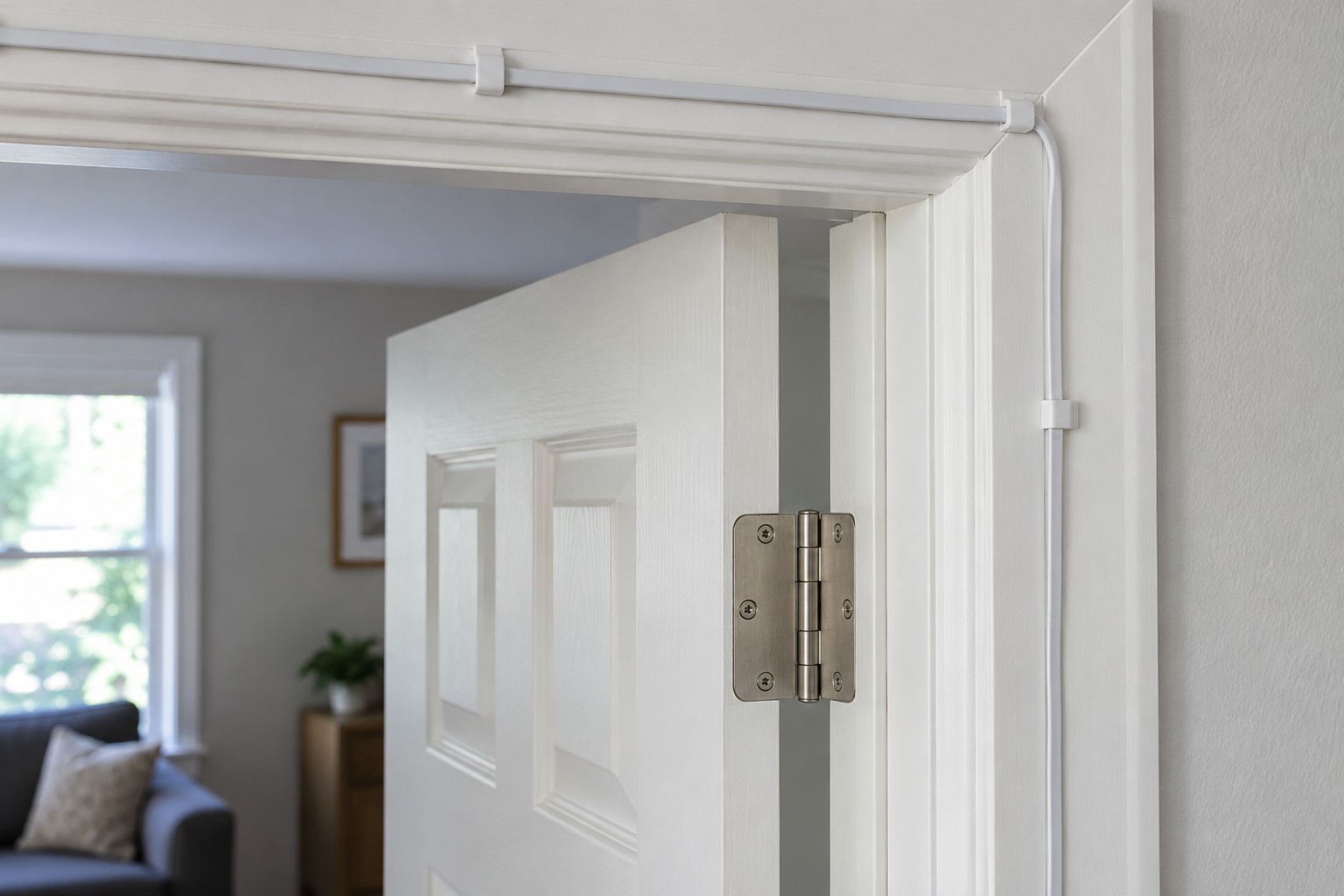
A wall-mounted route around the doorway is often easier to inspect than a loose crossing at floor level. Follow the cable manufacturer's minimum bend guidance. Do not fold a flat cable sharply simply to make it follow every corner neatly. Clips should guide the jacket rather than compress it.
Avoid nails or staples that could pierce the cable. Adhesive clips need to suit the surface and support the route without leaving tension on a connector. Discuss permanent alterations to rented walls or frames before making them. Fire doors and fixed penetrations are not suitable places for improvised notches.
If a floor crossing cannot be avoided, it needs a solution intended for that location and its foot traffic. Covering a loose cable with a rug does not automatically make it safe. Consider chair wheels, vacuum cleaners, children and people with limited mobility, not just your own usual path through the room.
Retest the installed route
Test the cable between router and client before securing it. Repeat after installation and after operating the door normally several times. Look for disconnections and check the negotiated Ethernet speed. Successfully loading one page can miss an intermittent fault.
If a route works only by squeezing the cable, choose another route. A different surface path, professionally planned penetration or alternative network arrangement is preferable. The benefit of Ethernet should not come at the cost of a damaged cable or a hard-to-see trip hazard.