Setting up motion-activated hallway lighting
Match detection, daylight threshold and switch-off delay to the routes people actually take through the hall.
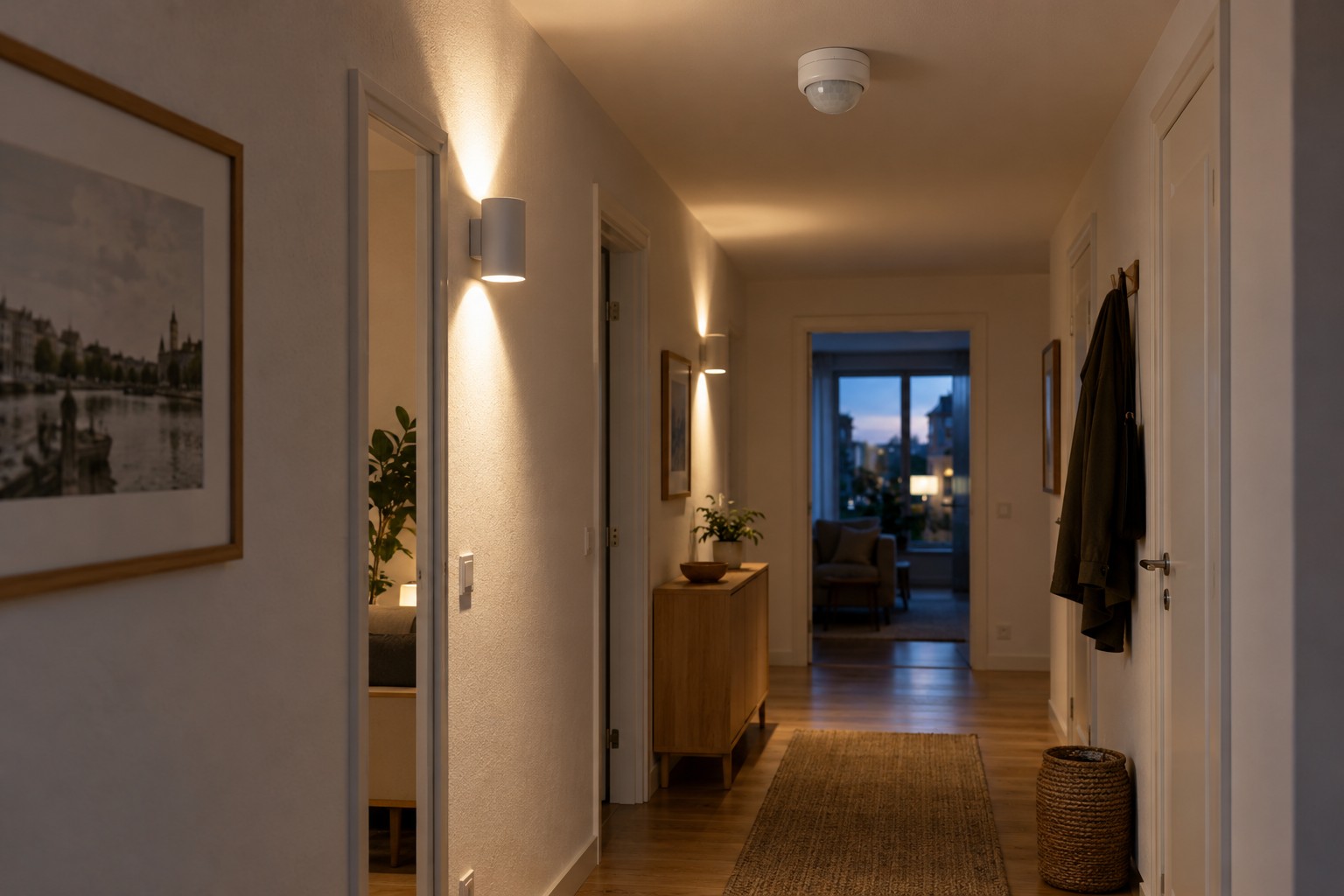
Motion lighting is properly configured when it turns on before the first dark stretch and stays on while someone ties their shoes. Maximum detection range is rarely the most useful specification. Doorways, walking routes and places where people pause matter more.
Sketch the ways people enter the area: through the front door, from a bedroom or down a staircase. An open door or tall coat cupboard can hide a sensor's view. Check the documented detection pattern and try the position before mounting it permanently. If several sensors are necessary, confirm that the system can combine them sensibly to control the same lights.
Separate three different settings
Motion sensitivity changes how readily movement is detected. Increasing it may help when the light reacts late, but can also encourage unwanted triggers. Improve the sensor position before pushing sensitivity to an extreme. Otherwise an unsuitable viewing angle may be mistaken for a settings problem.
The daylight threshold is a separate control. On systems that provide it, this determines whether the hall is already bright enough to leave the lights off. Philips Hue explicitly distinguishes daylight sensitivity from motion sensitivity. A sensor beside a bright window may not represent a darker stretch further along the corridor. Judge the walking route, not just the patch immediately around the sensor.
The switch-off delay should accommodate slower activities such as putting down a bag, removing a coat or fastening shoes. A motion detector may not reliably recognise a person who has stopped moving. Do not shorten the delay until people need to wave deliberately to restore the light. A clear manual option for keeping it on is useful for longer tasks.
A different night setting, without uncertainty
If the system supports time windows, you may prefer a lower brightness at night. Still check that thresholds, objects on the floor and the approach to stairs remain visible. A faint decorative glow is not a substitute for adequate lighting on a hazardous route. At a staircase, illumination should be available before someone reaches the first tread.
Walk every normal route slowly, then repeat while carrying a bag. Try doors both open and closed, in daytime and after dark. Record specific failures rather than simply calling the system unreliable: a late response at the bedroom door, an early switch-off by the coat rack or an unwanted trigger from the living room. You can then change one relevant setting at a time.
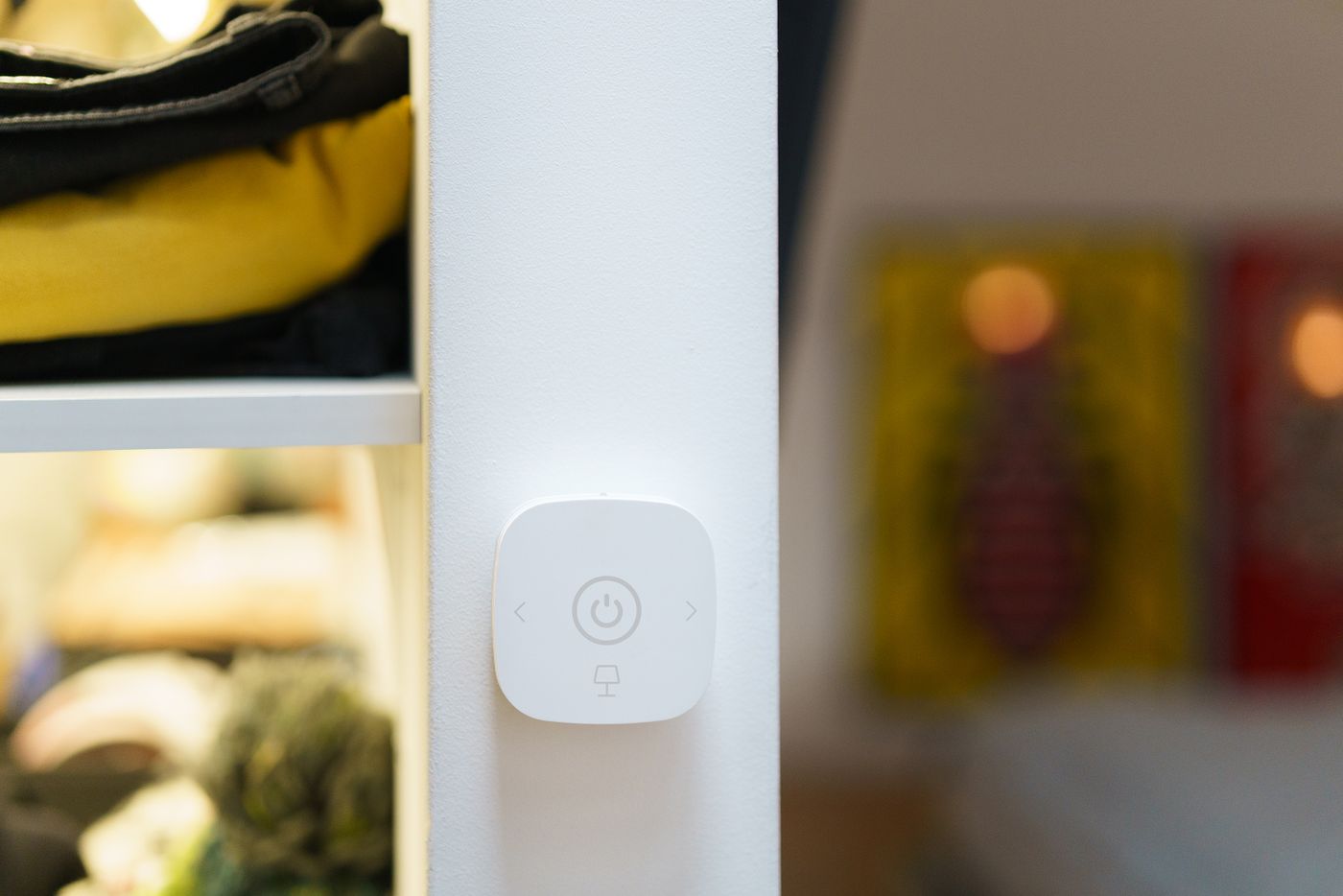
Keep an understandable physical control. Visitors should not need to know whether an app, schedule or wireless sensor is responsible. Repeat the short walking test after changing a sensor battery or moving furniture. A small adjustment to the room can alter the detection area even though the app settings have not changed.