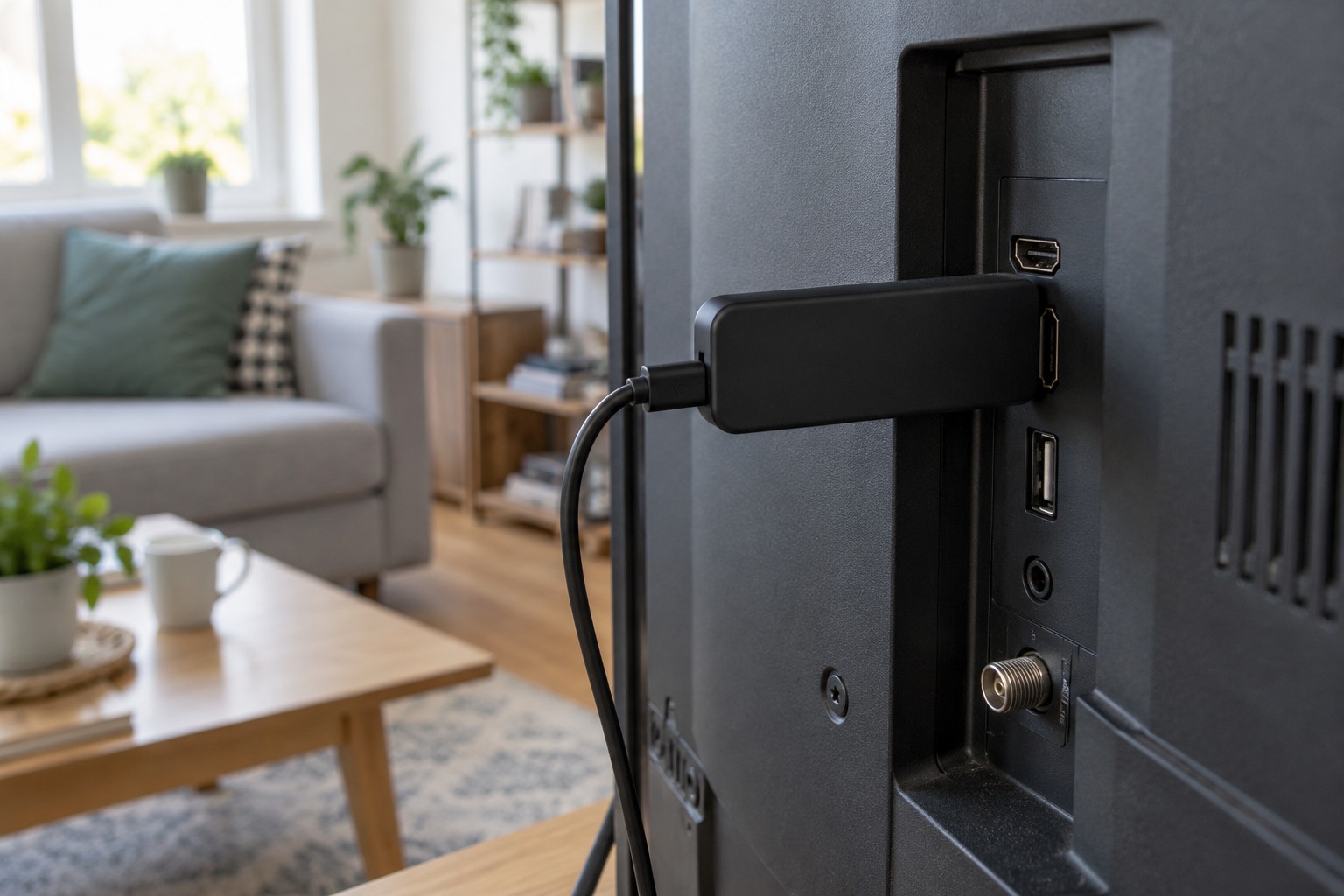
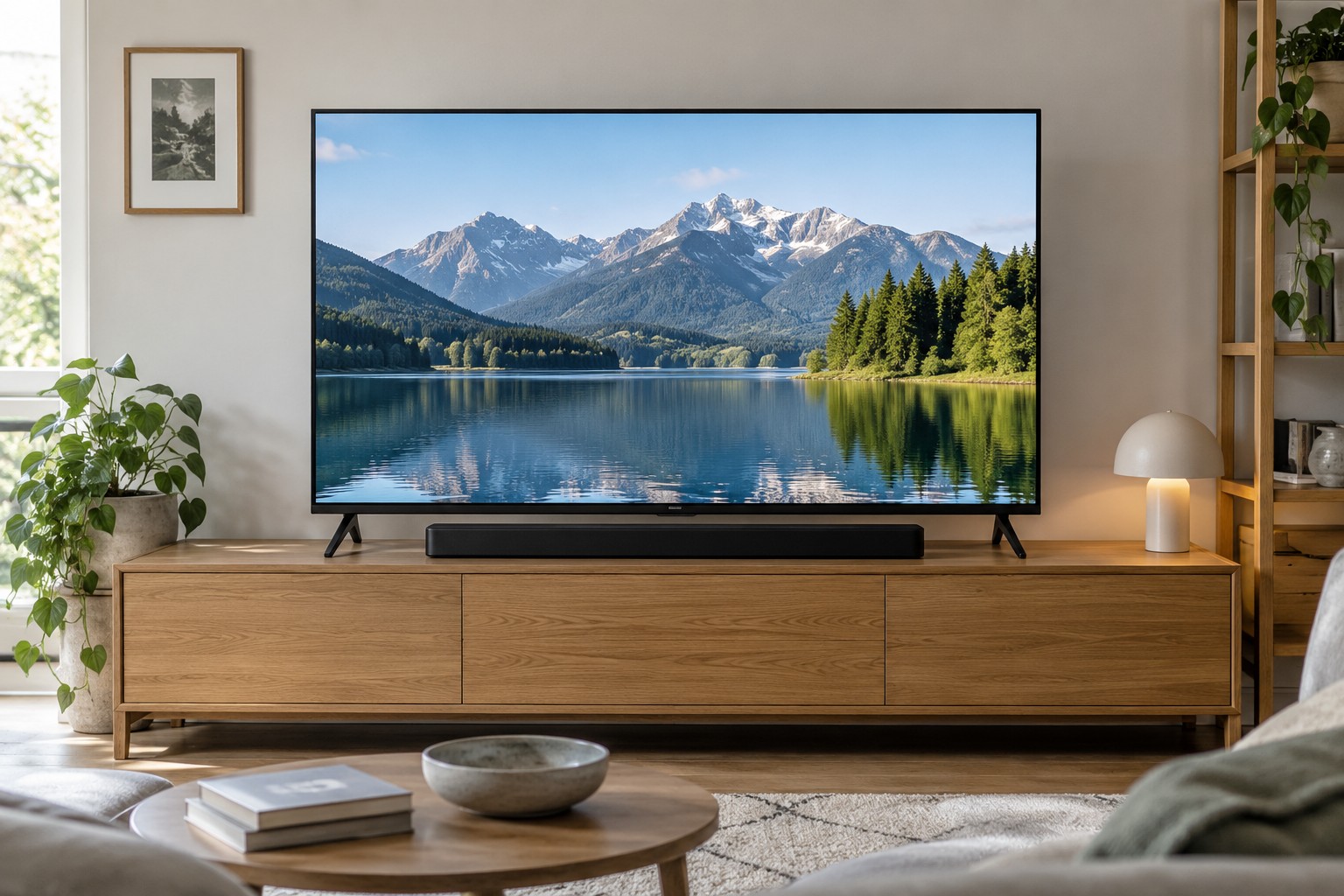
Finding the right HDMI port for a soundbar
Television sound over HDMI needs the appropriate return-channel connection at both ends. Connector shape alone is not enough.
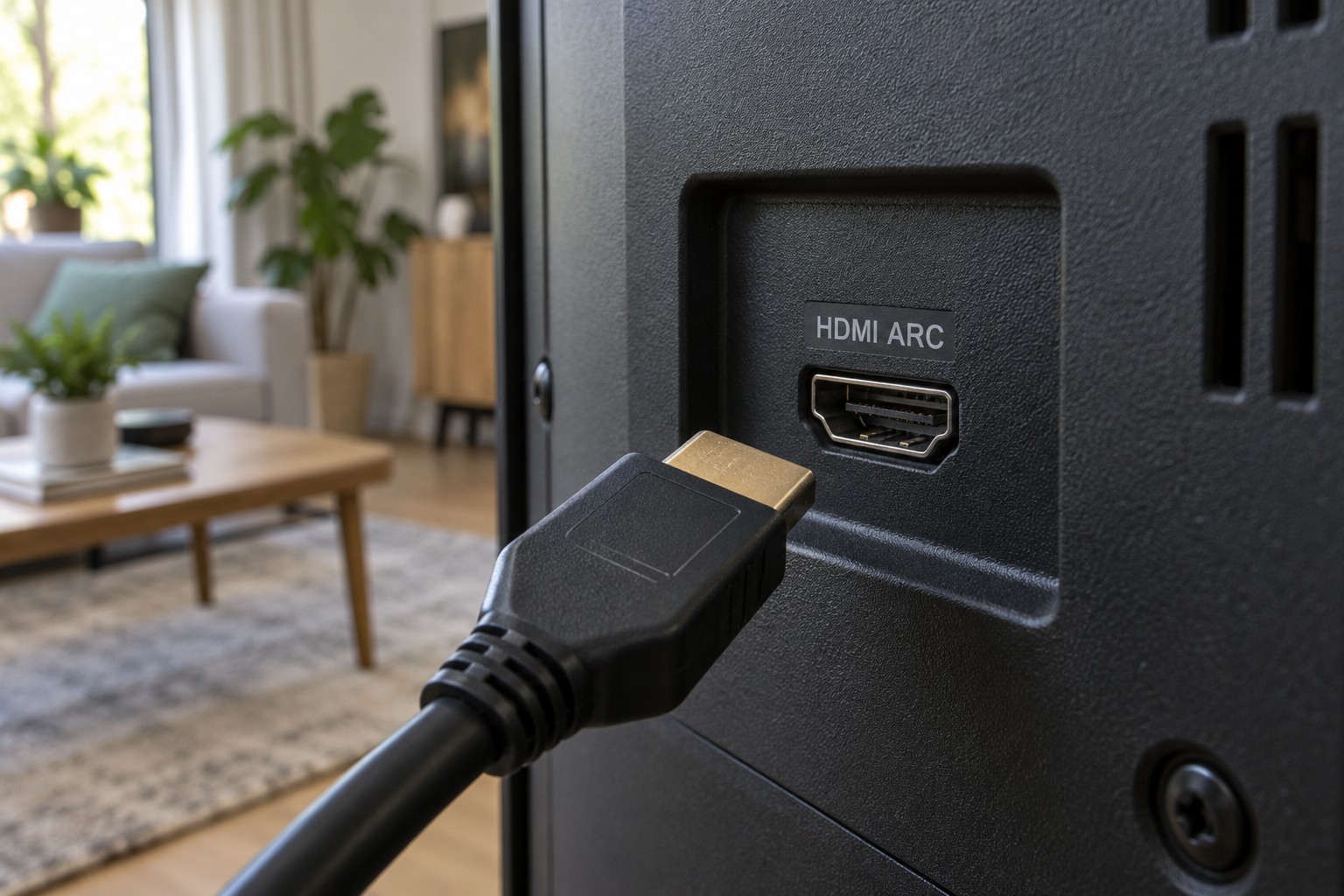
Several HDMI sockets on a television may look alike without providing identical functions. Sound travelling from the television to a soundbar normally uses the port designated for ARC or eARC. Another HDMI input may accept video from a source without offering the same audio return path.
Find the model numbers and connection diagrams for both products first. The television may label the socket HDMI IN with an additional ARC or eARC marking. The soundbar commonly uses a port labelled TV OUT, ARC or eARC. Follow the exact assignments in their manuals.
Why the soundbar uses an output
The label can initially seem contradictory: television sound arrives through something marked OUT. The return channel uses a connection that, on suitably equipped products, can also carry video towards the television. Sony's connection instructions accordingly show the television's ARC input connected to the soundbar's ARC output.
Distinguish this from any additional HDMI input on the soundbar. That may accept an external player where the model provides it. Connecting the television cable to that input by mistake does not establish the intended return-channel arrangement.
eARC expands the capabilities of ARC, including support for certain higher-bandwidth audio formats. It does not mean every programme or streaming service automatically supplies the most elaborate format. Source, television, pass-through capability, soundbar and settings must all support the combination. One eARC label does not guarantee the entire signal chain.
Start with a simple connection
Follow the manufacturers' power-off instructions before reconnecting equipment. Use a cable meeting the documented requirements and join the two designated sockets. Leave additional adaptors and switches out initially so the components involved remain clear.
Select the external sound system as the television's output and the appropriate TV mode on the soundbar. Depending on the models, ARC, eARC or an associated control function may need enabling. HDMI-CEC can appear under a brand-specific name. Do not copy menu labels from an unrelated television when your own interface differs.
Test an internal television app or ordinary broadcast with clear speech first. Check sound and volume control, then introduce the external player. This separates the return channel itself from problems involving an additional source.
If there is no sound
Check the sockets at both ends before changing advanced settings. Then inspect output selection, soundbar mode and mute status. A visible picture does not prove the audio route is correct. Also confirm that a previously paired Bluetooth device has not remained selected as the output.
If the connection is recognised but certain material is silent, output format may be involved. A manufacturer-recommended PCM setting can serve as a limited diagnostic test. It may change available multichannel formats, however. Record the original choice and restore it where appropriate after testing.
If an internal app works but a connected player does not, examine the player's output and the television's supported pass-through. Connecting directly to an available soundbar HDMI input creates a different chain, but is appropriate only if its video and audio capabilities suit the source. Solving sound should not silently sacrifice a required resolution or refresh rate.
Choose an understood alternative
If one device lacks an appropriate ARC connection, a supported optical or analogue link may be an alternative. It has different features and format limits. Shared volume control through one remote is not automatically identical either.
Once working, record the port assignments and important settings. A cable moved accidentally later is then easier to identify. A more expensive cable is not the first answer to every fault; the sockets, modes and capabilities of the whole connection need to agree first.
Also check behaviour after switching both products off and on again. If sound returns only after manually changing the soundbar mode, record that sequence for further diagnosis. Successful playback during the first test does not establish reliable automatic recognition after a restart.