Positioning a soundbar in front of a television
Keep the screen edge, remote sensor and speaker openings clear at the same time.
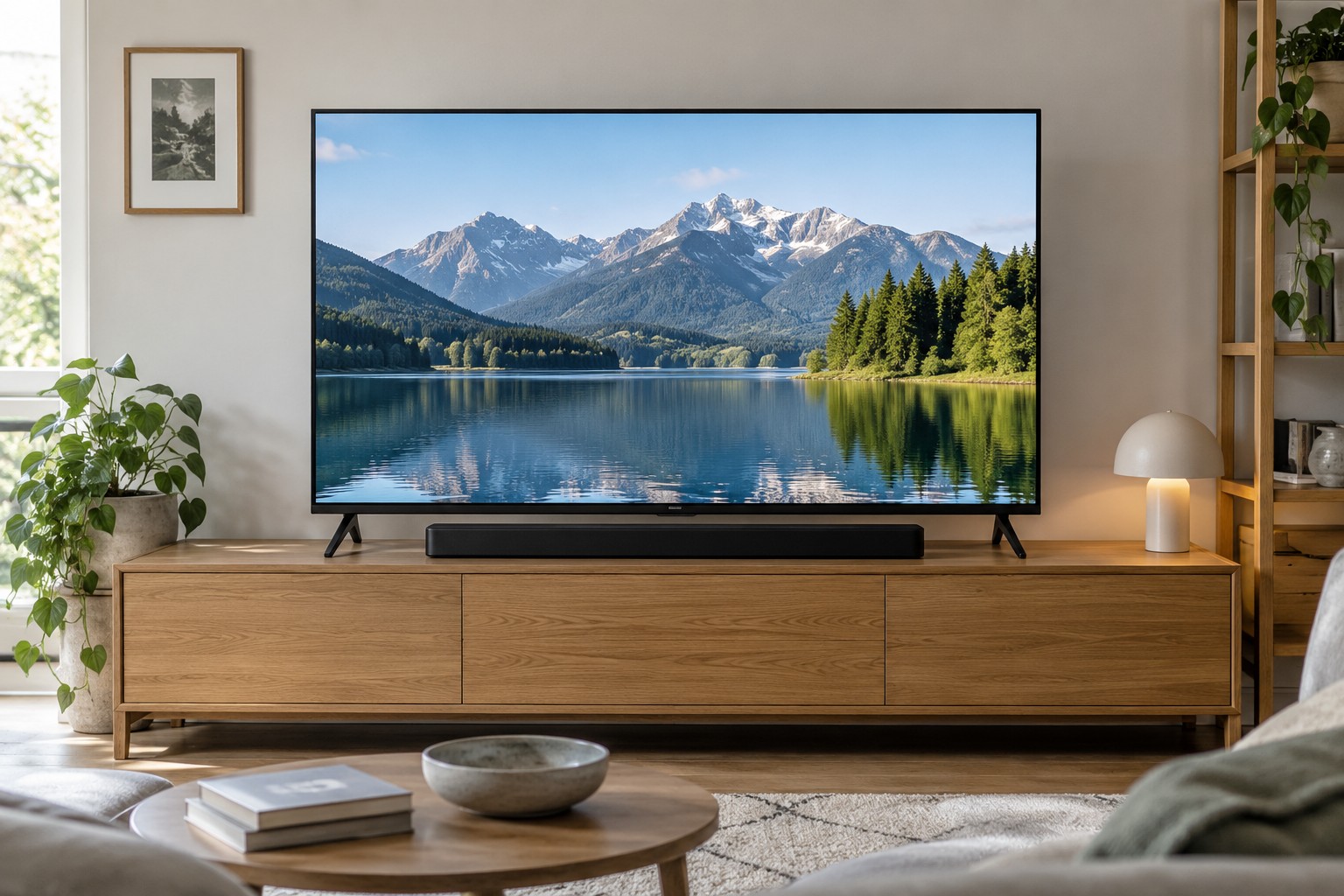
A soundbar does not fit a television merely because their widths are similar. Check its height and depth in the intended position first. It must not obscure the lower image or important sensors, and its speakers need the clear space specified by the manufacturer.
Place a paper outline of the actual dimensions on the television furniture. Sit in the normal position and inspect the lower screen edge. Even a slim bar can cover subtitles or status messages beneath a low-mounted television. Raising the television is an option only with a stand explicitly suitable for it.
Construction determines clearance
Some soundbars have side-firing or upward-facing speakers. A tight recess or shelf immediately above can change their effect. Read the placement guidance for the exact model. A universal instruction to push every soundbar as far beneath the television as possible ignores these differences.
Do not hide the front behind a cabinet door or dense decoration. Check that a cloth on the furniture cannot cover openings or slip around connections. Use a stable, level surface and the permitted orientation. Do not turn an unsupported model vertically simply to save room.
Try the television remote from the seat. A covered infrared receiver may explain why switching or volume control suddenly seems unreliable. Some products offer a documented repeater feature, but do not assume every model includes it.
Leave room for connections
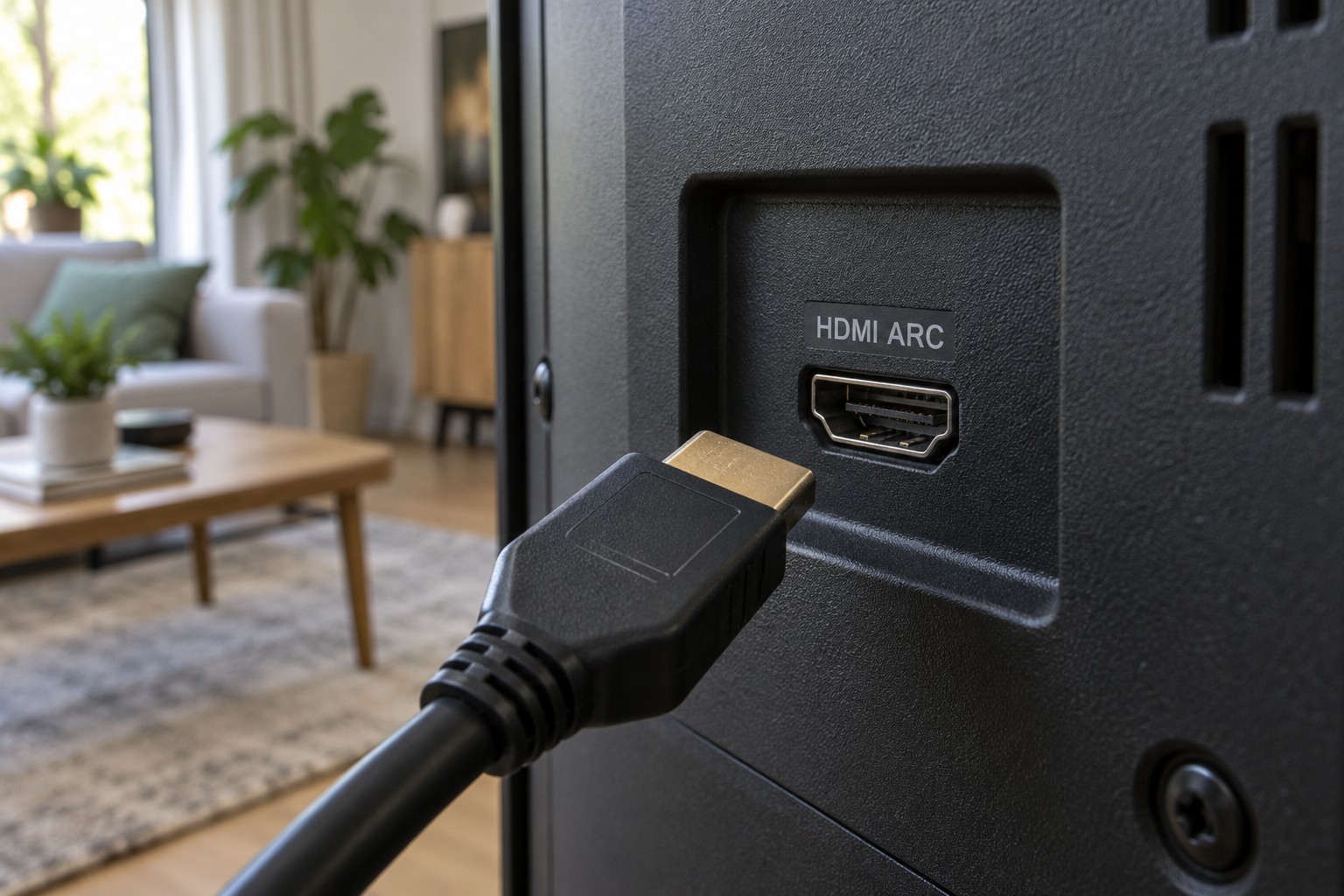
Allow space for HDMI and power leads behind the bar. Connectors require more depth than the housing alone. Do not crush cables between the product and wall, and preserve the specified ventilation. Wall installation needs the appropriate bracket and fixings.
Begin setup with a clear connection arrangement and ordinary spoken television content. Are the output selection and volume controls correct? Are both television and soundbar playing together and creating an echo-like effect? Choose the documented output before altering sound modes.
If automatic room adjustment is available, run it only after choosing the final location. Later furniture or position changes may justify repeating it. Compare a familiar scene at normal volume afterwards, rather than judging only a short dramatic effect.
The right position balances unobstructed sound, a visible display and accessible equipment. A soundbar should complement the television without making its operation or secure placement more difficult.