Planning television size around viewing distance
Screen diagonal alone describes neither the space required nor the view from your sofa.
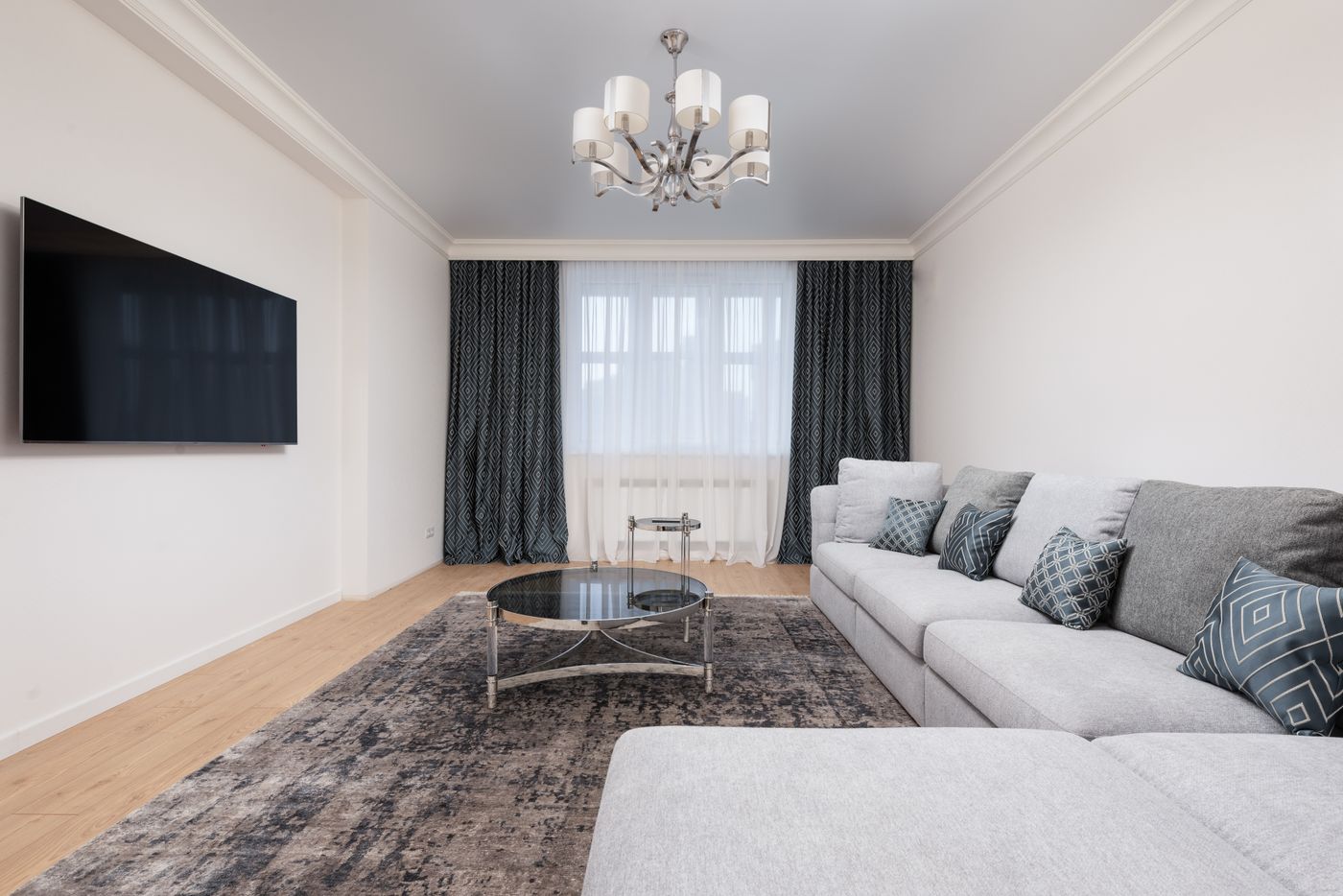
A larger diagonal can make a film feel more expansive, but it also spreads subtitles and movement across more of your view. Begin at the actual seat. Measure from your normal eye position to the planned screen surface, not from the sofa's front edge to the wall.
Include several positions if people regularly watch together. The central seat and a side armchair may have quite different viewing angles. A size that works from one place is not automatically right for the entire room.
Try an outline in the room
Record the exact model's width and height, including its frame. Diagonal size is not cabinet width. Represent those dimensions at the proposed position using a surface-safe marker or paper outline. Check that speakers, furniture and doors still have room.
Sit upright and then in your usual relaxed posture. Can you take in the full surface without continually moving your head? Is the image centre comfortable to view? Mounting too high is not necessarily corrected by sitting further away. Evaluate height and size together.
Manufacturers such as Sony publish viewing-distance suggestions for particular resolutions. Treat these as starting points rather than compulsory comfort formulas. Source quality, viewing habits and preferred image scale influence the choice. A high-quality shop demonstration may not resemble the programmes you mostly watch at home.
Compare familiar material
Where possible, view a news programme, a subtitled film and a sports or fast-moving sequence from a comparable distance. Look beyond fine detail. Check whether captions are readable and whether following the action requires constant shifts between widely separated parts of the image.
Low-resolution or heavily compressed material can reveal its limitations more clearly across a larger area. That does not mean a large television is inherently unsuitable. It means size should not be assessed independently of the material you actually use.
Consider the switched-off television too. It remains a substantial object in the room. Check daytime reflections, stand or wall-mount requirements and access to connections. A suitable size combines viewing, use and secure accommodation.
If you are choosing between two sizes, compare both outlines in the same location instead of judging the larger one only in a shop. Record the difference that matters to you: clearer subtitles, less soundbar space or an awkward view from an armchair. Those observations are more useful than assuming that larger is always better.