Setting up predictable home and away routines
A phone's location is evidence about presence, not certain knowledge that the household is empty.
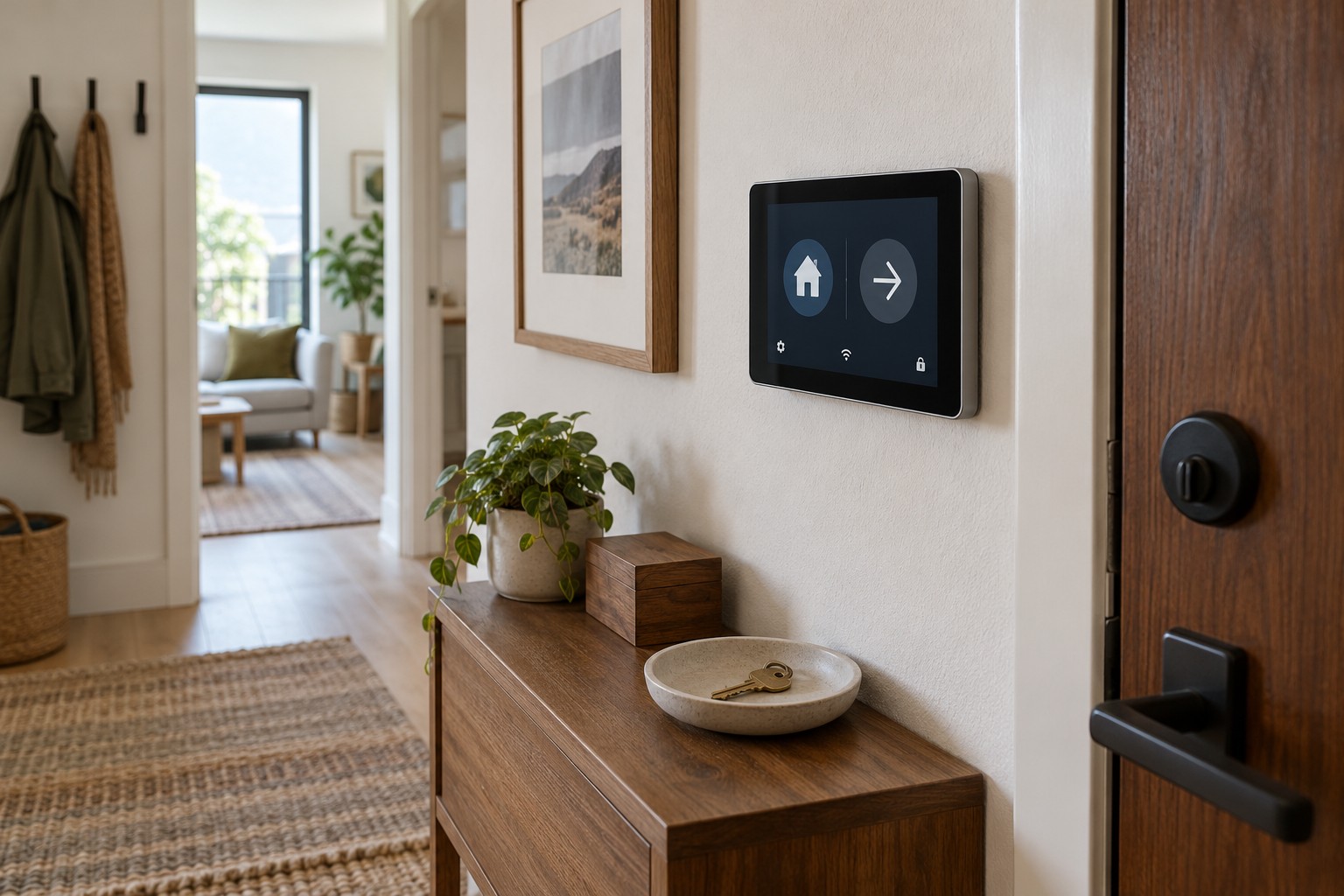
A rule should turn off the lights when you leave. That sounds simple until someone else stays home, a guest without the app sits in the living room or your phone remains on the kitchen table. Presence belongs to the household; automation sees only the signals available to it. Plan around that difference.
Write down the intended meaning
Describe the trigger in a complete sentence. Should the action run when one named person leaves, when every tracked person leaves, or only when another room condition also holds? Those are different rules. A label such as away can conceal the fact that only some occupants are represented.
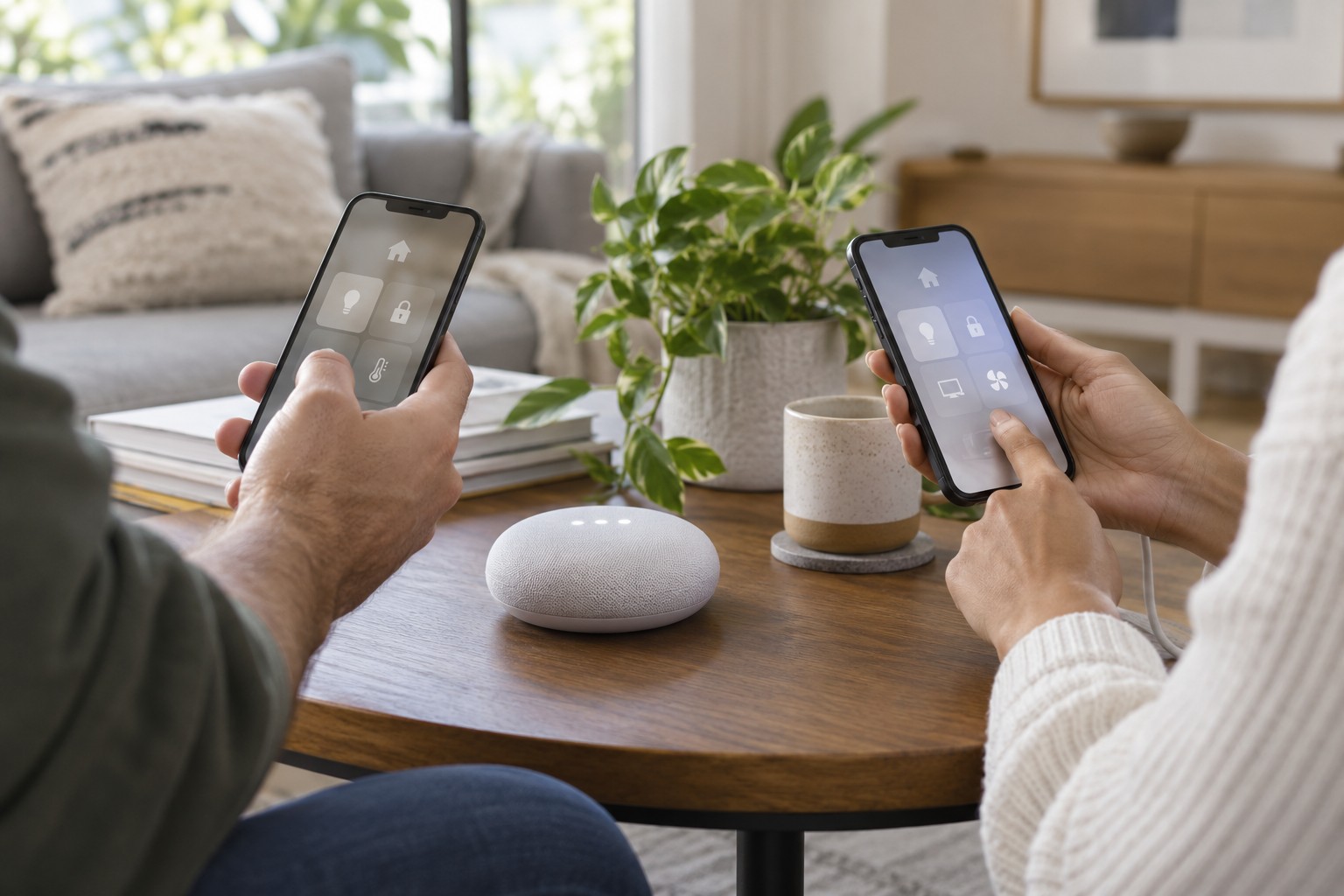
List available signals: shared phone locations, particular motion sensors or supported device activity. Establish which the platform actually uses. Then identify people and circumstances not represented reliably. Guests, children without phones and someone with a switched-off device belong explicitly in this assessment.
Discuss location sharing with those involved. Everyone need not disclose their movements merely to make a light switch off. If someone does not want to participate, provide a suitable manual or less personal alternative. Technical setup should not quietly introduce a new monitoring arrangement.
Begin with a low-consequence action
Test with a nonessential lamp or another harmless indicator. Do not use an action whose unexpected start or failure could harm someone. Switching off necessary equipment, issuing an ill-considered access command or controlling a safety-critical function is not a suitable first experiment with uncertain presence detection.
Record the detected state and action time separately. This shows whether presence is already misclassified or the subsequent rule fails. Delay can arise in sensing, a condition, the service or the destination device. Treating all stages as one problem makes it easy to change the wrong setting.
Test more than one successful departure
Try ordinary scenarios: one person leaves while another stays; everyone leaves and one returns early; someone walks briefly to the letterbox; a phone is left behind; a guest remains without a registered device. For each, decide what response is acceptable and what must be avoided.
Also examine manual changes to the presence state. Some systems later overwrite them with automatic signals. Manually selecting home therefore does not necessarily suspend every away action indefinitely. Read the platform's behaviour and observe it using the harmless test action.
When investigating faults, alter one condition at a time. Check the selected home address, permitted location access and actual participating devices. Use the intended settings and respect personal or employer-imposed device restrictions. Disabling every protection and battery control is not a focused diagnosis.
Retain ordinary manual operation
A wall switch or understandable button should still support normal use. Agree how to suspend a routine for guests or a changed day. Returning to ordinary automation also needs a clear step, otherwise it may remain forgotten off or surprise occupants when it resumes.
Look for overlap with schedules and other scenes. A timer can switch a light on while a presence rule immediately switches it off. Both rules may individually work correctly; their conflict is the problem. A short list of rules operating the same device makes this visible.
Distinguish an internet outage, a failed hub and a flat phone battery. They remove different information or execution paths. Test only low-consequence actions and record observed behaviour. One locally successful command does not establish that the whole arrangement is failure-proof.
After a period of ordinary use, assess how often people must correct the routine. A deliberately pressed scene button may suit the household better than an automatic departure rule. Automation helps when its limits fit the selected actions, not simply because the feature exists.
Revisit the arrangement after a phone replacement, account change or new resident. The physical home may be unchanged while the set of participating signals is different. A short repeat of the original scenarios is more useful than assuming an old successful test still describes the current household.