Planning battery changes for household sensors
The correct cell and a functional test matter more than replacing every sensor on the same calendar date.
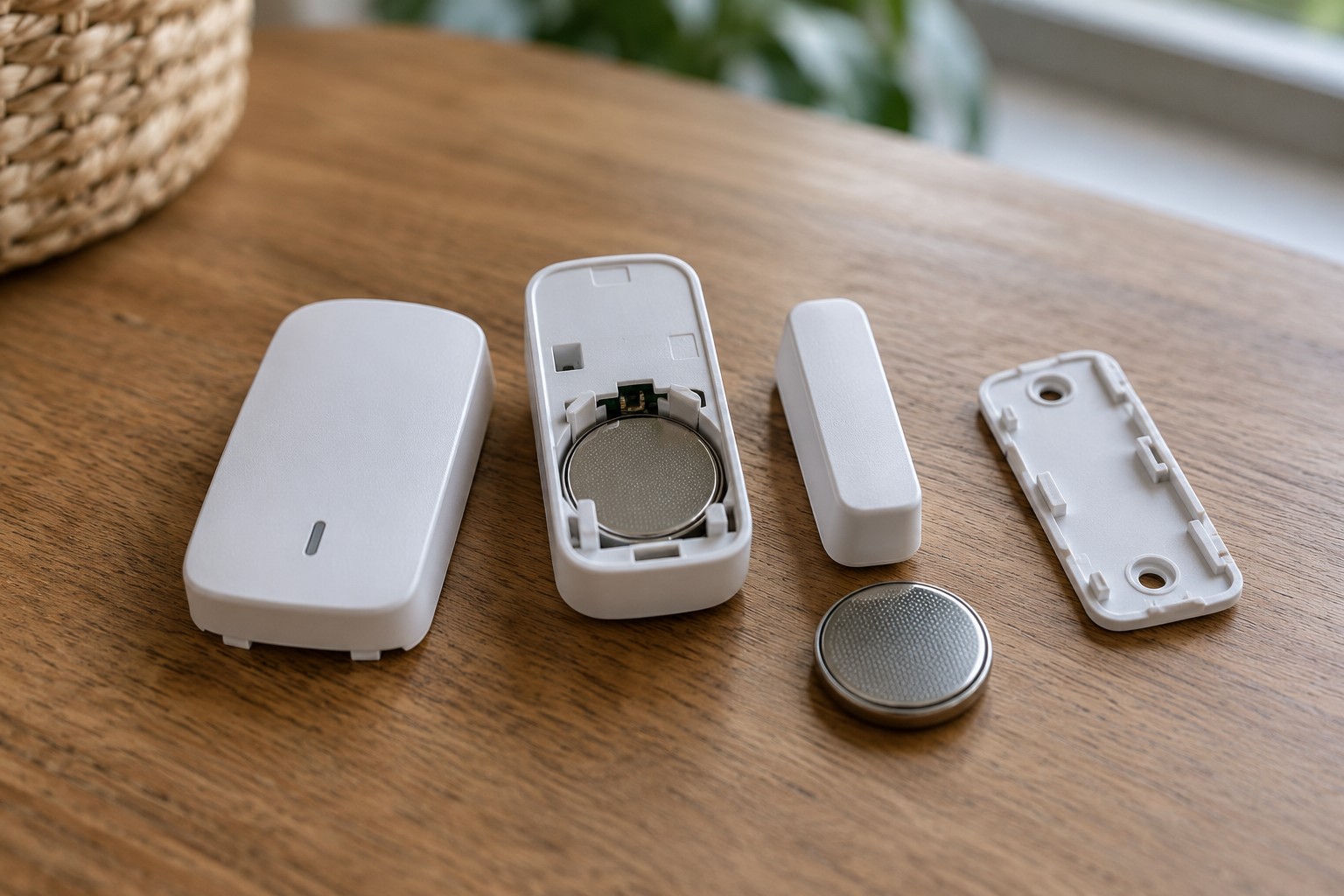
A household with contacts, motion detectors and leak sensors may contain several battery types. Similar round or cylindrical shapes do not establish matching voltage, chemistry or dimensions. Read the exact sensor's instructions and the complete cell designation before changing it.
Record each sensor's location, battery type and last replacement or test date. This lets you keep appropriate spares and helps prevent an inconspicuous device behind furniture being forgotten while visible sensors receive regular attention.
Use the specified cell
Choose the type required by the manufacturer. A rechargeable cell is not automatically a suitable substitute for a disposable one of the same shape. Never charge a battery not explicitly marked rechargeable. Observe polarity and the intended way to open the housing rather than damaging a tight cover with unsuitable tools.
Keep button cells especially away from children and pets, including removed ones. Do not leave batteries loose among coins or metal tools. Store spares and spent cells safely and separately, and use the appropriate collection or disposal route.
For leaking, damaged or deformed cells, follow the battery and device manufacturers' safety guidance. Do not simply add a fresh battery to a visibly corroded sensor without establishing whether the device remains suitable. Avoid improvised repairs to safety-related equipment.
Test the task after closing
First establish that the sensor reconnects. Then perform an intended harmless functional test, such as opening its associated door normally. Observe the state change and any configured notification. A new battery reading does not establish correct magnet alignment or the complete alert path.
Some status displays do not update immediately. Check their documented meaning before treating an unchanged percentage as a fault. Repeatedly short life may justify investigating communication, environment and device condition.
Update the record with the date and result. If a battery fails earlier than expected, that history is useful for support. It provides better evidence than assuming every unit of one model must achieve identical runtime.