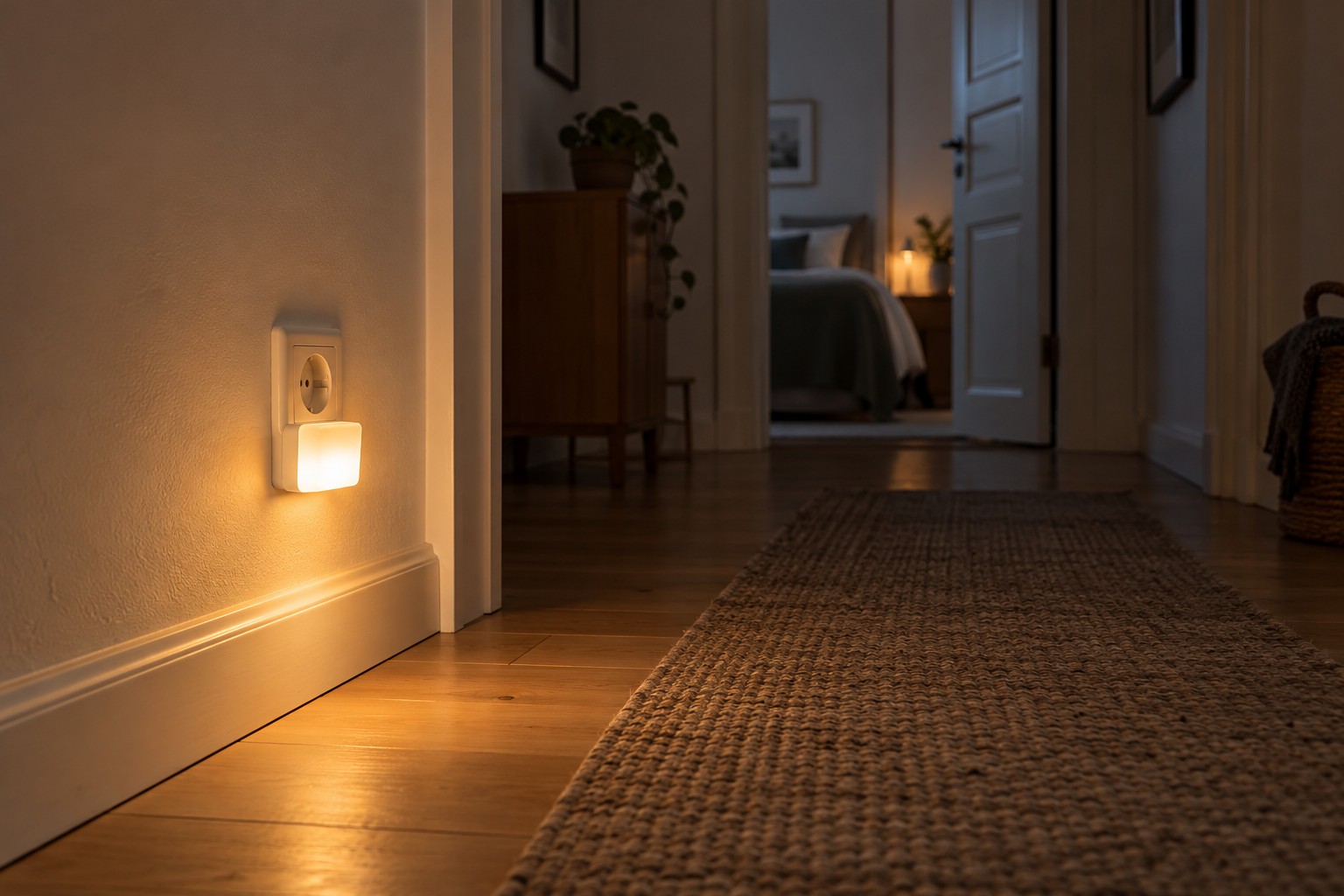
Making stair treads visible with lighting
Light should be available before the first step, with the whole route clearly readable.
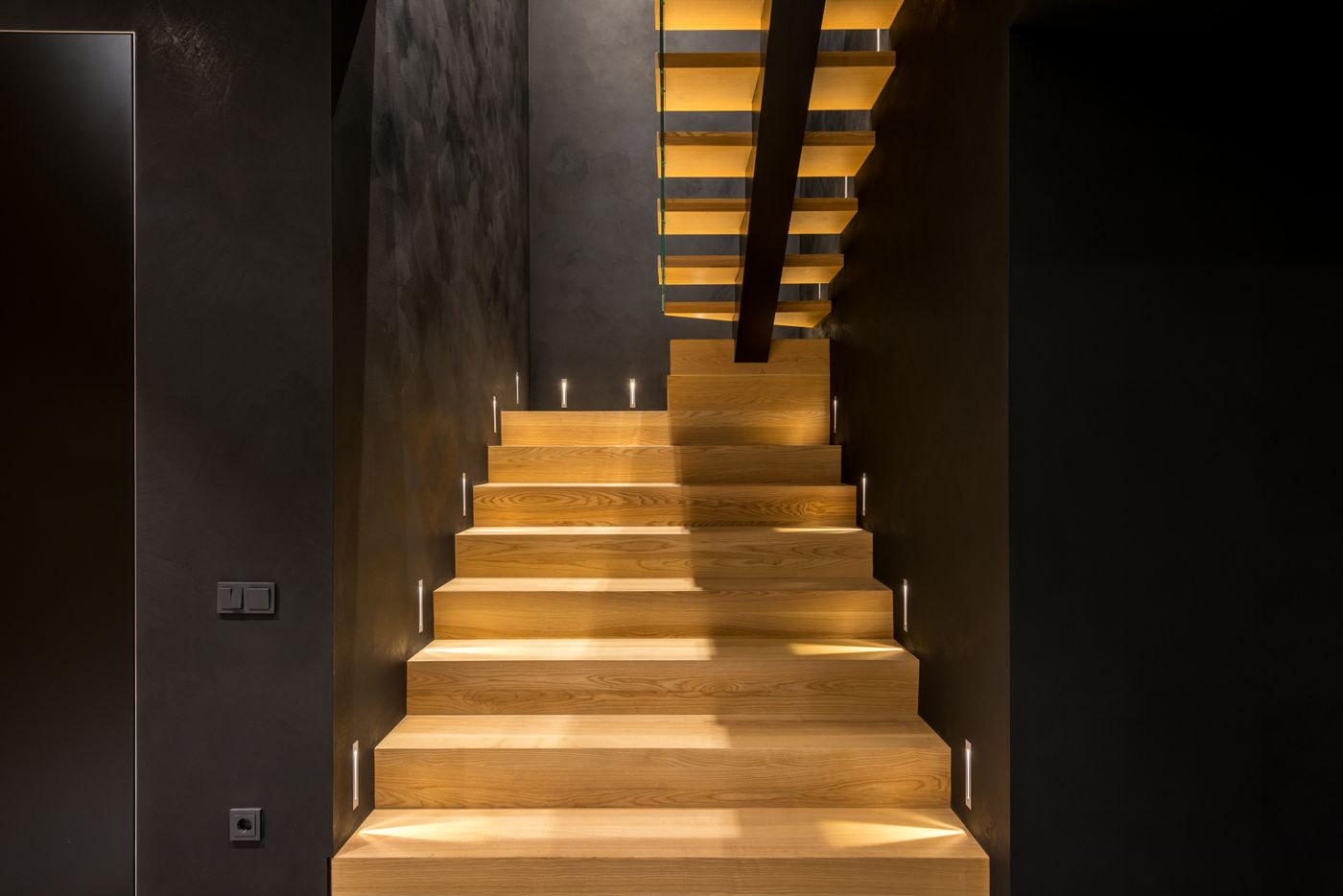
On a staircase, highlighting individual treads decoratively is not enough. Surfaces, edges, landings and transitions into the next room should be clear. Check both directions: a fitting that works well while climbing may shine directly towards someone coming down.
Start with the existing normal lighting. Can it be controlled from both ends? Is there a dark section around a turn or beneath a landing? If someone must step onto the staircase before reaching a switch, the control arrangement needs attention. An electrician can assess suitable fixed switching options.
Consistency before effects
Very bright patches beside dark areas can make the stairs harder to read. Examine the visible edges along the entire flight rather than just the light source. Glossy finishes can reflect light and obscure contours. Check from the height and distance of a person using the stairs normally.
Side or indirect lighting may help, but it must suit the tread shape and handrail. The rail should remain fully usable. Cables and added adhesive fittings must not introduce trip hazards or work loose under shoes. Avoid temporary extension leads across the staircase.
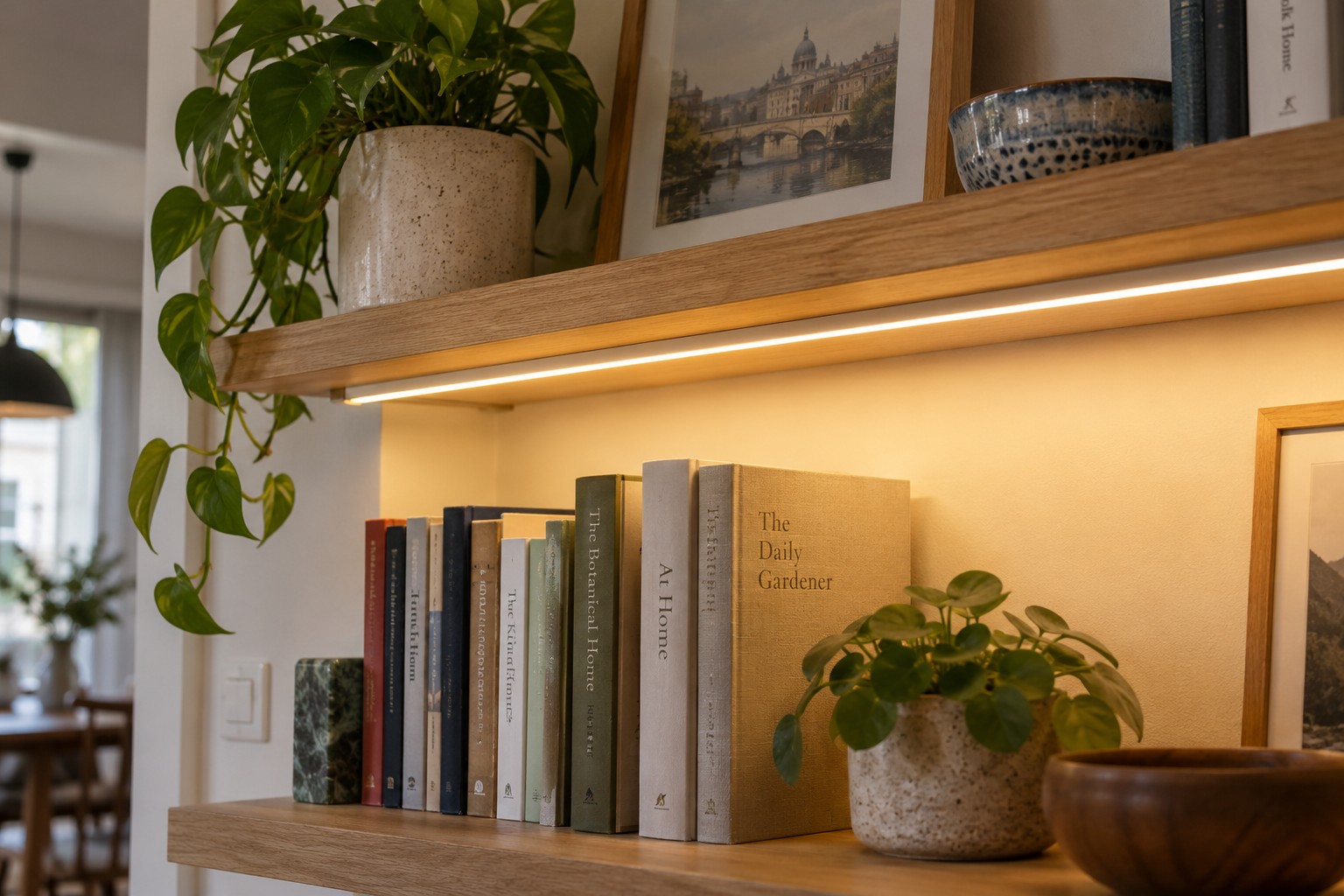
For fixed installation, electrical suitability, secure mounting and local requirements all matter. A strip intended for a bookshelf is not automatically suitable for an exposed stair edge. Have the actual installation assessed professionally rather than copying only the appearance of a reference photograph.
Automatic and manual operation
If motion sensors are used, they should detect the approach early. One detector may not reliably cover both ends. Test with doors open and while carrying a bag that partly obscures the body. The switch-off delay must accommodate slow movement and a pause.
A dimmer night setting must not remove necessary visibility. Assess it separately and retain a clear way to obtain normal lighting. Automation is not a reason to make existing safe controls unusable.
Recheck after changing runners, wall finishes or furniture near the entrance to the staircase. People with particular visual or mobility needs may require an individual professional assessment. The arrangement should suit the people using it, not simply repeat a decorative pattern across every step.