Planning a simple lighting timer
A reliable schedule starts with a clear purpose and a test that includes switching off as well as on.
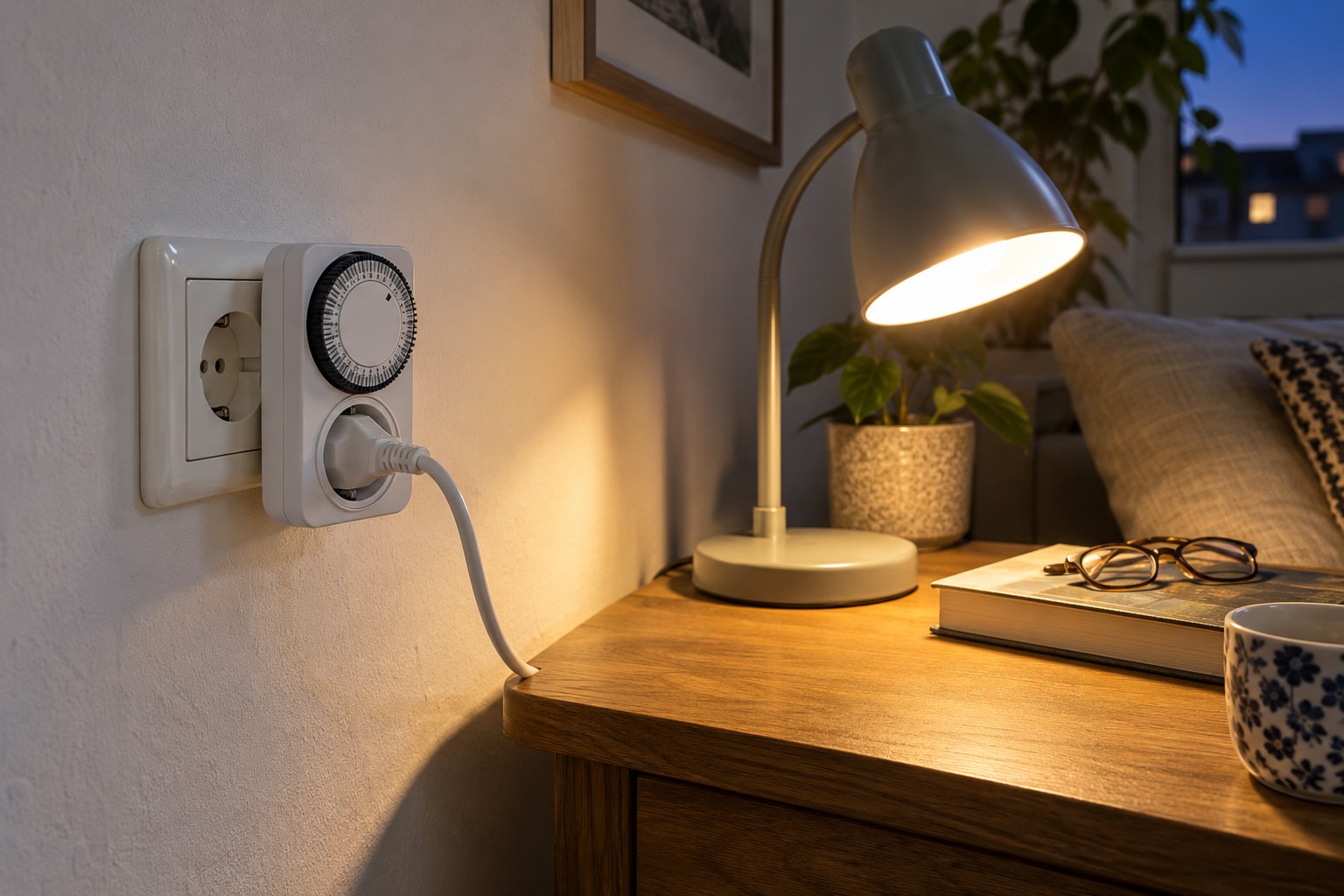
A timer can bring on a particular lamp in the evening or prevent background lighting from remaining on all night. Define that purpose first. One understandable routine is easier to check than several overlapping rules affecting the same room.
Choose the appropriate control method. A plug-in timer interrupts the connected lamp's electricity supply. A smart bulb is often controlled internally and needs to remain powered. A lamp with an electronic button may stay off when power is restored. Check its documented behaviour before buying a timer for it.
A clock time or sunset?
A fixed time is predictable but does not follow seasonal daylight. A sunset-based rule may suit the room better, but requires correct location information and a system that supports the calculation. Check whether it works locally or depends on an online service. Do not grant more precise location access than the chosen function requires.
Always define an end as well as a start. Decide which days apply and how the schedule should interact with manual operation. Should it later switch off a reading light that somebody has turned on, or only the decorative lamp? That answer determines whether the devices belong in the same routine.
For an initial test, choose an on and off time a few minutes ahead while you are at home. Observe both actions, then enter the real schedule. Check the time zone, daylight-saving handling and, where relevant, the clock after a power interruption. A correctly entered schedule can still run at the wrong local time if those foundations are wrong.
Make exceptions manageable
Consider how to pause the routine during a visit or holiday. An obvious, accessible disable option is more useful than a complicated exception for every imaginable event. Other household members should know which lamp acts automatically and how to stop the routine temporarily.
After a few days, check for duplicate schedules in another app or voice platform. A light that switches back on shortly after being turned off manually is not necessarily faulty. Two independent schedules may be working against each other.
A lighting timer is not a guarantee against burglary and should not be treated as one. Its immediately verifiable purpose is simpler: operating a suitable light predictably at the time you intended.