Lighting a mirror evenly
A brightly lit wall is not the same as useful light reaching your face.
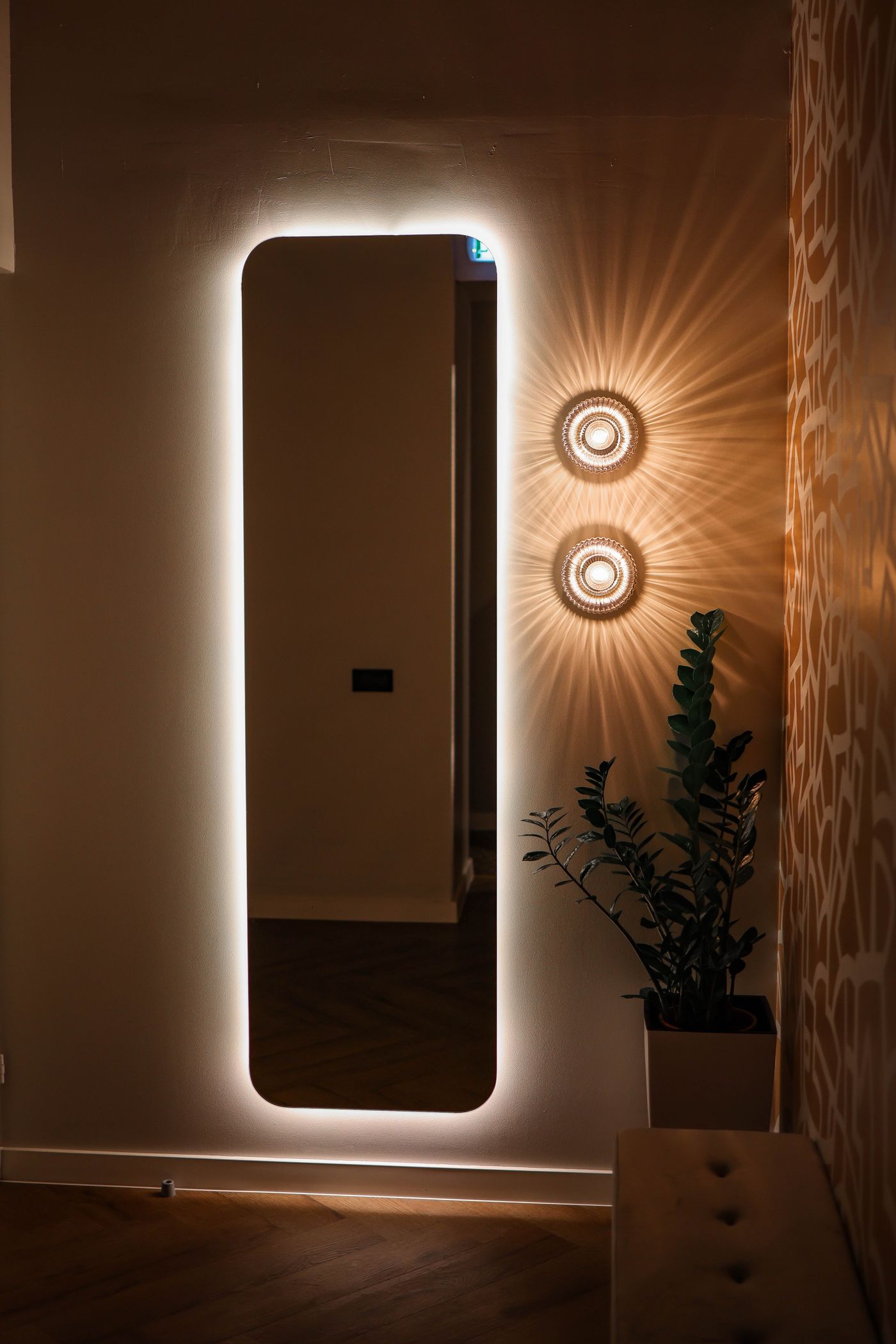
A bright fitting directly above a mirror can illuminate the wall strongly while still casting shadows below the eyes and chin. Direction explains the difference. If the mirror is used for grooming or detailed tasks, assess the light from the actual working position.
Stand at your normal distance and compare both sides of your face. A window on one side may provide useful light during the day, but that contribution disappears in the evening. Test without daylight as well. Decorative lighting behind the mirror may send relatively little light towards the face.
Balance without direct glare
Diffused light on either side can distribute shadows differently from a single overhead source, but it is not the right solution for every mirror. Width, height, existing connections and the users' positions all affect the result. What matters is avoiding a very bright source reflected directly towards the eyes.
Compare normal viewing distances. Moving closer for a detailed task may reveal a source that was previously shielded. A pivoting magnifying mirror can also reflect lamps from a different angle. Include that secondary reflection rather than checking only a straight-on view.
With several lights, look for consistent colour appearance and even distribution. A warm source on one side and a much more neutral one on the other can make colours harder to judge. Kelvin helps compare the appearance of white light, but does not fully describe colour rendering.
Bathrooms add requirements
A decorative living-room fitting should not be installed beside a bathroom mirror simply because it looks suitable. Moisture, possible water exposure and the precise mounting location determine the required suitability. Ask a qualified professional to assess the fitting and fixed connection against local requirements. Do not assume one protection rating applies at every distance from a basin or shower.
Cables, drivers and controls are part of that assessment too. They must not be damaged by the mirror edge or placed in an unsuitable damp position. For integrated products, follow the complete installation instructions, not just the information about the visible light.
A hallway mirror may not involve bathroom conditions, but mounting and electrical suitability still matter. Finish the assessment with a normal task at the mirror. Even, sufficient illumination without distracting reflected points is more useful than making the surrounding wall as bright as possible.