Planning audio across several rooms
Shared playback, independent rooms and a stereo pair are different requirements.
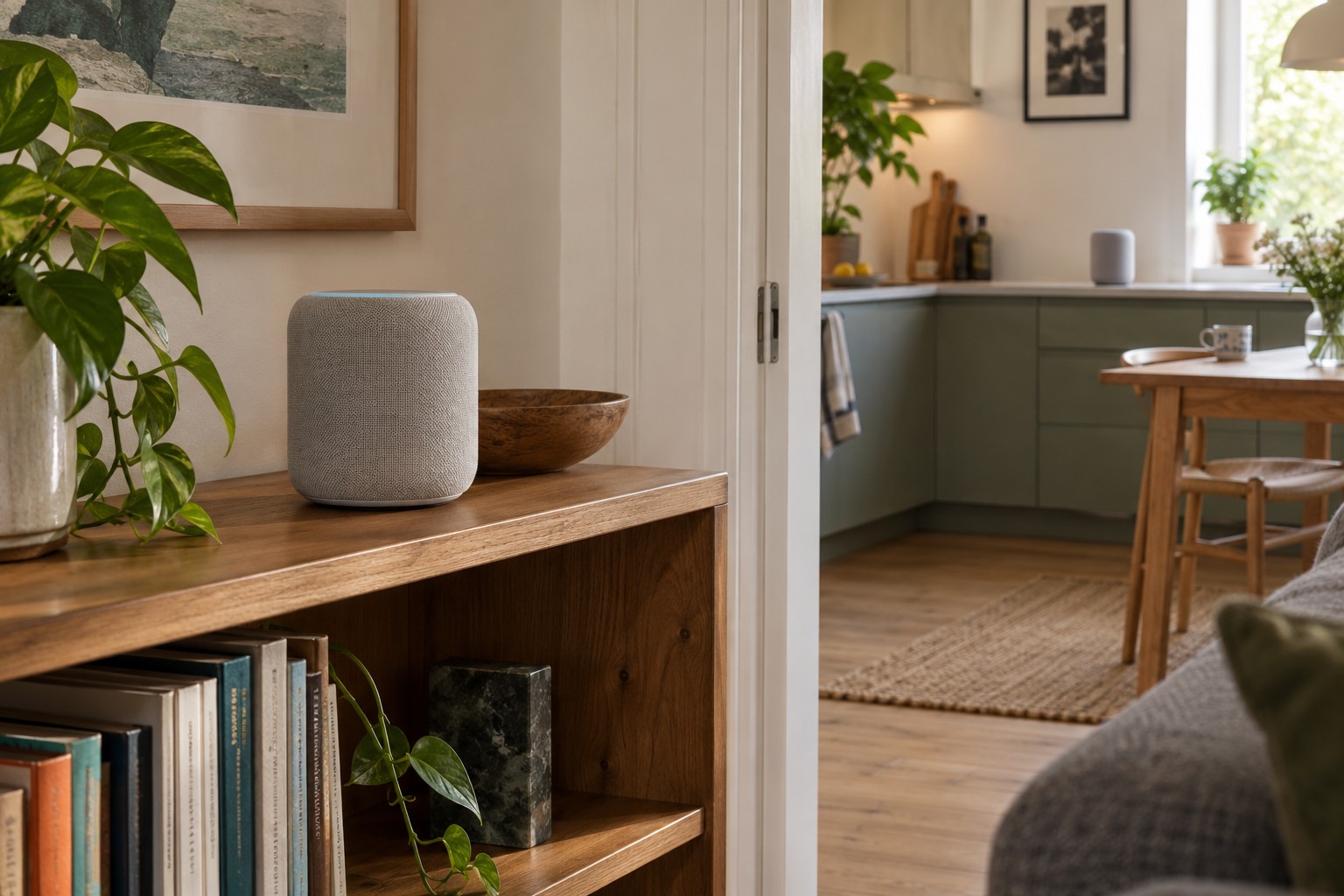
Before buying several speakers, clarify the intended use. Should the same music continue as you walk between kitchen and living room? Should two people hear different material simultaneously? Or do you want improved stereo within one room? Those goals do not necessarily require the same feature.
Check compatibility between exact products and the chosen platform. Shared branding does not guarantee that every generation and operating mode can be grouped. Supported music services and required accounts belong in the decision too.
Begin with two rooms
Fully set up one speaker and verify ordinary playback, then add the second room. Give both clear location-based names. Kitchen and study are easier to understand than default device numbers.
Try grouped and independent playback. Check whole-group and individual-room volume controls. A small kitchen may need a different level from an open living space. Group membership does not require identical percentage settings everywhere.
Walk through the boundary between rooms during playback. Systems that are not coordinated can produce an echo-like impression. Two separately started Bluetooth links are not automatically a synchronised multiroom arrangement. Use the intended grouping feature rather than accidental parallel playback.
Include network and source limits
A networked system needs a stable connection at each intended position. Test normal rooms and usage periods, not just devices side by side during setup. If one room drops out, inspect its connection and location before rebuilding the entire group.
The source may impose restrictions too. A service can limit simultaneous independent streams, and an external input may not support every grouping mode. Check the actual use case in product and service documentation. Successful shared playback does not establish unlimited independent content.
Television audio is another task. A system that distributes music successfully may not suit timing-sensitive picture-and-sound playback. Test that separately and follow its specific rules.
Agree everyday control
Decide how people change groups and restore independent rooms. Accidentally taking over a study speaker can interrupt a call. Separating it should be straightforward rather than buried in unfamiliar settings.
Expand only after two rooms work consistently. Before each addition, check compatibility, position and actual need. A manageable room structure is easier to maintain than one whose grouping must be rediscovered after every session.