Finding an unobtrusive night light
A night light should reveal a particular route, not automatically illuminate the entire bedroom.
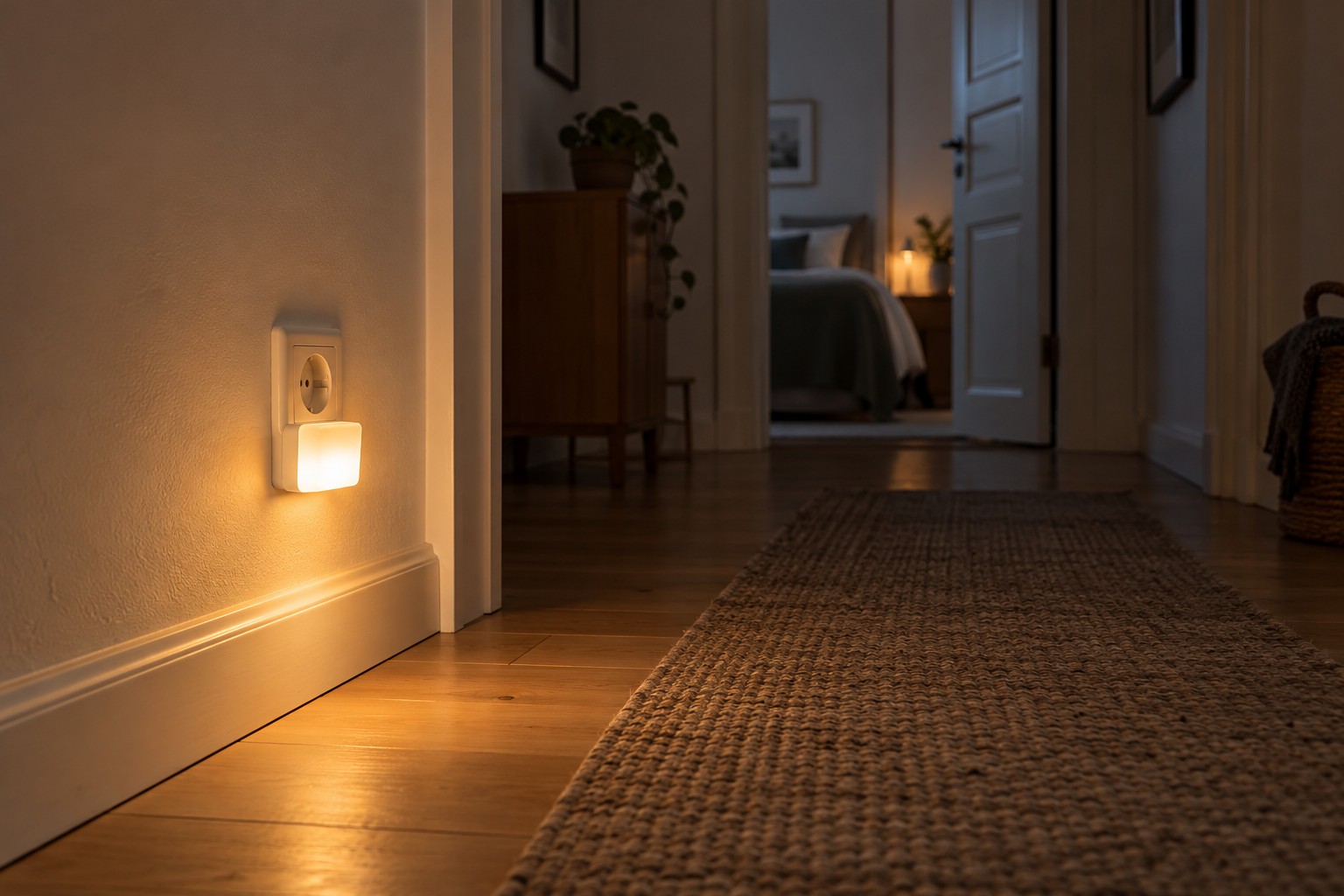
The first question is not which colour looks appealing, but which area needs to be visible at night. It may be the route from bed to door, a threshold or a section of hallway. A small light hidden behind furniture is of little use if it does not reach that area.
Check the route under the room's normal night-time conditions without deliberately creating darkness or obstacles. Notice rug edges, shoes and door swings. Lighting supplements a clear route; it does not replace one. Stairs and other higher-risk areas need appropriate normal illumination.
Keep the source out of direct view
A low, shielded light can reveal the floor without shining straight towards someone in bed. Whether it does so depends on its beam and position. Check the view while lying down and while getting up. A tiny exposed LED can be more distracting than a larger indirectly lit surface.
A plug-in model should sit securely and not obstruct neighbouring connections in a problematic way. Use it only in the environment for which it is intended. An ordinary indoor product is not automatically suitable for a splash-prone location. Follow the precautions for households with children and avoid accessible small parts or loose leads across the route.
A dusk sensor may behave unexpectedly if the light sits permanently in shadow behind a cupboard. With motion activation, detection and switch-off delay need to match the journey. Confirm that illumination starts early enough and remains on while someone walks slowly.
Keep settings straightforward
Begin with modest brightness and increase it only until the required surfaces are visible. If colour can be adjusted, judge the result in the actual room. A warm or red setting alone does not justify broad claims about health or sleep.
Battery and rechargeable models require a manageable charging or replacement routine. A light that is empty when needed is not fulfilling its purpose. Try the selected settings over several ordinary nights, and check the documented behaviour after a power interruption.
Manual control should remain simple. If automatic detection occasionally fails, a familiar room light should still be accessible. A night light is an addition for a particular route, not a replacement for every other source of illumination in the room.