Making room for a grow light indoors
Plant type, existing daylight and lamp distance determine the setup. Purple light alone is not a quality indicator.
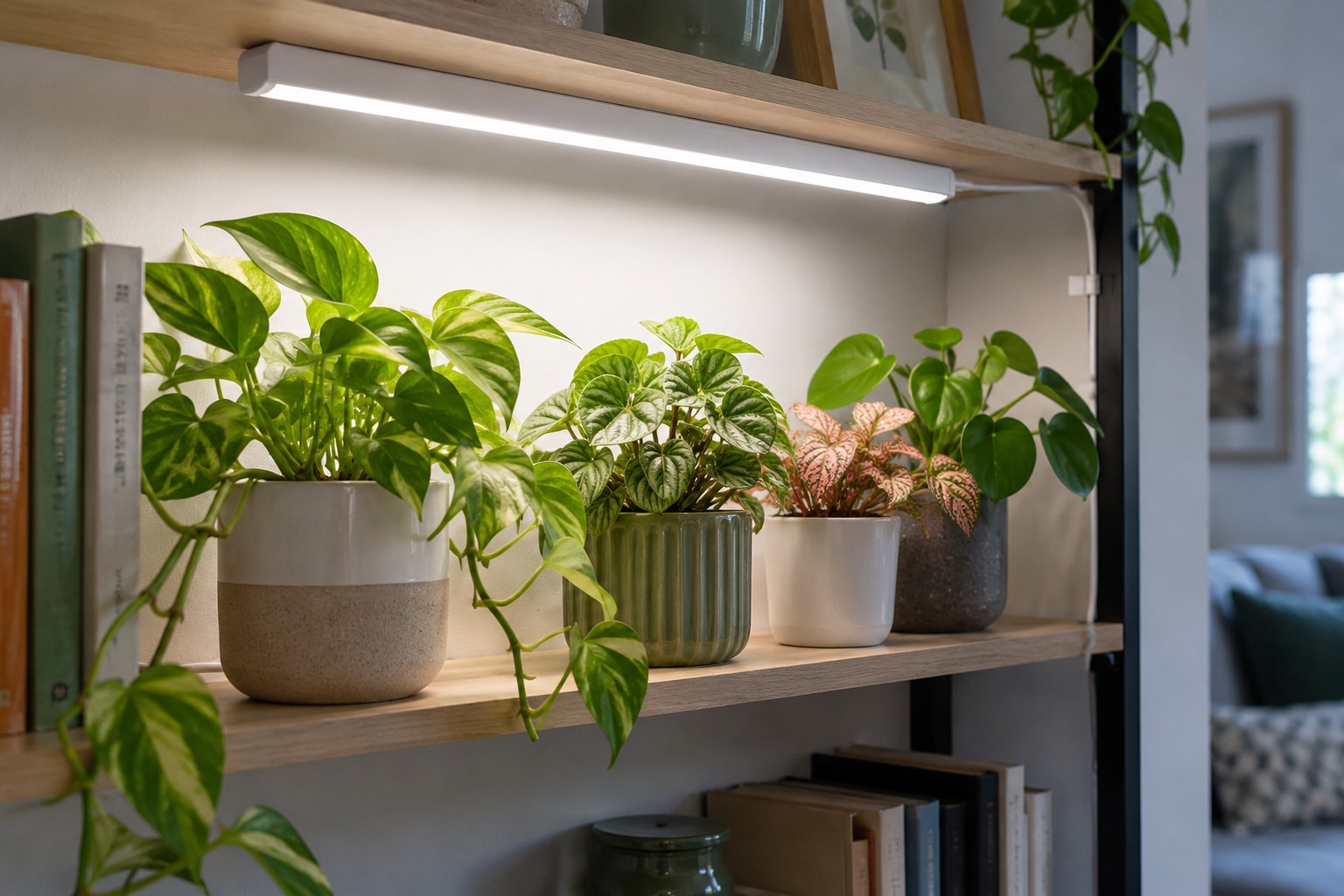
A grow light should address a specific gap in the light already available. Before adding lamps to a shelf, identify the plants and observe the position through the day. A spot that looks bright to a person does not necessarily provide enough light for every species.
University of Minnesota Extension recommends matching plants to the available light and adding supplementary illumination according to need. Both insufficient and excessive light can cause problems. One universal setting for all houseplants is therefore an unsuitable starting point.
Consider coverage and distance together
A small lamp directly above one pot covers a different area from a long bar across a shelf. Check the manufacturer's stated working distances and intended coverage. Do not compare electrical power alone. Some light may miss the leaves or be blocked by neighbouring plants.
Allow for growth. The gap to the light changes as a plant becomes taller. An adjustable, securely mounted support makes correction easier. Cables should not hang among leaves or be pulled into wet areas during watering. A loose flexible arm that gradually droops onto the plant is not a lasting arrangement.
Different species have different requirements for intensity and duration. Existing daylight is part of the total exposure. A timer can support a regular routine, but the appropriate duration depends on the plant and the lighting instructions. Continuous illumination around the clock is not a general recommendation for houseplants.
Fit the light into the living space
Look at the lamp from the sofa or desk. A directly visible bright strip can be distracting indoors. Suitable positioning and an approved shield are preferable to an improvised cover that traps heat. Assess white or coloured light by its spectrum and the plant's needs rather than by the familiar appearance of a growing rack.
Keep the power supply and connectors dry during watering. Manage water in saucers according to the plant's care requirements and keep electrical parts separate from it. A fitting intended for a dry room is not automatically suitable inside a humid growing enclosure.
Over the following weeks, observe new growth rather than judging only older leaves. Change distance or operating time gradually and record each adjustment. Leaf damage can have other causes, so do not attribute every problem immediately to lighting.
A suitable grow light combines plant requirements, documented coverage and a safe position in the room. Neither maximum power nor a particularly striking colour is a sufficient basis for choosing one.