Understanding household appliance noise figures
A decibel figure becomes meaningful only alongside the measurement type, operating mode and test conditions.
Two household appliances with similar noise figures may draw attention in quite different ways. Steady airflow is unlike repeated clicking or a high-pitched tone. The specification is a useful comparison point, but not a complete description of the experience in your living room.
Start with when and why the appliance will run. A vacuum may operate briefly during the day, while a purifier works for hours beside a sofa. An automatic emptying station may add a short, more noticeable phase. Intended use determines which operating states deserve comparison.
Decibel figures can describe different things
Sound power and sound pressure are different quantities. A sound-pressure reading depends partly on measurement position and distance; sound power describes a source's sound output under defined conditions. Both may be expressed in decibels. Do not compare two numbers directly merely because both end in dB.
Weighting and test method matter too. Look for the explanation in the technical data. A number without its operating setting or measurement conditions cannot support a precise comparison with another product. Ask for missing information rather than turning a small numerical difference automatically into a decisive purchasing advantage.
Decibels do not form a linear scale where twice the number simply means twice the perceived loudness. Nor does every level difference translate into one universal subjective effect. Frequency, timing and background sound also matter. For an ordinary buying decision, the useful consequence is to compare like measurements and not treat the number as the entire experience.
Compare the setting you will need
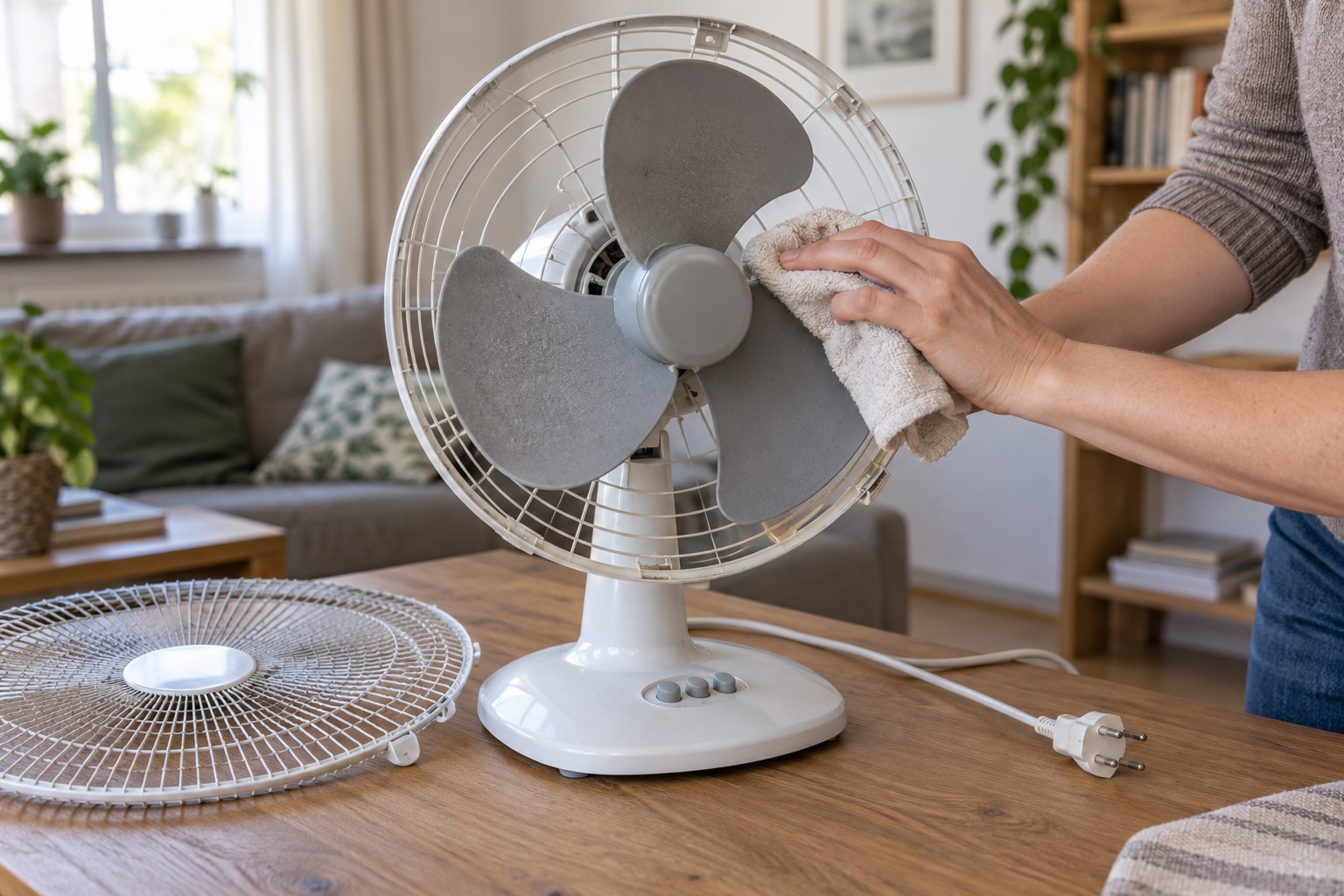
A figure advertised as starting from a particularly low value may describe minimum speed. If that setting cannot do the required job, it has limited relevance. Consider the airflow needed from a fan, the associated performance of a purifier or the normal operating mode of a dehumidifier.
Meaco explains, for example, that it measures fan sound at different speed settings. This illustrates why minimum and maximum describe different situations. It does not establish equivalence with an unspecified method used by another manufacturer.
Imagine appliance A is unobtrusive at minimum but needs a higher setting for your room. Appliance B is slightly more audible at minimum but achieves the required task at a middle setting. Compare those actual working states. Otherwise you have compared the quietest modes rather than the modes suited to your use.
The room changes the result
Hard surfaces, an empty room and a corner position can make sound seem different from a furnished space. A vibrating appliance on a lightweight shelf may also excite the furniture. Check its intended supporting surface and stability. An improvised soft mat is not always appropriate because it can change ventilation or support.
Increase distance from a seat only while preserving the appliance's function and safe cable routing. A purifier should not disappear into a closed cupboard, and a fan still needs an open air path. Positioning balances function, access and noise rather than simply hiding the source.
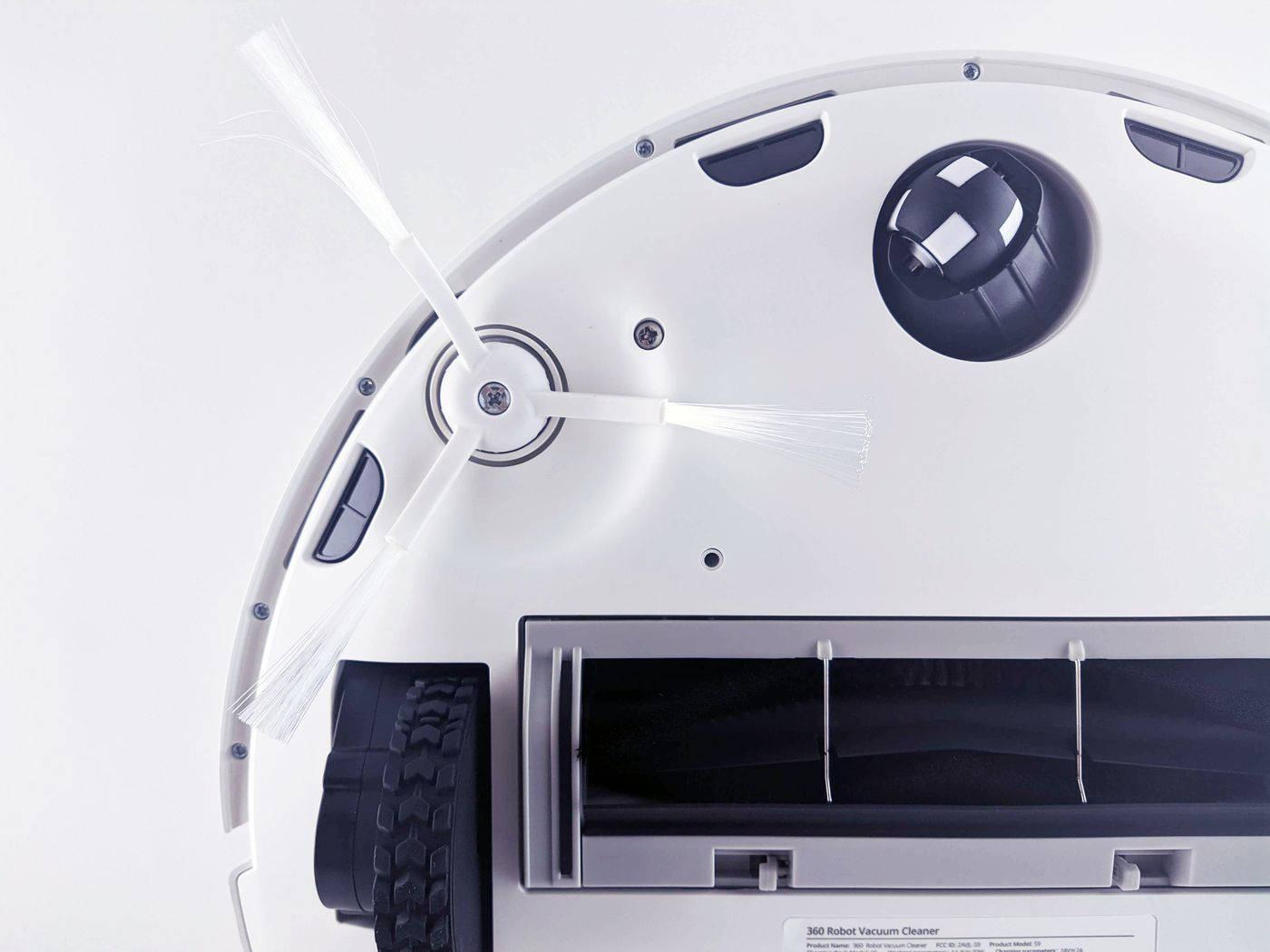
For changing sounds, note the timing. A brief start-up sound differs from a new continuous scraping noise. An emptying station may be noticeable briefly while the robot operates more quietly afterwards. Schedule such phases for a suitable time where the product provides that control.
Use personal comparisons cautiously
A phone app may show a rough change under consistent conditions, but without suitable calibration it is not a replacement for standardised measurement. Different phones, microphone directions and automatic level processing can alter results. Do not treat such readings as proof that a manufacturer has breached its specification.
For a personal comparison, hold position, mode and surroundings constant. Listen to the character and repetition of the sound as well. Note whether it interrupts a conversation, call or another specific activity. That can be more useful for your choice than an apparently precise decimal place.
If an existing appliance suddenly sounds different, consider maintenance or a fault first. Inspect only documented user-accessible parts and stop if there is unusual heat, smell or mechanical trouble. A new scraping sound should not be hidden by turning up the television. A quiet label in the product name does not replace checking the machine's actual condition.