Using a rechargeable table lamp
A cordless lamp is convenient only when its runtime, charging position and controls match the way it will be used.
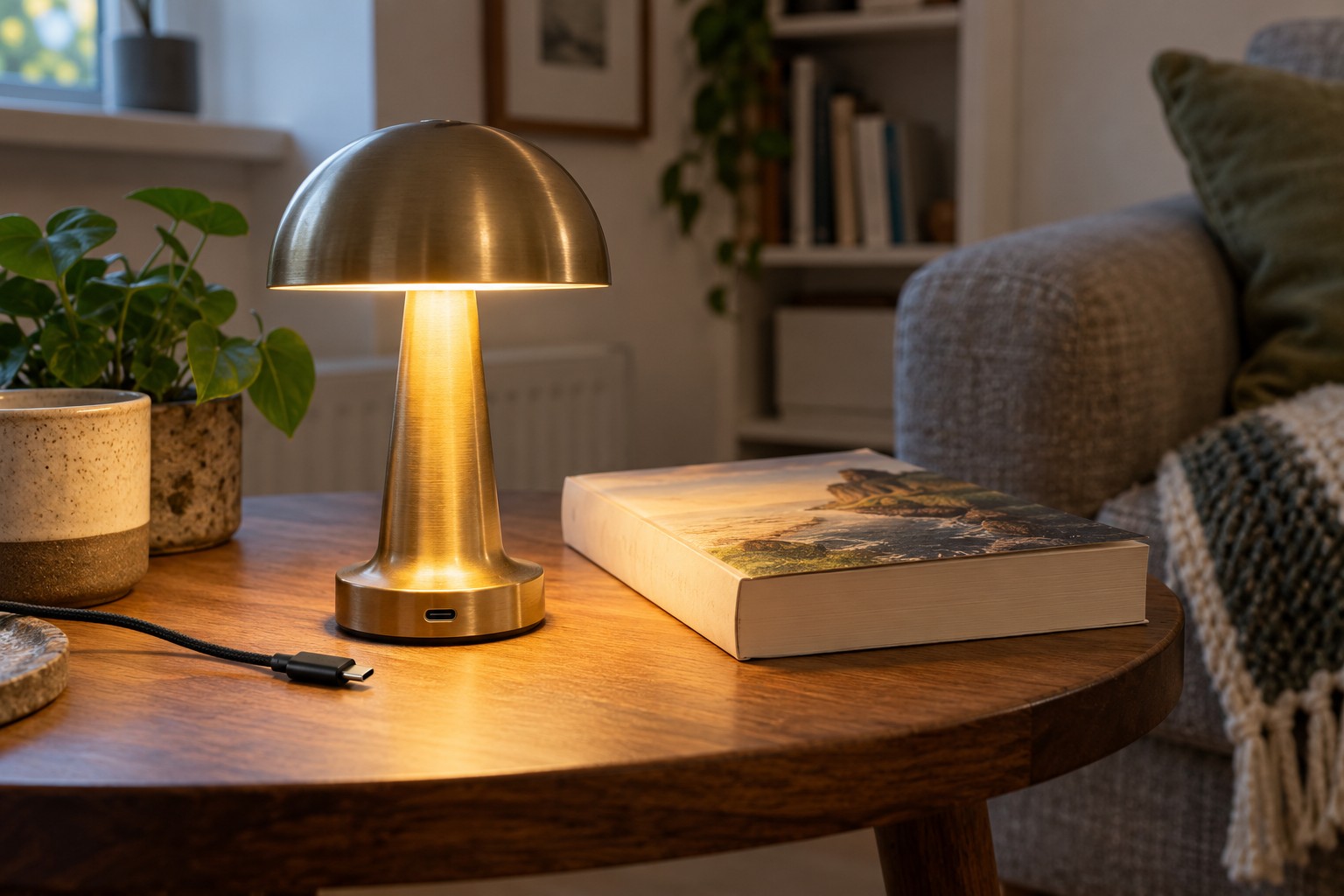
A rechargeable lamp can work on a table without a nearby socket. That does not mean it can replace every mains-powered reading light. Compare the required pool of light and typical session length first. A decorative glow during dinner asks something different from several hours of reading.
Advertised runtime often refers to a particular brightness or operating mode. Check those conditions rather than comparing only the largest number of hours. If you need the lamp at a bright setting, its runtime at that setting matters. A wide dimming range is not enough if the required working brightness is unavailable.
Choose a charging position
Plan a dry, accessible place where the lamp can charge according to its instructions. Running a charging lead across the room removes part of the cordless advantage. An available USB socket is not automatically an appropriate supply; check the required electrical specifications and suitable charger.
A magnetic connector and a USB socket require different handling. Check whether the connection can be made without force and whether the lamp stays stable while charging. The lead should not pull on the housing. Stop using damaged charging cables and do not open an integrated battery for improvised repairs.
Establish whether the lamp may be used while charging. That is a product-specific feature. If you expect to keep it for a long time, investigate whether the battery can eventually be replaced or serviced before buying.
Portable does not mean weatherproof
A lamp that is easy to carry onto a balcony is not automatically suitable for rain or overnight moisture. Follow its intended-use restrictions and storage instructions. A carrying handle or portable shape says nothing about its protection rating.
At the intended location, check stability and visibility of the light source. A broad, low base may suit a narrow side table better than a tall, top-heavy design. Controls should be reachable while seated without needing to hold the lamp by a delicate cover.
A simple routine is often enough: check the charge after a typical session and recharge in a consistent place. During initial use, note the actual duration available at your preferred brightness. This lets you judge the lamp by the task it performs rather than by a runtime figure achievable only at minimum output.