Positioning speakers on a shelf
A shelf can support speakers, but affects stability, vibration and the clear path towards the listening position.
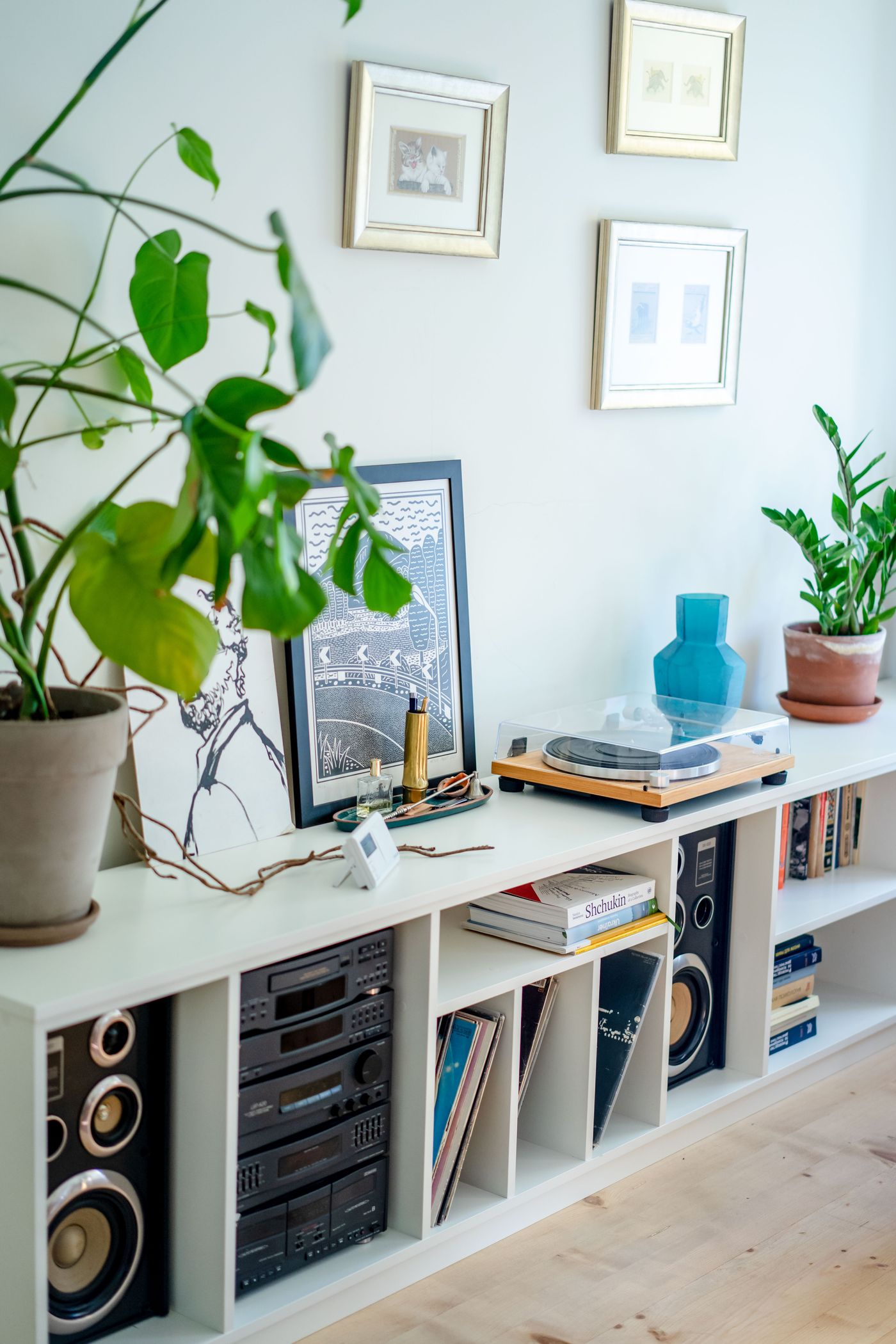
The term bookshelf speaker does not mean every gap between books is ideal. A speaker needs secure support and the space specified around its cabinet and openings. Sound also needs to reach the seat rather than being immediately obstructed by a cupboard edge.
Check the shelf's load capacity and the speaker's weight first. Include other objects on the same board and the stability of the whole unit. A narrow speaker can be heavy, while a long thin shelf may sag. The arrangement should not depend on improvised bracing.
Keep the front unobstructed
Leave the intended sound openings clear. A position deep behind the front edge can affect sound differently from one nearer the front. Preserve secure support, however: the cabinet must not tip over an edge or be easily struck by someone passing.
Follow the recommended separation from rear and side surfaces. Bass ports in particular should not be blocked arbitrarily. Whether an enclosed compartment is suitable depends on construction. The exact product's instructions are more useful than a universal distance.
For a stereo pair, give both sides reasonably similar surroundings. One speaker in a tight corner and another on an open shelf may behave differently. Start with comparable height and sensible orientation towards the main seat. Fine sound adjustment comes afterwards.
Identify objects that vibrate
Play a familiar recording at ordinary volume. If a particular note produces a rattle, inspect decorations, doors and other objects on the unit. Remove only the suspected item for a comparison. A new speaker cable will not cure a glass vibrating beside the cabinet.
Suitable manufacturer-approved pads may help in some arrangements, but must remain stable and leave openings clear. A soft uneven support can make the speaker insecure. Do not stack miscellaneous foam pieces to adjust height.
Route cables with a little slack and without sharp bends. Connections should remain reachable without pulling the speaker out by its lead. Active models also require attention to heat clearance.
Finally assess speech and music from the usual seat. If the shelf still imposes substantial limitations, appropriate separate stands may be more useful. Furniture should support the speakers securely rather than dictate their function through an unsuitable recess.