Taking Wi-Fi onto a balcony or terrace
Check the actual seat with the door closed before buying equipment for outdoor coverage.

The Wi-Fi symbol remains visible on the balcony, yet a call keeps breaking up. That symbol alone does not show whether the connection is adequate for the task. The signal may travel through an external wall or coated glazing, with the chair also sitting off to one side of the router. Testing beside an open balcony door does not reproduce those conditions.
Use the same device indoors and outside. Compare the spot immediately beyond the door with the chair or table where you intend to work. Repeat with the door closed. Note whether only the signal indicator changes or whether the actual activity suffers, such as speech during a call or loading a large page.
Change the indoor arrangement first
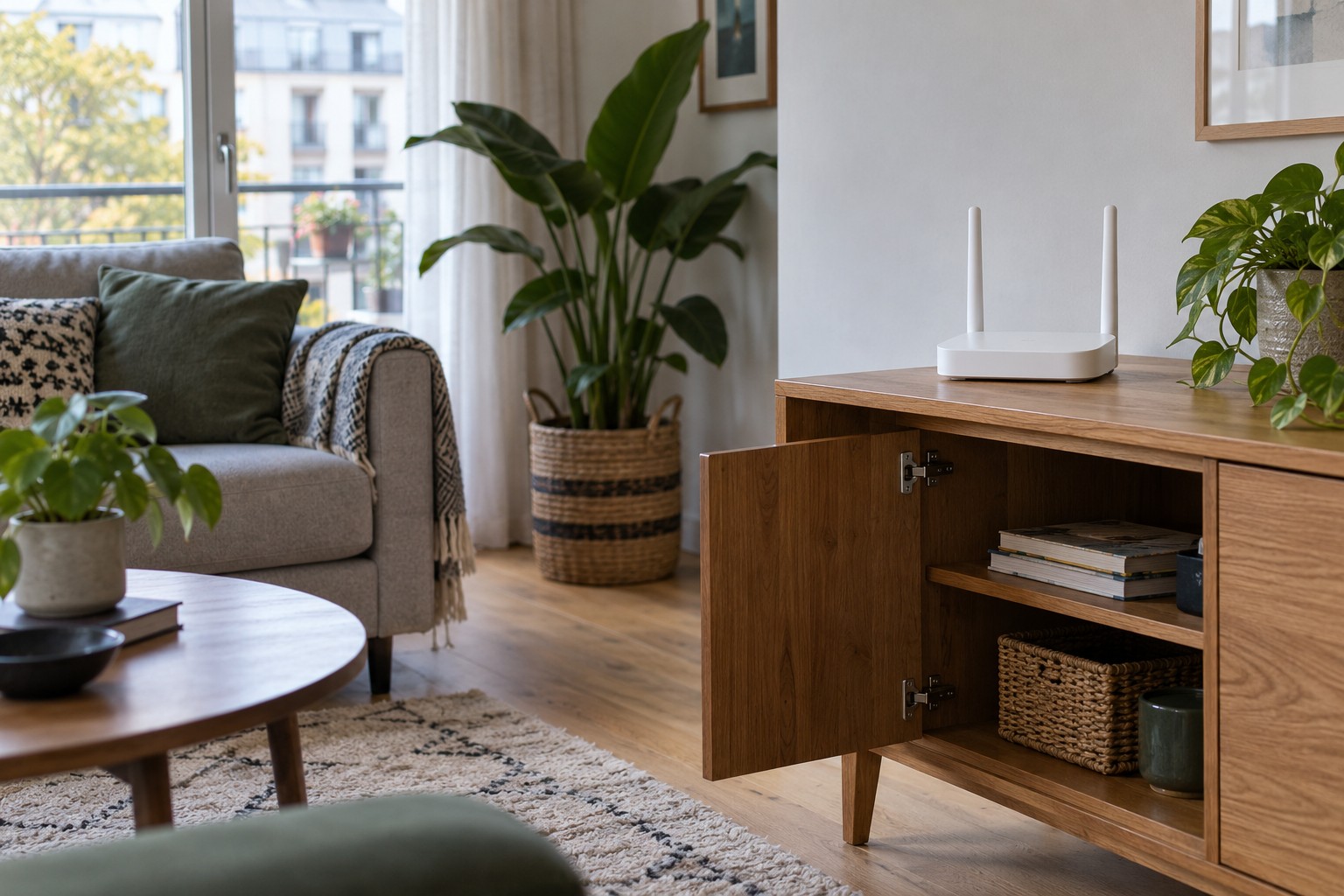
A router hidden inside furniture or behind a television might work better in a more open position. Check that moving it does not make important indoor rooms worse. The result needs to suit the whole household, with cables routed safely and ventilation openings left clear.
An extra mesh node still needs a good connection back to the network. An indoor position near the terrace door may be worth testing. A node placed at the edge of existing coverage, however, may have only a weak upstream connection to pass on. Check the manufacturer's link indicator and then repeat the test at the outdoor seat.
Do not move an ordinary indoor router onto the balcony table simply because reception improves. Moisture, direct sunlight, rain and temperature changes may fall outside its operating conditions. A roof overhang does not automatically make an indoor device suitable outdoors. Its power supply and connections need the same consideration.
When an outdoor access point makes sense
If the terrace is a regular workplace and simpler changes fail, an access point explicitly designed for the location may be an option. Its position, cable route and power or PoE supply need to be planned together. Check the exact environmental rating, and arrange appropriate installation for fixed electrical work. A weather-resistant housing does not protect a separate exposed cable joint.
Judge the connection at the times when you actually use the space. Neighbouring networks, other household downloads and different client devices can change the result. A successful phone test does not guarantee identical performance on an older laptop. Reading an occasional message may not justify a permanent outdoor installation; daily long calls make a different case.