Troubleshooting weak bedroom Wi-Fi
Three comparison locations can reveal more than an untested extender plugged in behind the bed.

If wireless access is weak only in the bedroom, that is initially a location-specific symptom. It does not prove the broadband plan is too slow or the router is defective. Use the same device in three places: near the router, at the bedroom door and at the actual seat or bed position. This reveals where the experience changes.
Close the door as it normally stands in the evening. Test where you use the device, not only while standing in the middle of the room. Device position can affect the radio path too. Compare a specific task, such as a short call or loading the same substantial page, rather than counting signal bars alone.
One device or the whole room?
Repeat with a second device. If that works well in the same place, inspect the first client's supported bands, software and saved connection. If both struggle, the location becomes a more likely factor. A single troublesome application can also fail independently of the room.
Look at what lies between router and bedroom. A router inside furniture may first benefit from a more open position. Change only that position and repeat the comparison. Check other important rooms so improving the bedroom does not quietly make the office worse.
With an existing mesh system, inspect node connections and client assignments. A device does not necessarily switch immediately to the physically nearest point. Record what the interface actually reports rather than inferring the connection from distance.
Do not put an extender in the dead zone
An additional wireless point needs a usable upstream connection itself. An open location along the route may work better than a socket behind a metal bed at the edge of coverage. Check the point's connection first, then its service to the client.
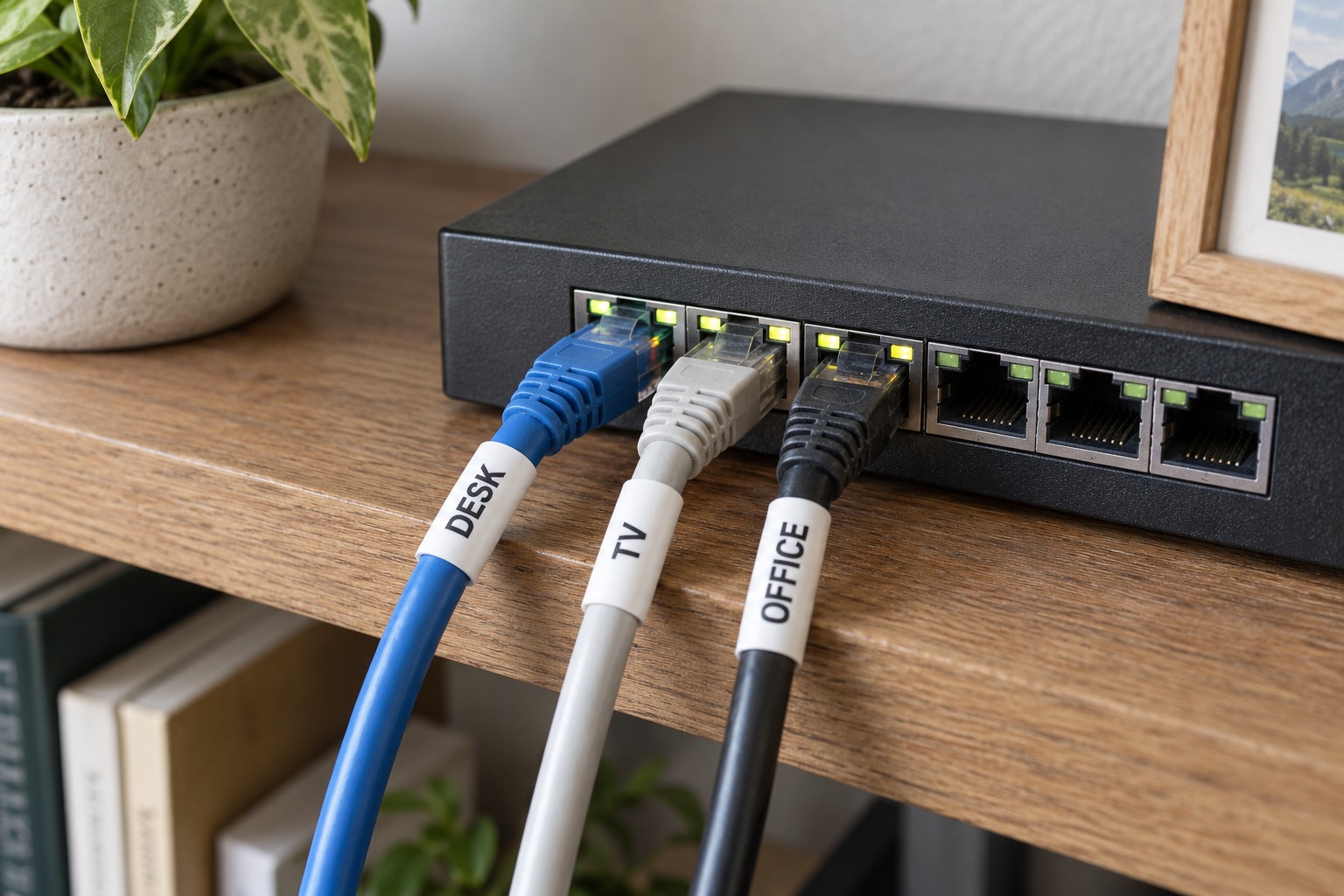
If Ethernet reaches the room, a compatible access point can use it. Its operating mode and connection order need to fit the existing network. For one regularly used laptop, a direct cable may solve the narrower problem more simply.
Judge the result over normal use. One successful test with an open door is not enough when the fault normally appears with it closed. Record the successful arrangement before furniture and equipment move again.